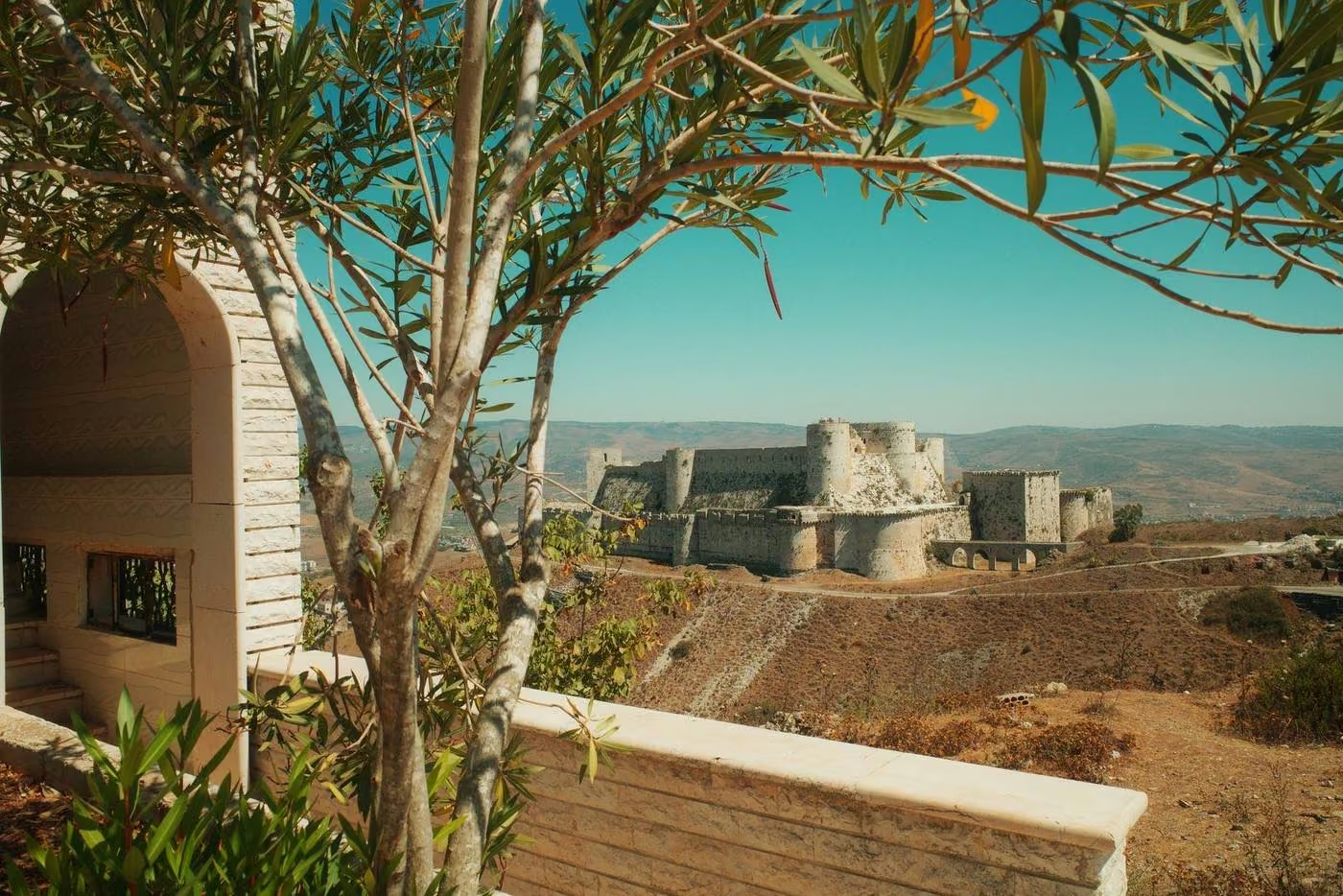
The Crusades are retold on both sides as a clash of religions with a clear villain. In popular memory the Franks arrive in 1095 as aggressors, and Saladin answers as the chivalrous defender of Islam. The record is more tangled than either telling allows.
These six facts are well documented in Latin, Greek and Arabic sources, and each complicates the usual story. They give Muslims no reason to excuse the massacres of the invaders, and they give Western readers no reason to treat the period as a simple war of faiths. They help anyone who wants to know what happened.
In 1095 Pope Urban II preached at Clermont after an appeal from the Byzantine emperor Alexios I, whose empire had lost most of Anatolia to the Seljuk Turks after the battle of Manzikert in 1071. Alexios had sent envoys to the pope earlier that year asking for fighting men.[1] The Crusade was presented as help for the Eastern Christians and as a pilgrimage to Jerusalem. The accounts of the sermon were written down years afterwards and differ in their wording, so historians reconstruct its content with care.[2]
The aim then grew beyond what Alexios had asked, because Jerusalem lay far outside the territory he hoped to recover. The wider Muslim world was divided at the time. The Seljuk empire was breaking up into rival states after the death of the sultan Malik-Shah in 1092, and the Fatimid caliphate in Egypt was its enemy. The Fatimids took Jerusalem from a Turkish garrison in 1098, while the Crusaders were marching south, so the invaders met no common front.[1]
When the Crusaders took Jerusalem on 15 July 1099 they killed a large part of its Muslim and Jewish inhabitants. Their own chroniclers, such as Fulcher of Chartres and Raymond of Aguilers, describe streets running with blood, and Muslim writers such as Ibn al-Athir record the same.[3] Raymond writes with open satisfaction, and Fulcher speaks of a corpse-strewn city.
The figures are disputed. Ibn al-Athir gives a very high number, and modern historians think the Latin and Arabic totals both reflect rhetoric as much as counting. The fact of the massacre is not disputed. The city had been under Muslim rule since Umar accepted its surrender in 637, and the terms preserved in al-Tabari’s history gave its Christians a guarantee of their lives, churches and property.[4] The comparison between those two conquests, four and a half centuries apart, is the one that medieval and modern readers have drawn most often.
Salah al-Din (Saladin) took Jerusalem in October 1187 after the battle of Hattin. The city was surrendered under terms. Residents could buy their freedom at a fixed ransom, which the Muslim sources give as ten dinars for a man, five for a woman and one for a child, and he released many who could not pay. The Jews were permitted to return, and the Church of the Holy Sepulchre was left in Christian hands.[5]
The picture is not without shadow. After Hattin, Saladin had the captured Templars and Hospitallers put to death, and he killed Raynald of Châtillon himself. Many Latins in Jerusalem who could not find the ransom were enslaved.[6] The contrast with 1099 is still noted by historians of every background. The Latin Christians who could pay left, and the Orthodox and Eastern Christians remained.
In 1204 the Fourth Crusade sacked Constantinople, the capital of the Christian Byzantine empire, and its soldiers looted churches and killed thousands. The expedition had already attacked the Christian city of Zara, on the Adriatic, in 1202 to pay its debts to Venice. Both the Crusader Geoffrey of Villehardouin and the Byzantine Niketas Choniates, who lost his home in the sack, wrote accounts of it.[7]
The Latin states set up in the East were often at odds with the local Orthodox, Armenian and Syriac Christians. At Antioch the Crusaders replaced the Greek patriarch with a Latin one.[8] The Crusades were not a united front of Christendom against Islam. They were also a competition among Christian powers.
The same was true on the Muslim side, and fairness requires saying so. Saladin spent a decade fighting other Muslim rulers before he could turn on Jerusalem.
Medieval Muslims called the invaders al-Ifranj, “the Franks”, and wrote little about “Crusades” as a single religious war. Interest in the term grew in the nineteenth century, with European colonial writing and then with Arab nationalism. The Ottoman sultan Abdulhamid II drew on the memory of the Crusades in his appeals to Muslims, and the Arabic phrase for the Crusades, al-hurub al-salibiyya, came into common use in the same period.[6]
The strongest objection is that medieval Muslims did see the invasion in religious terms. A preacher in Damascus, Ali ibn Tahir al-Sulami, called for jihad against the Franks soon after 1099, and later rulers such as Nur al-Din and Saladin used the same appeal.[9] That is true, and it shows that the resistance had a religious voice. It does not show that anyone then saw one unbroken war of two civilisations. Modern speakers on both sides use the word as shorthand for a grievance or a banner, and the historical event is much smaller than the label.
In 1140 Damascus, under pressure from the Zangid ruler of Aleppo and Mosul, made an alliance with King Fulk of Jerusalem.[10] Pacts of this kind were common enough in the twelfth and thirteenth centuries that they belong to the ordinary record of the period.
The clearest case is 1229. The Ayyubid sultan al-Kamil of Egypt agreed with the emperor Frederick II, without a battle, that Jerusalem would pass to the emperor under a truce of about ten years. The Haram al-Sharif stayed under Muslim control, with its own garrison and judge.[11] Other Muslim rulers were angry. Sibt ibn al-Jawzi denounced the treaty in a sermon in Damascus, and al-Kamil replied that he had given up only some churches and ruined houses.
Usama ibn Munqidh, a Syrian nobleman and warrior, befriended Templars during his visits to Jerusalem and thought them more civilised than other Franks.[12] None of this shows a friendship between two faiths. It shows rulers weighing power, trade and rivals, with religion one factor among several.
The bottom line
The sources support a plain reading. The Crusaders came at the request of a Christian emperor and went on to conquer more than he asked. They massacred Jerusalem in 1099, and the recapture in 1187 was conducted on better terms, although Saladin was no saint and Muslim rulers fought one another as readily as Christian princes did.
The unity that later speakers claim on each side did not exist at the time. Muslims have good reason to remember the conduct of 1099 and to hold their own rulers to the standard of Umar’s guarantee. They have equal reason to refuse the slogan that turns a messy medieval conflict into a permanent war between faiths.
Notes
- Thomas Asbridge, The First Crusade: A New History (Oxford, 2004).
- Fulcher of Chartres, Historia Hierosolymitana, on the council of Clermont; the other accounts, including Robert the Monk’s, differ in wording.
- Fulcher of Chartres, Historia Hierosolymitana; Raymond of Aguilers; Ibn al-Athir, al-Kamil fi’l-tarikh.
- Al-Tabari, History, the terms granted by Umar to the people of Aelia (Jerusalem). Tabari, Tarikh al-rusul wa-l-muluk (Shamela text), vol. 3, p. 609, “The conquest of Bayt al-Maqdis”: the document guarantees the lives, property, churches and crosses of the people of Aelia and forbids compulsion in religion. It also requires the jizya and bars Jews from living in the city.
- Imad al-Din al-Isfahani, al-Fath al-qussi, on the surrender of 1187; Ibn al-Athir for the ransom rates.
- Carole Hillenbrand, The Crusades: Islamic Perspectives (Edinburgh, 1999).
- Geoffrey of Villehardouin, The Conquest of Constantinople, and Niketas Choniates, Historia.
- Thomas Asbridge, The Crusades: The Authoritative History of the War for the Holy Land (London, 2010).
- Ali ibn Tahir al-Sulami, Kitab al-Jihad, as discussed in Hillenbrand, op. cit.
- Basit Hammad Qureshi, “In the Shadow of Zengi: Diplomatic Relations between Damascus and the Crusader States during the Reign of King Fulk of Jerusalem”, Medievalists.net (2010), on the alliance of 1140.
- The treaty of Jaffa, 18 February 1229, between al-Kamil and Frederick II, as summarised in the article “Treaty of Jaffa (1229)” in Wikipedia (read 23 October 2026), which cites the Arabic and Latin accounts; Sibt ibn al-Jawzi, Mirat al-zaman, for the sermon in Damascus.
- Usama ibn Munqidh, Kitab al-I’tibar, trans. Philip K. Hitti, An Arab-Syrian Gentleman and Warrior in the Period of the Crusades (New York: Columbia University Press, 1929), pp. 161–170, on the Templars.