
In the second century, some Christians made a claim that most churches came to reject: that the God who made the world and gave the Law to Moses was a different being from the Father whom Jesus revealed. Some called the creator harsh, some ignorant, some arrogant. Modern writers often cite them as proof that the earliest Christians knew Yahweh to be evil, or even Satan.
The real picture is more varied, and more interesting. The thinkers involved disagreed with each other, and the word “Gnosticism” groups together movements that never called themselves by one name; scholars such as Michael Williams and Karen King have shown how misleading the single label can be.[1] This article takes seven points in turn and ends with the question that matters for this series: did any early source equate the God of Israel with Satan?
Number 1: Marcion: the creator and the God proclaimed by Jesus
Marcion, a shipowner from Sinope on the Black Sea, came to Rome around 140 and was expelled by its church in 144.[2] He taught that the God of the Hebrew Bible, who made the world, gave the Law and punished those who broke it, was a different God from the Father of Jesus, who had been unknown until Jesus revealed him. He set out the contrast in a work called the Antitheses, now lost, and assembled the first known Christian canon: one gospel, related to Luke, and ten letters of Paul, edited to remove what he regarded as later additions.

What Marcion thought of the creator is reported by his opponents. Tertullian, who wrote five books against him around 207, says that Marcion set up two gods, “one judicial, harsh, mighty in war; the other mild, placid, and simply good”.[3] Irenaeus, writing around 180, is harsher: Marcion called the God of the Law and the Prophets “the author of evils”, one who takes “delight in war”.[4] Most historians, from Adolf von Harnack to Judith Lieu, conclude that Marcion’s creator was a just and severe God, inferior to the good God, and that he never identified him with the devil.[5] The creator in Marcion’s system punished wrongdoing according to his law. Being harsh, in his scheme, was a different thing from being evil.
Number 2: The Demiurge: one word, several ideas
The Greek word demiourgos means a craftsman. In Plato’s Timaeus the Demiurge is the good maker who shapes the world after the pattern of the eternal forms.[6] Second-century Christian teachers borrowed the word for the maker of the material world and placed him below the highest God, and they did so in very different ways.

Ptolemy, a Valentinian teacher, wrote a letter to a Christian woman named Flora explaining where the Law of Moses came from. He argued that the Law could not have been given by the perfect God, nor by the devil, and that its divine part came from an intermediate figure, the creator, who is just and is neither the perfect God nor the author of evil.[7] Saturninus of Antioch, as Irenaeus reports him, taught that the world was made by angels, that the God of the Jews was one of them, and that Satan was a separate angel who opposed the world-makers, the God of the Jews above all.[8] These are two systems in which the maker of the world is inferior, and in both of them he is explicitly distinguished from Satan.
The Sethian texts, discussed next, go further in their portrait of the creator. Treating all of these as one “Gnostic” doctrine hides the fact that their teachers disagreed about the creator’s character, and that none of them said he was the highest God.
Number 3: Yaldabaoth and the Secret Book of John
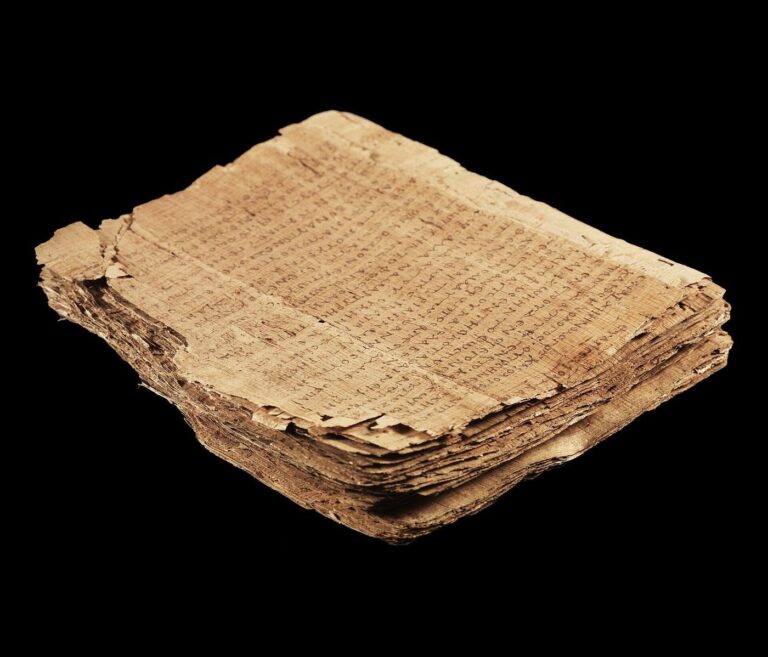
The Secret Book of John, also known as the Apocryphon of John, survives in four Coptic copies: three in the Nag Hammadi codices found in Egypt in 1945 and one in the Berlin Codex bought in 1896.[9] The manuscripts date from the fourth and fifth centuries, but Irenaeus summarised a closely related myth around 180, so the work goes back to the second century.[10]
In its myth, Sophia, a divine power, brings forth a being without the consent of the highest Spirit. He is shaped like a lion-faced serpent, and she names him Yaldabaoth. He steals power from his mother, makes a world and its rulers, and, ignorant of the realm above him, boasts that he is a jealous God and that there is no other God beside him.[11] The boast echoes the Ten Commandments and the Book of Isaiah, and the text treats it as proof of his ignorance and arrogance. The book also gives him three names: Yaltabaoth, Saklas, meaning “fool”, and Samael.[12]
Here the creator is portrayed in strongly negative terms, as a usurper who traps human beings in a material world. He is still a product of the divine realm, and the drama of salvation concerns the light he stole. Karen King, in her study of the text, reads it as a sophisticated rewriting of Genesis by Christians who wanted to explain the existence of evil and injustice without blaming the highest God.[13]
Number 4: The serpent in Eden and the gift of knowledge
Genesis gives the serpent a striking speech. It tells the woman, in the King James Version, “Ye shall not surely die: for God doth know that in the day ye eat thereof, then your eyes shall be opened, and ye shall be as gods, knowing good and evil”, and later God says, “Behold, the man has become like one of us, knowing good and evil.”[14] Some second-century readers concluded that the serpent told the truth and that the God who forbade knowledge was jealous of it.

The Testimony of Truth, a Nag Hammadi text of the late second or early third century, takes that line. It asks what kind of God first begrudged Adam the tree of knowledge and then asked “Adam, where are you?” as if he did not know, and it concludes that this God has shown himself to be malicious and envious.[15] It reads the serpent as a figure of Christ, citing the bronze serpent that Moses lifted up. In the Secret Book of John, Christ says that he himself caused Adam to eat from the tree of knowledge, and the Hypostasis of the Archons makes the spiritual principle speak through the serpent as an instructor.[16]
The mainstream Jewish and Christian tradition read the scene the other way. The Wisdom of Solomon says that “through the devil’s envy death entered the world” (NRSV), and the Book of Revelation calls the devil “the old serpent”.[17] The Quran gives the deceptive speech to Satan himself, who tells Adam and his wife that their Lord forbade the tree only so that they would not become angels or immortals.[18] In each case the serpent’s voice is the voice of the adversary. The Gnostic texts reversed this, praising the serpent and blaming the creator; even so, they did not make the creator into the serpent.
Number 5: Jesus and the Father: John 8, John 14 and John 17
The Gospel of John was a favourite of second-century teachers on all sides. The earliest known commentary on it was written by Heracleon, a Valentinian, and survives in quotations by Origen.[19] Its sayings about the Father seemed to some readers to point beyond the God of Israel: “He who has seen me has seen the Father”, and “This is eternal life, that they should know you, the only true God, and him whom you sent, Jesus Christ.”[20]
The verse most quoted today is John 8:44, where Jesus tells his opponents that their father is the devil. As part 1 explains, it is addressed to a particular group in a particular argument, and it is no statement about Jews as a people. Its context also identifies the Father of Jesus with the God of Israel. His opponents say, “We have one Father, God”; Jesus replies, “If God were your father, you would love me, for I came out and have come from God”, and a little later speaks of “my Father who glorifies me, of whom you say that he is our God”.[21] The dispute is over who truly knows that God.
Mainstream interpreters read the “only true God” of John 17:3 as the God of Israel’s confession that God is one, and note that the same Gospel has Jesus say that Moses wrote about him.[22] On that reading, the Gospel that the second-century dissenters loved most is the one that most firmly ties Jesus to the God of the Hebrew scriptures.
Number 6: How early Christian theologians answered Marcion and the Gnostics
The response was swift and wide. Justin Martyr, writing in Rome in the 150s, warned that Marcion was teaching people to confess another god greater than the maker of the world.[23] Irenaeus of Lyon wrote his five books Against Heresies around 180, arguing that one God made the world, gave the Law and sent his Son, and that the scriptures of Israel and the writings of the apostles speak of the same God. He reports that Polycarp, the aged bishop of Smyrna, once met Marcion and called him “the first-born of Satan”.[24] Tertullian’s five books against Marcion answered the Antitheses point by point.

The theological core of the response was the goodness of creation and the unity of God. Genesis says that God saw everything he had made, and “behold, it was very good”.[25] If the maker of the world is good, the world is no prison, and the God of the Law is the Father of Jesus. The churches also defined their scriptures in part as a response to Marcion’s narrow canon, keeping the Hebrew Bible and four gospels together.[26] Marcionite churches nonetheless survived for several centuries, especially in the East.
Number 7: Which sources, if any, explicitly equate Yahweh and Satan?
The ancient sources discussed here call the creator inferior, ignorant, harsh or arrogant. They do not, on the evidence of the texts themselves, call him Satan. Marcion’s creator is just and severe. Ptolemy says explicitly that the lawgiver is neither the perfect God nor the devil. Saturninus makes Satan the enemy of the God of the Jews. The Secret Book of John comes closest, by giving its arrogant creator the name Samael, which in some Jewish and Christian writings belongs to an evil angel; the Ascension of Isaiah, for example, uses Sammael for a satanic figure.[27] Even there, Yaldabaoth is a lesser and ignorant power within a larger myth, and the text does not reduce him to the devil of the Gospels.
An explicit identification of the maker of the visible world with Satan appears later, in medieval dualist movements. According to the Byzantine theologian Euthymius Zigabenus, writing in the early twelfth century, the Bogomils taught that Satan, the elder son of God, made the visible world and the human body, while God created only the soul, and they rejected most of the Old Testament.[28] Some Cathar groups in western Europe, according to their opponents, ascribed the Old Testament to the evil principle. These movements are separated from the second-century debates by nearly a thousand years, and their own beliefs are known mainly through hostile accounts.
The distinction this article has drawn holds throughout. To call a creator inferior or ignorant is one claim. To identify him with Satan is another, and the early Christian sources made the first claim and, with very few exceptions, avoided the second.
The bottom line
Marcion and the teachers later grouped as Gnostics did believe that the creator was not the highest God, and some of them portrayed him harshly. Their opponents answered them by defending one God of creation and redemption, and most of the church followed. The claim that early Christians knew Yahweh to be Satan finds little support in the sources: the closest ancient parallels are the name Samael in one myth and the medieval Bogomils. How Islam answers the underlying question, the relationship between the God of the Bible, the God of the Quran and the figure of Iblis, is the subject of part 5. Earlier site articles on the canon, including which letters Paul wrote, touch on Marcion’s role in shaping the New Testament.
Notes
- Michael A. Williams, Rethinking “Gnosticism”: An Argument for Dismantling a Dubious Category (Princeton: Princeton University Press, 1996); Karen L. King, What Is Gnosticism? (Cambridge, MA: Harvard University Press, 2003).
- Judith M. Lieu, Marcion and the Making of a Heretic: God and Scripture in the Second Century (Cambridge: Cambridge University Press, 2015).
- Tertullian, Against Marcion 1.6, trans. Peter Holmes, Ante-Nicene Fathers 3 (1885); compare the translation of Ernest Evans (Oxford: Clarendon Press, 1972).
- Irenaeus, Against Heresies 1.27.2, trans. Alexander Roberts and William Rambaut, Ante-Nicene Fathers 1 (1885).
- Adolf von Harnack, Marcion: The Gospel of the Alien God, trans. John E. Steely and Lyle D. Bierma (Durham, NC: Labyrinth Press, 1990; German original 1921); Lieu, Marcion and the Making of a Heretic.
- Plato, Timaeus 28a–29a.
- Ptolemy, Letter to Flora, preserved in Epiphanius, Panarion 33.3–7; trans. in Bentley Layton, The Gnostic Scriptures (Garden City, NY: Doubleday, 1987).
- Irenaeus, Against Heresies 1.24.1–2.
- Nag Hammadi Codices II,1, III,1 and IV,1, and Berlin Codex 8502,2; Michael Waldstein and Frederik Wisse, eds., The Apocryphon of John: Synopsis of Nag Hammadi Codices II,1; III,1; and IV,1 with BG 8502,2 (Leiden: Brill, 1995).
- Irenaeus, Against Heresies 1.29.
- Apocryphon of John, NHC II,1, 10–13, in Waldstein and Wisse, The Apocryphon of John; compare Exodus 20:5 and Isaiah 45:5. The wording of the boast differs between translations; this article paraphrases it.
- Apocryphon of John, NHC II,1, 11, in Waldstein and Wisse.
- Karen L. King, The Secret Revelation of John (Cambridge, MA: Harvard University Press, 2006).
- Genesis 3:4–5, King James Version; Genesis 3:22, World English Bible.
- Testimony of Truth, NHC IX,3, 45–48, trans. Søren Giversen and Birger A. Pearson, in James M. Robinson, ed., The Nag Hammadi Library in English, 4th ed. (Leiden: Brill, 1996); compare Numbers 21:9.
- Apocryphon of John, NHC II,1, 22; Hypostasis of the Archons, NHC II,4, 89–90.
- Wisdom of Solomon 2:24, New Revised Standard Version; Revelation 12:9, World English Bible.
- Quran 7:20, Saheeh International.
- Origen, Commentary on the Gospel of John, which quotes Heracleon throughout.
- John 14:9 and 17:3, World English Bible.
- John 8:41–42 and 8:54, World English Bible.
- John 5:46; compare Deuteronomy 6:4.
- Justin Martyr, First Apology 26.
- Irenaeus, Against Heresies 3.3.4.
- Genesis 1:31, World English Bible.
- Bruce M. Metzger, The Canon of the New Testament: Its Origin, Development, and Significance (Oxford: Clarendon Press, 1987).
- Ascension of Isaiah 1:8–11 and 2:1, in James H. Charlesworth, ed., The Old Testament Pseudepigrapha, vol. 2 (Garden City, NY: Doubleday, 1985).
- Euthymius Zigabenus, Panoplia Dogmatica 27; Dmitri Obolensky, The Bogomils: A Study in Balkan Neo-Manichaeism (Cambridge: Cambridge University Press, 1948).



Leave a Reply