
Where did the worship of Yahweh begin, and what did it look like before the Hebrew Bible reached its final form? For most of history the only answer came from the Bible itself. Over the last century and a half, excavation has added a second source: inscriptions, shrines, figurines and royal monuments from Egypt, Sinai, Judah and Moab. Some of them fit the biblical picture closely. Others show a religion more varied than the later texts admit.
This article sets out seven of those discoveries. For each it gives the date of the object, which is often centuries apart from the date it was found, the reading of the text where there is one, and the main interpretations scholars defend. The aim is to be clear about what each find shows. Archaeology can describe how people worshipped Yahweh in particular places and periods. It cannot tell us who Yahweh is, and it has nothing to say about whether he is the same being as Satan, the question taken up in the first part of this series.
Number 1: The Shasu of Yhw: Egyptian lists from the fourteenth and thirteenth centuries BCE
The oldest possible trace of the name is Egyptian. At Soleb in Nubia, a temple built under Pharaoh Amenhotep III in the fourteenth century BCE carries lists of foreign lands on its column bases. One entry reads “the land of the Shasu, yhw“. A similar list was copied at Amarah West in the time of Ramesses II, in the thirteenth century, where yhw appears in a sequence of Shasu lands that also includes s’rr, which many scholars connect with Seir in Edom.[1] The Shasu were pastoral groups of the regions south and east of Canaan, often hostile to Egypt.
The attraction of the lists is that they place a name like Yahweh in the same southern lands the Bible associates with him. The Song of Deborah says, “Yahweh, when you went out of Seir, when you marched out of the field of Edom, the earth trembled”, and Deuteronomy says that “Yahweh came from Sinai, and rose from Seir”.[2] Michael Astour, Donald Redford and others have argued that the Egyptian yhw is related to the divine name, and that Yahweh was first worshipped by groups in the south before he became the god of Israel.[3]
The caution is as important as the claim. In the lists, yhw is the name of a land or a group, marked with the sign Egyptian scribes used for foreign territories. Nothing in the inscription names a god. The spelling, the reading of the hieroglyphs and the location are all debated, and the most recent studies treat the link with Yahweh as possible but unproven.[4] The lists show that a name close to Yahweh’s was known in the southern deserts by the fourteenth century BCE. They do not show that it belonged to a deity.
Number 2: Kuntillet Ajrud: "Yahweh of Samaria" and "Yahweh of Teman"
Kuntillet Ajrud, also called Horvat Teman, is a small hilltop site in north-eastern Sinai on an ancient desert route. Ze’ev Meshel excavated it in 1975 and 1976, and the full publication appeared in 2012. The site is dated to about 800 BCE, at the end of the ninth or start of the eighth century, by its pottery and by radiocarbon.[5]

Two large storage jars carry blessings written in ink. One invokes “Yahweh of Samaria and his asherah”, and the other “Yahweh of Teman and his asherah”.[6] Samaria was the capital of the northern kingdom of Israel; Teman means “the south” and appears in the Bible as a region of Edom, which recalls the line in Habakkuk, “God came from Teman”.[7] The formula ties Yahweh to particular places, much as other gods of the region were worshipped as the Baal of one city or another. The jars also carry drawings: two standing figures with animal faces, often identified as the Egyptian protective god Bes, and a seated figure playing a lyre. Whether the drawings illustrate the inscriptions, or were added independently, is disputed.
The phrase “his asherah” is the centre of the debate. Asherah was a goddess in the wider Canaanite world, and many scholars read the inscriptions as evidence that some Israelites worshipped her as Yahweh’s consort.[8] Others note that in Hebrew a personal name rarely takes a possessive suffix, and read “his asherah” as a cult object, a wooden pole or sacred tree associated with Yahweh’s worship, which the Bible condemns many times.[9] On either reading, the inscriptions show forms of Yahweh worship that the prophets and the Deuteronomistic historians would later reject.
Number 3: Khirbet el-Qom: a blessing in a tomb near Hebron
Khirbet el-Qom lies west of Hebron in the hill country of Judah. In 1967 William Dever investigated two rock-cut tombs there after tomb robbers had found them, and he published an inscription carved into a pillar of one tomb in 1970.[10] It dates from the second half of the eighth century BCE. Beneath it is a carved human hand, a protective symbol found elsewhere in the region.
The text is badly scratched and its reading is uncertain. A widely cited translation runs: “Uriyahu the honourable has written this. Blessed be Uriyahu by Yahweh, and from his oppressors by his asherah he has saved him.”[11] Dever’s first reading did not include the word asherah at all; it was proposed after the Kuntillet Ajrud texts were found, and some scholars still doubt it.[12] If the reading is right, the inscription carries the same pairing as Kuntillet Ajrud, now in a private burial in Judah, without a place name attached to Yahweh.
The find is a good example of the limits of epigraphy. A single uncertain word can change the meaning of a text, and the interpretation of one inscription often depends on another. Scholars who see a goddess at Kuntillet Ajrud tend to see her here, and those who see a cult object read both texts the same way. The honest summary is that the pairing of Yahweh and asherah appears in at least two places, and that what the word meant is still debated.
Number 4: The Arad shrine: altars, standing stones and incense
Tel Arad, in the northern Negev, was a royal Judahite fortress. Yohanan Aharoni began excavating it in 1962 and found a small shrine within the walls, with a courtyard, a broad room and a raised niche at the back.[13] In the niche stood one or two standing stones (massebot), and on its steps two limestone incense altars. Its plan recalls, on a small scale, the description of the Jerusalem temple. A reconstruction of the niche is displayed at the Israel Museum.
In 2020, Eran Arie, Baruch Rosen and Dvory Namdar published an analysis of the dark residue on the altars’ tops. The larger altar held traces of frankincense. The smaller held cannabis resin, mixed with animal dung to allow slow burning.[14] The authors date the shrine’s use to the eighth century BCE, between about 760 and 715 BCE. Ze’ev Herzog, who re-examined the stratigraphy, argued that the shrine went out of use in the late eighth century, and some scholars connect its end with the reform of King Hezekiah, who “removed the high places, and broke the pillars, and cut down the Asherah”.[15]
Arad shows official, state-sponsored worship of Yahweh outside Jerusalem, in a royal fortress, before the centralisation of worship that the Books of Kings describe. It also shows ritual practices that do not appear in the biblical laws of sacrifice. The ostraca from the fort, which include a reference to a “house of Yahweh”, show that its officers named their sons after Yahweh and served the king of Judah.[16] Religious diversity here was a feature of royal religion, and the reformers who closed such shrines regarded it as a deviation.
Number 5: The Mesha Stele: Yahweh, Chemosh and the gods of nations
The Mesha Stele is a basalt monument set up around 840 BCE by Mesha, king of Moab, east of the Dead Sea. It was found at Dhiban in Jordan in 1868 by the missionary Frederick Augustus Klein, broken by local people soon after, and reassembled; it is now in the Louvre.[17] Its Moabite text describes Mesha’s revolt against Israel, the same events the Bible records from Israel’s side, where Mesha is the sheep-breeding king who rebelled after the death of Ahab.[18]

The stele contains what is widely accepted as the earliest reference outside the Bible to Yahweh as the god of Israel. Describing the capture of Nebo, Mesha says that he killed its inhabitants, seven thousand men and women, “for I had devoted it to Ashtar-Chemosh”, and that he “took from there the vessels of Yahweh and dragged them before Chemosh”.[19] The word for devoting a town to destruction is hrm, the same root as the herem of Deuteronomy and Joshua, discussed in part 1.
The stele also shows a shared way of thinking about national gods. Mesha explains that Omri of Israel oppressed Moab “because Chemosh was angry with his land”, and that Chemosh later drove Israel out.[20] The Bible speaks of Yahweh’s anger and favour towards Israel in the same terms, and in the Book of Judges, Jephthah says to the king of Ammon: “Wilt not thou possess that which Chemosh thy god giveth thee to possess? So whomsoever the LORD our God shall drive out from before us, them will we possess” (KJV).[21] To a reader of the stele, Yahweh in the ninth century looks like one national god among several. To a reader of the later prophets, he is the only God, and Chemosh is no god at all. How the first view became the second is the subject of part 3.
Number 6: Figurines, cult stands and a temple near Jerusalem
Some of the richest evidence comes from objects found in ordinary homes. Thousands of small clay figurines of a woman supporting her breasts, the Judean pillar figurines, have been found in Jerusalem and across Judah, most dating from the late eighth to the early sixth century BCE.[22] Raz Kletter, who catalogued them, connected them with Asherah. Erin Darby has argued from their find-spots that they were used in household rituals of protection and healing, which need not involve a goddess at all.[23]

Other finds point to cult installations beyond Jerusalem. At Taanach, Paul Lapp found in 1968 a tiered clay cult stand of the tenth century BCE decorated with lions, sphinxes, a tree flanked by animals and, on its top tier, a horse beneath a winged sun.[24] At Tel Motza, a few kilometres west of Jerusalem, excavators uncovered in 2012 a temple of the early Iron Age, with an altar and figurines, in use while the kingdom of Judah was taking shape.[25]
The Bible itself records the practices these objects reflect. Jeremiah describes families baking cakes for “the queen of the sky”, and in his account the people reply that they prospered while they made offerings to her and suffered after they stopped.[26] The Book of Kings says that King Josiah brought “the Asherah” out of the temple in Jerusalem and burned it.[27] The archaeology and the biblical polemic agree that popular religion in Israel and Judah was diverse. They differ in their judgement of it.
Number 7: What archaeology can and cannot establish
Taken together, the seven finds support several conclusions. A name like Yahweh’s may have been known in the southern deserts by the fourteenth century BCE. By the ninth and eighth centuries, Yahweh was worshipped in regional forms, as the Yahweh of Samaria and the Yahweh of Teman, in royal shrines outside Jerusalem, and sometimes alongside an asherah, whether goddess or symbol. His worship shared a vocabulary of national gods with Moab and its neighbours. Scholars such as Mark Smith, Ziony Zevit and Thomas Römer have built histories of Israelite religion on this evidence, and they differ in many details.[28]
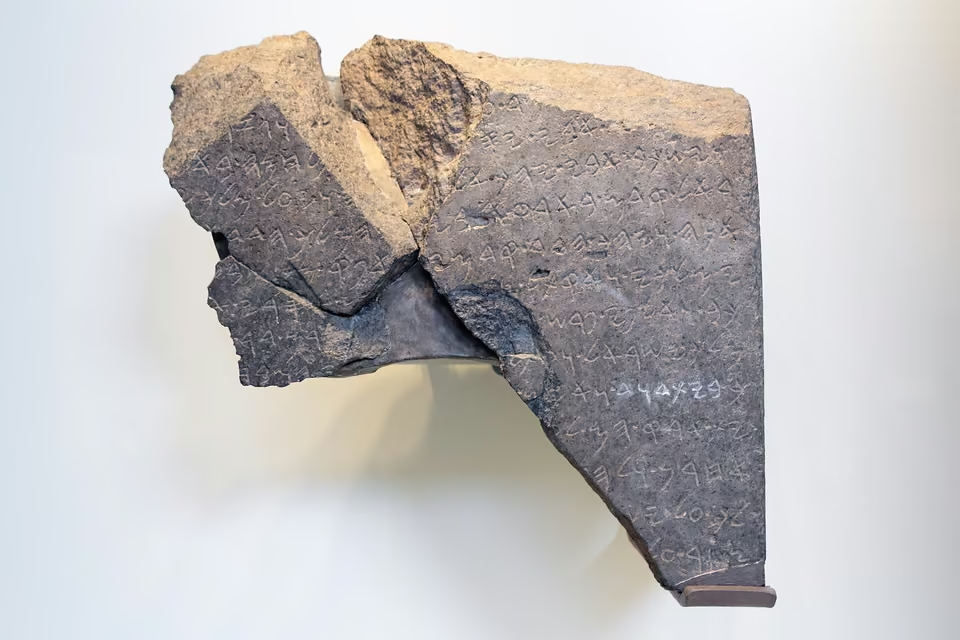
The finds also have limits. Inscriptions record what people said and did; they cannot reveal the nature of the being they addressed. The Egyptian lists may not refer to a god at all, and the asherah inscriptions turn on one disputed word. The dates of objects, often a single century wide, depend on pottery sequences and radiocarbon calibration that scholars continue to refine. No find so far identifies Yahweh with a hostile or adversarial figure. The developed Satan of later literature, described in part 1, appears in texts centuries later than these objects, and nothing in the archaeological record connects the two.
A Muslim reader will recognise the pattern. The Quran describes communities that received a message of one God and then mixed it with the worship of other powers, and it presents the prophets as calling them back. The archaeology of Israel and Judah shows that the people the prophets addressed did indeed worship in many ways. It cannot say which way was true, a question for theology, taken up from an Islamic perspective in part 5.
The bottom line
Archaeology has made the early history of Yahweh worship richer and more complicated. It shows a god associated with the south, worshipped in regional forms, sometimes paired with an asherah, served at royal shrines that later reformers closed, and spoken of in the same terms as the national gods of Israel’s neighbours. It does not show who Yahweh is, and it gives no support to the claim that he is Satan. For how the Quran and Muslim scholarship relate the God of Abraham عليه السلام to the God of the Bible, see 7 reasons why Allah of the Quran is the same God as the God of the Bible.
Notes
- Raphael Giveon, Les bédouins Shosou des documents égyptiens (Leiden: Brill, 1971); Titus Kennedy, “The Land of the šꜣsw (Nomads) of yhwꜣ at Soleb”, Dotawo: A Journal of Nubian Studies 6 (2019): 175–192, https://escholarship.org/uc/item/07x6659z.
- Judges 5:4–5 and Deuteronomy 33:2, World English Bible.
- Michael C. Astour, “Yahweh in Egyptian Topographic Lists”, in Festschrift Elmar Edel, ed. M. Görg and E. Pusch (Bamberg, 1979); Donald B. Redford, Egypt, Canaan, and Israel in Ancient Times (Princeton: Princeton University Press, 1992).
- Faried Adrom and Matthias Müller, “The Tetragrammaton in Egyptian Sources: Facts and Fiction”, in The Origins of Yahwism, ed. Jürgen van Oorschot and Markus Witte (Berlin: De Gruyter, 2017); Daniel E. Fleming, Yahweh before Israel: Glimpses of History in a Divine Name (Cambridge: Cambridge University Press, 2020).
- Ze’ev Meshel et al., Kuntillet ʿAjrud (Horvat Teman): An Iron Age II Religious Site on the Judah–Sinai Border, ed. Liora Freud (Jerusalem: Israel Exploration Society, 2012).
- Shmuel Aḥituv, Esther Eshel and Ze’ev Meshel, “The Inscriptions”, in Meshel et al., Kuntillet ʿAjrud, inscriptions 3.1 and 3.9.
- Habakkuk 3:3, World English Bible.
- William G. Dever, Did God Have a Wife? Archaeology and Folk Religion in Ancient Israel (Grand Rapids: Eerdmans, 2005).
- Judith M. Hadley, The Cult of Asherah in Ancient Israel and Judah: Evidence for a Hebrew Goddess (Cambridge: Cambridge University Press, 2000); compare Deuteronomy 16:21 and 2 Kings 17:16.
- William G. Dever, “Iron Age Epigraphic Material from the Area of Khirbet el-Kôm”, Hebrew Union College Annual 40–41 (1969–1970): 139–204.
- Ziony Zevit, “The Khirbet el-Qôm Inscription Mentioning a Goddess”, Bulletin of the American Schools of Oriental Research 255 (1984): 39–47; Judith M. Hadley, “The Khirbet el-Qom Inscription”, Vetus Testamentum 37 (1987): 50–62.
- Baruch Margalit, “Some Observations on the Inscription and Drawing from Khirbet el-Qôm”, Vetus Testamentum 39 (1989): 371–378.
- Ze’ev Herzog, “The Fortress Mound at Tel Arad: An Interim Report”, Tel Aviv 29 (2002): 3–109.
- Eran Arie, Baruch Rosen and Dvory Namdar, “Cannabis and Frankincense at the Judahite Shrine of Arad”, Tel Aviv 47, no. 1 (2020): 5–28.
- Herzog, “The Fortress Mound at Tel Arad”; 2 Kings 18:4, World English Bible.
- Yohanan Aharoni, Arad Inscriptions (Jerusalem: Israel Exploration Society, 1981).
- Shmuel Aḥituv, Echoes from the Past: Hebrew and Cognate Inscriptions from the Biblical Period (Jerusalem: Carta, 2008), 389–418; Louvre, AO 5066; Kanaanäische und Aramäische Inschriften (KAI) 181.
- 2 Kings 3:4–5, World English Bible.
- Mesha Stele, lines 14–18, in Aḥituv, Echoes from the Past.
- Mesha Stele, lines 4–9, in Aḥituv, Echoes from the Past.
- Judges 11:24, King James Version.
- Raz Kletter, The Judean Pillar-Figurines and the Archaeology of Asherah, BAR International Series 636 (Oxford: Tempus Reparatum, 1996).
- Erin Darby, Interpreting Judean Pillar Figurines: Gender and Empire in Judean Apotropaic Ritual, Forschungen zum Alten Testament 2/69 (Tübingen: Mohr Siebeck, 2014).
- Paul W. Lapp, “The 1968 Excavations at Tell Ta’annek”, Bulletin of the American Schools of Oriental Research 195 (1969): 2–49; Othmar Keel and Christoph Uehlinger, Gods, Goddesses, and Images of God in Ancient Israel (Minneapolis: Fortress, 1998).
- Shua Kisilevitz, “The Iron IIA Judahite Temple at Tel Moza”, Tel Aviv 42 (2015): 147–164.
- Jeremiah 7:18 and 44:17–18, World English Bible.
- 2 Kings 23:4–7, World English Bible.
- Mark S. Smith, The Early History of God: Yahweh and the Other Deities in Ancient Israel, 2nd ed. (Grand Rapids: Eerdmans, 2002); Ziony Zevit, The Religions of Ancient Israel: A Synthesis of Parallactic Approaches (London: Continuum, 2001); Thomas Römer, The Invention of God, trans. Raymond Geuss (Cambridge, MA: Harvard University Press, 2015).


Leave a Reply