
Much of the argument over the Quran and the earlier books runs on a few verses and a few stories. A verse is quoted for the Torah, a verse for the Gospel, a story is set beside its Bible parallel, and each side declares the matter closed. Read slowly, the verses say less than either side wants, and a few of them say more.
These seven points go through the claims that come up most often, and grade each by how far the evidence reaches. Some favour the Muslim reading and some do not. The larger arguments are in The Islamic Dilemma and Did Islam teach that the Bible was corrupted?. This article stays with the verses themselves and the first-hand sources they point to. It does not name those who make the claims.
Number 1: No verse calls the Torah or the Gospel preserved, and one verse says the Torah is with them
The Quran says that the Torah and the Gospel were sent down, and it says what they held. The Torah held “guidance and light” (5:44). The Gospel held “guidance and light” and confirmed the Torah (5:46). It uses the word for guarding on only one subject: “indeed, it is We who sent down the message, and indeed, We will be its guardian” (15:9). For the Torah it says something weaker. The prophets and rabbis judged by it “by that with which they were entrusted of the Scripture of Allah” (5:44). A thing entrusted is a thing that can be neglected.[1]
The strongest verse for the other side is 5:43: “how is it that they come to you for judgement while they have the Torah, in which is the judgement of Allah?” The verse speaks of a Torah in the hands of the Jews of Medina, and it says that it contains a ruling from God. A Muslim can say that a text may contain a ruling from God and still be mixed with other things. That reading is possible, and it is also the harder one to hold with the verse in front of you.

Strength: moderate. The silence on preservation is real. So is 5:43, and a fair reader should say so.
Number 2: The Quran cites the Gospel for a promise that the four Gospels do not contain
Quran 9:111 says that God has bought from the believers their lives and property for Paradise, that they fight in his cause, kill and are killed, and that this is “a true promise binding upon Him in the Torah and the Gospel and the Qur’an”.[2] A reader who turns to the four Gospels will find sayings about losing one’s life for Jesus and finding it (Matthew 10:39, 16:25, Mark 8:35) and a reward in heaven for those who are reviled (Matthew 5:11–12). Nobody will find a promise of Paradise for those who fight, kill and are killed.[3]
The Torah does not carry the wording either. So the verse is not quoting the books in the form we have them, and that is true whichever side one takes. The Muslim answers are two. One is that the Injīl is what God gave to Jesus, which the four Gospels carry in part (see Where is the Injīl?). The other is that the promise is one of substance, not of wording: God rewards those who give their lives for him.
Strength: moderate. The gap is real. The first answer works only if the Injīl is not the four Gospels, and the second explains the verse without finding the words.
Number 3: The books are said to describe the Prophet, and the descriptions are not where Christians look
Quran 7:157 speaks of the unlettered prophet “whom they find written in what they have of the Torah and the Gospel”. The verse can be read in two ways. Either the passages once stood in the books and were lost or changed, or they stand in passages that Muslims and Christians read differently (see Deuteronomy 18 and the Paraclete). The Quran does not give a chapter and verse, and neither can anyone who reads only the verse.
The verse is a poor tool for either side. A Muslim who offers it as proof of textual loss assumes the claim that the Prophet ﷺ is described there. A critic who offers it as proof that the Quran got the books wrong assumes that the Quran is speaking of the books as they now read. The phrase “what they have” also tells against a total loss, because it presupposes that some copy carried the description when the verse was revealed.
Strength: thin as proof in either direction. The verse is consistent with the Muslim view and does not establish it.

Number 4: Moses' hand: the Bible says leprous and the Quran says white without disease
In Exodus 4:6–7 God tells Moses عليه السلام to put his hand inside his cloak. When he takes it out his hand is “leprous, as white as snow”, and when he puts it in again and takes it out it is restored. In the Quran the same sign is described as a hand that comes out “white without disease” (20:22, 27:12, 28:32).[4] The Arabic is min ghayri sūʾ, and it denies illness.
The two accounts agree on the colour and the restoring, and differ on whether the whiteness was disease. A Muslim reader takes the Quran as the correction, since the sign was a miracle and not an affliction. That reading is natural to anyone who already accepts the Quran. For a reader who does not, the difference proves little by itself: it could be the same story told in two traditions, as with many of the stories the two books share.
Strength: thin as an argument to outsiders, and a fair part of the Muslim reading of the Quran as a criterion.
Number 5: Abraham's visitors: Genesis opens with the Lord and the Quran with messengers
Genesis 18:1 says that the Lord appeared to Abraham عليه السلام by the oaks of Mamre, and the next verse says he looked up and saw three men. Abraham addresses one as “my lord” (18:3), and in 18:22 the men go toward Sodom while Abraham “stood yet before” the Lord. Genesis 19:1 then says that “the two angels” came to Sodom. The Quran tells the scene as a visit of “Our messengers”, who are angels, and as the “honoured guests of Abraham” (11:69; 51:24).[5] It does not open with an appearance of the Lord.
The difference is real, but the Quran is not alone in how it reads the scene. The Talmud, in Bava Metzia 86b, says that the three men were the ministering angels Michael, Gabriel and Raphael.[6] So the Quran tells the visit in the way an old Jewish reading did. A Christian will point to the opening line of Genesis 18 and to Abraham’s words as evidence of an appearance of God, and the verses allow that reading too.
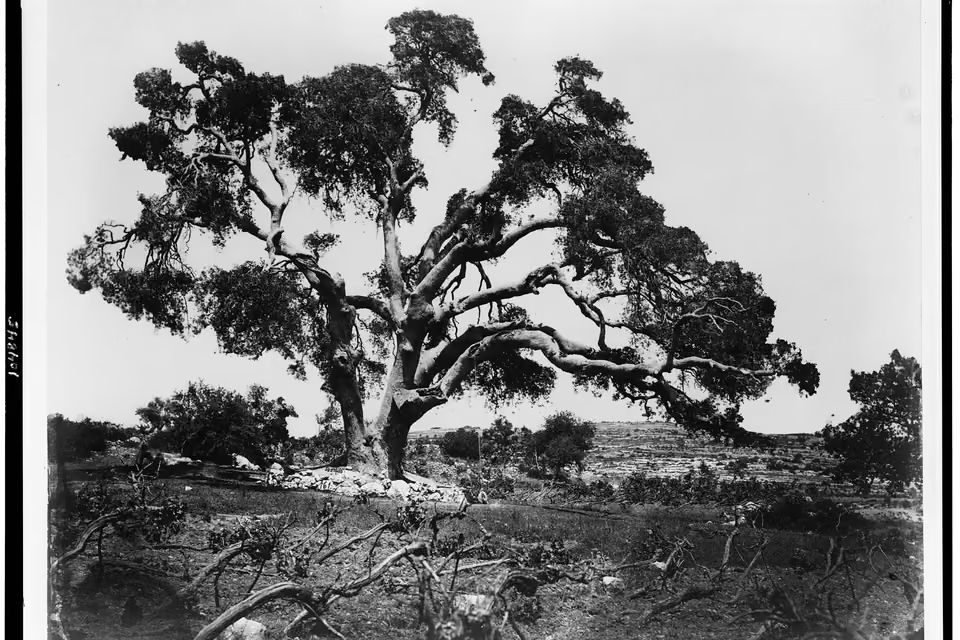
Strength: moderate. The difference is plain, and it does not prove alteration, because it matches a reading that was current among Jews.
Number 6: "Judge by what Allah revealed therein" does not make the whole text sound
Quran 5:47 tells the People of the Gospel to “judge by what Allah has revealed therein”, and warns that those who do not are the defiantly disobedient. Ibn Kathir records two Muslim readings. One is that the command applied to the Christians before the Quran came, and the other is that it covers everything in their book, including the foretelling of the Prophet ﷺ.[7] Either reading allows what the surrounding verses say about the Jews: that they come to the Prophet for judgement while they have the Torah (5:41–43) and are blamed for turning from a ruling they say they believe.
A command to follow a ruling does not by itself vouch for every line of the book that holds it. That is a point of logic, and the Quran adds its own rule for the mixed state: it is “a criterion over” what came before (5:48). A critic will answer that a God who knows the future would have told Christians that their Gospel had changed. The Muslim reply is that 3:85 and 5:48 do tell them, in the criterion and in the command to follow the final messenger.
Strength: moderate. The logic is sound. The verses 5:41–43 are the strongest on the other side, as in the first entry.
Number 7: The setting and the scholars: no known Arabic Bible, and a claim about the classical consensus
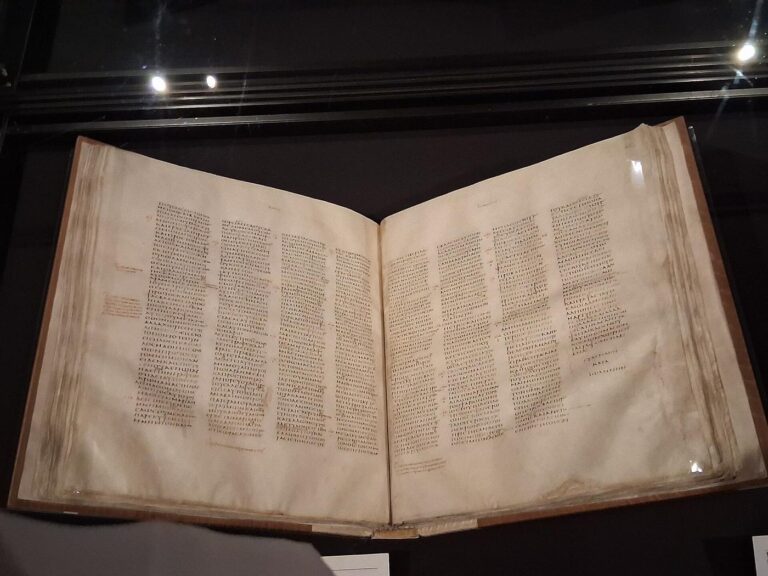
No written Arabic Bible from before Islam is known. Sidney Griffith, in his study of the Bible in Arabic, concludes that there is no clear documentary evidence of one.[8] That shows only that none has survived or been found. It does not show that none ever existed. The Arabic manuscripts we have date from about the ninth century, and the earliest Arabic Gospel manuscript reported is dated to about the year 800. In the seventh century the Christians near the Prophet ﷺ would have read scriptures in languages such as Greek, Syriac or Ge’ez. So when the Quran says “Tawrāt” and “Injīl” it is using Arabic names for revelations. On the evidence we have, the books it points to were not in Arabic, though a lost Arabic text cannot be ruled out.
It is sometimes said that the classical scholars never differed on the matter, and that no one before modern times held that the Bible as it stood was sound. The second half is close to the truth: the classical writers who dealt with it held that the Jews and Christians had altered the books in some sense. The first half is overstated. Classical writers differed on whether the alteration was of the wording or of the meaning, and the grading in Did Islam teach that the Bible was corrupted? sets out both camps.

Strength: moderate on the Arabic Bible, since it rests on absence of evidence, and moderate on the classical consensus, which holds in outline and not in the detail.
The bottom line
The verses do less than the dilemma wants and more than the objection to it wants. Five points are moderate: no verse says the Torah or the Gospel was preserved while 5:43 speaks of a Torah in Medina, the promise in 9:111 is not found in the Gospels or the Torah as we have them, Abraham’s visitors match an older Jewish reading, the command to judge by the Gospel does not vouch for every line, and no Arabic Bible from the Prophet’s time is known (which shows absence of evidence and no more). Two points are thin: the description of the Prophet in 7:157 and the difference over Moses’ hand settle nothing for either side without independent evidence.
The Muslim position, as Ismail al Faruqi stated it, recognises the divine base of the earlier books and ascribes their historical growth to human effort.[9] The verses fit that position. They do not prove it, and an honest reader of the Quran should say where they stop. Allāhu aʿlam.
Notes
- Quran 5:43, 5:44, 5:46 and 15:9, Saheeh International translation, read on the Quran.com API.
- Quran 9:111, same translation and source.
- Matthew 10:39, 16:25, Mark 8:35 and Matthew 5:11–12, World English Bible, read on bible-api.com.
- Exodus 4:6–7, World English Bible; Quran 20:22, 27:12 and 28:32, Saheeh International. The Arabic phrase min ghayri sūʾ is from the Quranic text.
- Genesis 18:1–3, 18:22 and 19:1, World English Bible; Quran 11:69 and 51:24, Saheeh International.
- Babylonian Talmud, Bava Metzia 86b, in the English translation of Rabbi Adin Steinsaltz on Sefaria.org (read there; no printed page checked).
- Ibn Kathir, Tafsīr, vol. 3, pp. 127–128, on 5:47–48 (Shamela text, shamela.ws/book/8473/1392 and 1393). Quran 5:41–43, 3:85 and 5:48, Saheeh International.
- Sidney H. Griffith, The Bible in Arabic: The Scriptures of the “People of the Book” in the Language of Islam (Princeton: Princeton University Press, 2013); the conclusion on pages 41–42 is as quoted in a secondary source and was not checked in the printed book. The dates of the earliest Arabic Gospel manuscripts follow a summary of Kashouh, The Arabic Versions of the Gospels (De Gruyter, 2011), also read second-hand.
- Ismail R. al Faruqi, Essential Writings, ed. Imtiyaz Yusuf (Leesburg, Va.: Center for Islam in the Contemporary World, and Petaling Jaya: Islamic Book Trust, 2021), “Islam and Other Faiths: The History”, p. 46.




_-_Bonfils_LCCN92500736.jpg)

Leave a Reply