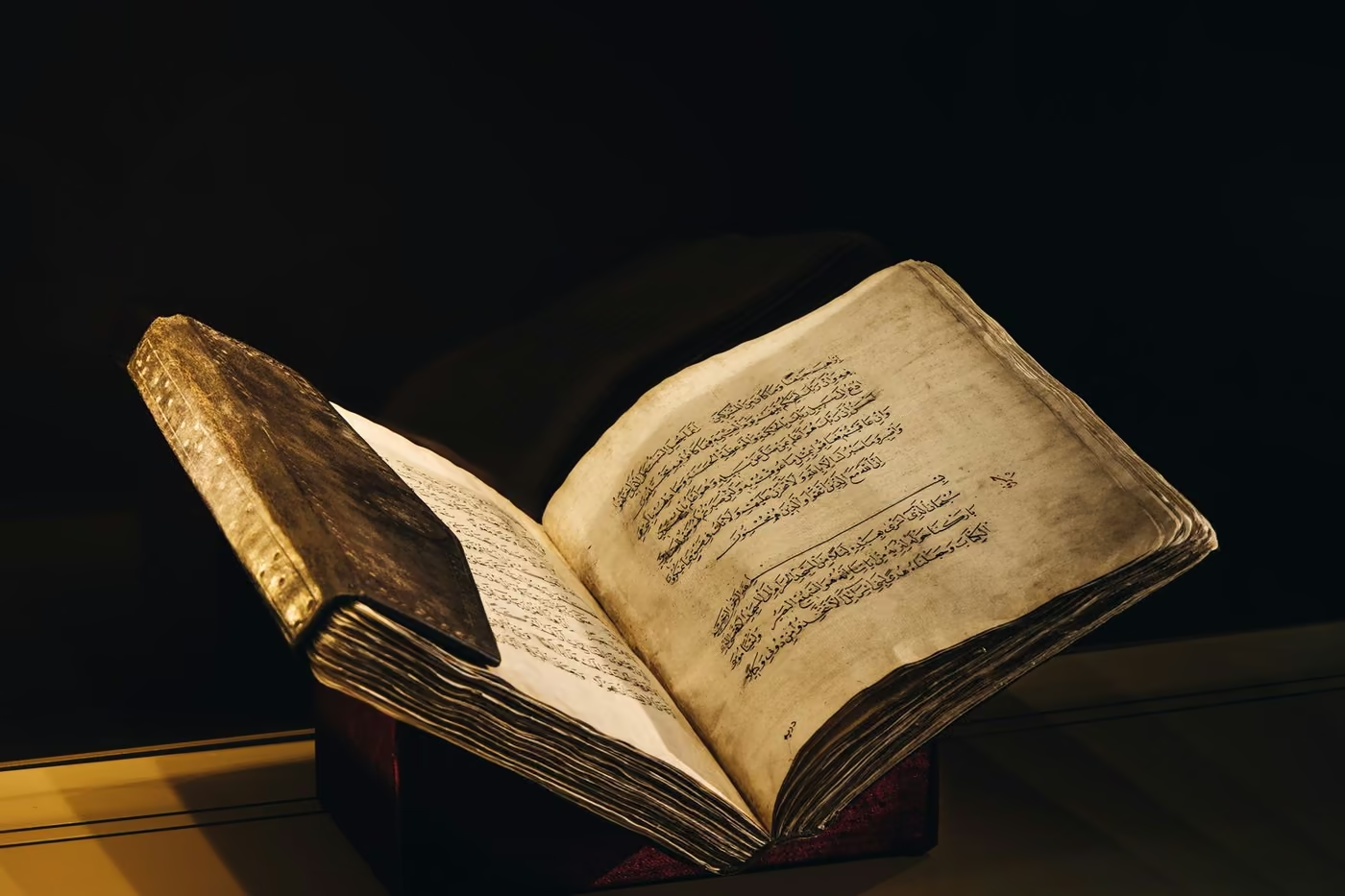
A common claim among Christian apologists is that Islam endorses the Bible as Christians hold it today, and that the charge of corruption was invented by later Muslims. Muslim writers reply with a list of verses, reports of the Prophet ﷺ and sayings of scholars.[1] Each side tends to quote what suits it.
These seven points grade that list by strength. Some of the evidence is firm and some is thin, and each entry says which. The argument that the Quran confirms the earlier books has its own article, The Islamic Dilemma. This one asks what Islam itself teaches about the history of the text. The Muslim position, as Ismail al Faruqi stated it, honours the revelation and examines the record: Islam “recognized the divine base of both and ascribed the historical growth to human effort, whether well or ill-meaning”.[2]
Number 1: Taḥrīf names two things, and Muslim scholars hold both
Taḥrīf, the Arabic word for distortion, covers two different acts. Taḥrīf al-lafẓ is a change in the wording, by addition, removal or substitution. Taḥrīf al-maʿnā is a change in the meaning, by reading a text wrongly while the words stay as they were. The two are easy to run together, and most online argument on both sides does.
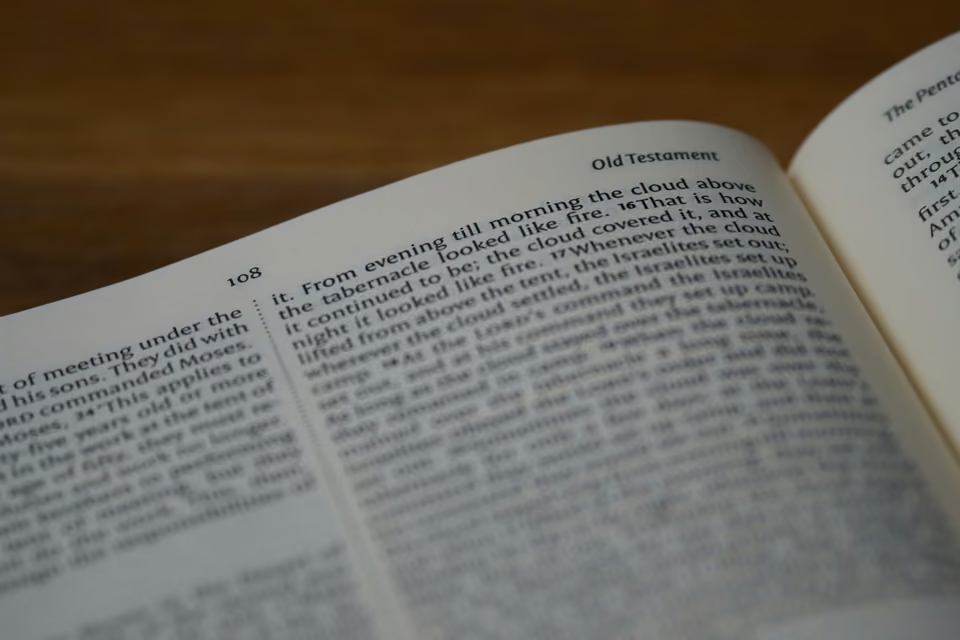
Muslim scholars held both. Al-Ṭabarī explains “they distort words from their places” in 4:46 as changing the meaning and the interpretation.[3] Ibn Taymiyya, surveying the debate, wrote that most Muslims hold that some of the words were changed, as many of the meanings were, while some hold that the change was in the meanings and not the words.[4] Al-Qurṭubī, on 5:13, first glosses the phrase as interpreting the text other than as it should be interpreted, and adds that “it is said” they also changed its letters.[5]
A gloss in one of al-Bukhārī’s chapter headings is cited for the second school. It says that no one can remove a word from any of God’s books and that the distortion is misinterpretation. Ibn Ḥajar could not find a sound chain tracing it to Ibn ʿAbbās and found it instead from Wahb ibn Munabbih.[6] The gloss still shows that the view was held early.
Strength: settled on one point. Both readings exist inside the tradition. Which one is right is the question the next six entries test.
Number 2: The Quran charges some People of the Book with writing and altering, and names no manuscript
Four verses carry the Quranic charge. Quran 2:79 speaks of those who write the scripture with their own hands, then say that it is from God, to sell it for a small price. Quran 4:46 and 5:13 say that some distort words from their places. Quran 3:78 says that a party among them twist the Book with their tongues, so that the listener thinks the twisting is from the Book.[7]
The verses point in two directions. Writing with the hands changes a text, and twisting with the tongue changes a reading. A fair reader grants that the Quran contains both charges. Neither is aimed at a named manuscript, a century or a city. The Quran says that some people wrote their own words and passed them off as revelation. It does not say that every copy of the Torah or the Gospel in the seventh century had been rewritten.
Some writers add 4:157, on the crucifixion, to the list. That verse says that those who claim to have killed the Messiah follow conjecture.[8] It speaks of an event and says nothing about a text. A Muslim who cites it as proof of textual corruption is arguing from the conclusion, and the argument should be dropped.
Strength: firm that the Quran charges falsification. The extent of the change is left open.
Number 3: The saying most often cited carries less weight than it seems
The report most often quoted as the Prophet’s own word on the matter comes from Muʿādh ibn Jabal. In Syria he saw Christians prostrating to their bishops and Jews to their rabbis, who told him it was the greeting of the prophets. He thought the Prophet ﷺ deserved the same. The Prophet ﷺ forbade it, and in one version said that they lied about their prophets just as they distorted their book.[9]
The sentence about distortion appears in Muʿādh’s version, which al-Ḥākim and al-Dhahabī graded to the standard of the two Sahihs. The parallel report from ʿAbdullāh ibn Abī Awfā has the same scene and the same prohibition and lacks the sentence.[10] The sentence therefore rests on one line of narration, however well graded. The words also place lying and distorting side by side, which fits taḥrīf in either of its two senses, so the report cannot decide between them.
A critic presses an objection with some force. The Quran itself tells of prostration to a person: the angels to Adam (2:34), and Joseph عليه السلام’s parents and brothers to Joseph (12:100). If Jews and Christians said that prophets were greeted by prostration, were they lying? The critic concludes that the Prophet ﷺ either contradicted the Quran or accused them falsely.
The classical commentators answer it. Ibn Kathir, on 12:100, writes that prostration as a greeting to a greater person was lawful in the earlier laws, that it stayed lawful from Adam to the law of Jesus, and that it was then forbidden in this community. He quotes the report of Muʿādh in the same place.[11] The Quran and the report therefore agree that earlier laws allowed it. The report objects to something else: clergy borrowing a custom of the prophets to claim for themselves the honour the Prophet ﷺ refused for himself. The angels bowed to Adam at God’s command, and Joseph’s family bowed to a ruler in a household greeting. A bishop who demands prostration on the strength of the prophets’ example is in neither case.
Strength: moderate. The chain is graded well. The weight is limited because only one version has the sentence and because the wording fits taḥrīf in either sense, so the reading that they misread their scripture stays open.
Number 4: Ibn ʿAbbās said the People of the Book changed it and wrote with their hands
The firmest report comes from the Companion Ibn ʿAbbās. In al-Bukhārī he asks the Muslims how they can question the People of the Book when their own book is the newest news from God, which they read pure and unmixed. He says that God has told them that the People of the Book changed what God wrote and altered it, and wrote the book with their own hands.[12]
The wording leans toward the text, because “wrote the book with their hands” echoes 2:79. Ibn ʿAbbās does not say how much was changed or when. The Companion Ḥudhayfa’s warning to ʿUthmān is sometimes added to the case. He asked that the Muslims be saved before they differed over the Book as the Jews and Christians had.[13] That is a remark about disputes over reading a scripture. It carries little weight as evidence that a text was altered.
Strength: firm for Ibn ʿAbbās, thin for Ḥudhayfa. Ibn ʿAbbās is the earliest voice in the collection who says that the text was changed.
Number 5: Reports that the Torah held what the Bible lacks are thin evidence
A long set of reports has Companions and converts quote the Torah or Gospel for words the Bible does not contain. ʿAbdullāh ibn ʿAmr tells ʿAṭāʾ ibn Yasār that the Torah describes the Prophet ﷺ in terms that echo the Quran, including that he is “not harsh nor rough, nor a noise-maker in the markets”.[14] Kaʿb al-Aḥbār and other converts give further descriptions. The argument is that the passages are missing from the Bible today, so they were removed.

The argument has three gaps. First, Isaiah 42 contains lines of the same kind: God’s servant will not shout or cry out or raise his voice in the street.[15] The report may carry a paraphrase of such passages and not a lost verse. Second, the narrators were Jewish converts, and the Prophet ﷺ gave a rule for what the People of the Book report: do not believe it and do not reject it.[16] Third, an argument from absence cannot tell a lost text from a text remembered in other forms. Those who make the argument grant this when they say that a convert may have known the passage by oral tradition.
These reports show that early Muslims believed the earlier books had once contained descriptions of the Prophet ﷺ. They do not show how the descriptions left the text, or that they did.
Strength: thin. The reports are real, and what they prove is smaller than what is claimed for them.
Number 6: The classical scholars lean to altered wording, with exceptions
Ibn Ḥazm of Cordoba (d. 1064) argued that the Christians themselves do not say God sent the four Gospels down to Jesus. They agree, he wrote, that these are four histories written by four known men at different times.[17] On the Torah he held that the Jews’ claim for their own copy had to be disproved, and he set out to disprove it.

Ibn al-Qayyim (d. 1350) set out the whole field in Ighāthat al-Lahfān. He lists three views. One group said that all or most of the Torah in people’s hands is altered. Imams of hadith, law and theology said that the change happened in interpretation and not in the revelation; the text names al-Bukhārī, and al-Rāzī as having chosen it in his commentary. A third group said that things were added and a few words were changed, but that most of it remains as it was sent down. He attributes the third view to “our shaykh” in al-Jawāb al-Ṣaḥīḥ, which points to Ibn Taymiyya.[18]
Ibn al-Qayyim’s own position sits closest to the third. He writes that the Torah in circulation contains much of what God revealed, and in the same passage he declines to say that it remains “as it was sent down in every respect, like the Quran”.
Strength: firm that both views exist. The majority of classical writers held that some wording changed, and a recognised minority held that only meaning did.
Number 7: The strongest objection: God's words cannot be changed, and the Prophet honoured the Torah
The strongest case against changed wording has two parts. The first is 6:115, “none can change His words”. The second is the Prophet’s conduct when a Jewish couple was brought to him for judgment. He asked for the Torah to be read, a man covered the verse with his hand, the verse about stoning was uncovered, and the Prophet ﷺ applied it.[19] Some scholars argued from both that the Torah in Medina was intact.

On 6:115 Ibn Kathir explains the “word” as God’s report, true in what it says, and His ruling, just in what it commands. “None can change” means that no one can overturn His decision, in this world or the next.[20] A scribe can rewrite a page. No scribe can overturn what God has decreed. The Quran also marks the difference between the books. The Torah was entrusted to its people to guard (5:44), and the Quran carries God’s own promise of protection (15:9). Sufyān ibn ʿUyayna made that point in a story that al-Qurṭubī tells on 15:9, where the earlier books were left in human custody and God kept the Quran.[21] The story itself is an anecdote and is not counted here as evidence.
The stoning report shows a Torah that held the ruling and a community that hid it. That is the mixed state of entry 1 and it matches the way the Quran describes the offenders, who hid some of what they held and displaced some of it (5:15 and 5:41). It does not show that every verse survived. A Muslim who offers it as proof of textual loss misuses it, and a critic who offers it as proof of integrity misuses it the other way.
The Quran also gives a rule for the mixed state. It calls itself a trustee and a criterion over the earlier books, so that what agrees with it is accepted and what contradicts it is set aside.[22]
Strength: serious. The objection shows that the intact-text view is a Muslim position. It does not remove the evidence in entries 2 to 4.
The bottom line
On the evidence graded here, Islam teaches that the Torah and the Gospel were revelations from God, and that human hands later wrote and altered, passing their own writing off as revelation. Three points are firm: the Quran charges falsification, Ibn ʿAbbās said the text was changed, and the classical scholars held that at least some of the wording changed, with a minority holding that only the meaning did.
Four points are thin: the sentence in Muʿādh’s report, the descriptions said to be missing, the argument from 4:157 and the remark of Ḥudhayfa. No verse or report lists which passages changed. For that reason the Quran is the criterion over the earlier books, and what the earlier books say about the Prophet ﷺ is weighed against it, as 5:48 says.
So the claim that Islam endorses the Bible as Christians hold it fails, and so does the claim that Islam calls it a forgery. The Islamic position is a third one: a mixture of revelation and later writing, which the Quran tells the reader how to sort. Allāhu aʿlam.
Notes
- The list of reports in entries 3 to 6 follows Bassam Zawadi, “Evidence That Islam Teaches That There Was Textual Corruption of the Christian and Jewish Scriptures”. Each reference below was rechecked where a source could be read, and the ones that could not be checked are marked.
- Ismail R. al Faruqi, Essential Writings, ed. Imtiyaz Yusuf (Leesburg, Va.: Center for Islam in the Contemporary World, and Petaling Jaya: Islamic Book Trust, 2021), “Islam and Other Faiths: The History”, p. 46.
- al-Ṭabarī, Jāmiʿ al-Bayān, ed. Mahmud Shakir (Dar al-Tarbiya wa al-Turath), vol. 8, p. 432, on 4:46 (Shamela text, shamela.ws/book/43/4515).
- Ibn Taymiyya, al-Jawāb al-Ṣaḥīḥ, vol. 2, p. 407 (Shamela text, shamela.ws/book/170/791).
- al-Qurṭubī, al-Jāmiʿ li-Aḥkām al-Qurʾān, on 5:13 (text read on quran.ksu.edu.sa; edition, volume and page not checked).
- Sahih al-Bukhari, Book of Tawhid, chapter on “Rather, it is a glorious Quran” (before no. 7553); Ibn Hajar al-Asqalani, Fath al-Bari (Salafiyya edition), vol. 13, pp. 522–523 (Shamela text, shamela.ws/book/1673/7953 and 7954).
- Quran 2:79, 3:78, 4:46, 5:13 and 5:41; compare 2:75 and 6:91.
- Quran 4:157.
- al-Ḥākim, al-Mustadrak, no. 7325 (Book of Dutifulness and Ties of Kinship), report of Muʿādh ibn Jabal, with the grade “to the standard of al-Bukhārī and Muslim” from al-Ḥākim and al-Dhahabī (text and grades read on hadithunlocked.com); al-Haythamī, Majmaʿ al-Zawāʾid, vol. 4, p. 312, grades the narrators as men of the sound collections. Zawadi also cites the Musnad of Ahmad; that reference was not found or checked.
- Ahmad, Musnad, no. 19403, and Ibn Majah 1853, report of ʿAbdullāh ibn Abī Awfā; graded good (jayyid) by Shuʿayb al-Arnāʾūṭ in his edition of the Musnad (text and grade read on surahquran.com). This version has the same scene and the same prohibition and lacks the sentence about distortion.
- Ibn Kathir, Tafsīr, on 12:100 (text read on quran.ksu.edu.sa; volume and page not checked); Quran 2:34 and 12:4.
- Sahih al-Bukhari 7363 (Book of Holding Fast to the Sunna, chapter “Do not ask the People of the Scripture about anything”), report of Ibn Abbas; Ibn Hajar, Fath al-Bari (Salafiyya edition), vol. 13, pp. 333–334 (Shamela text, shamela.ws/book/1673/7765).
- Sahih al-Bukhari 4987 (Book of the Virtues of the Quran, chapter on collecting the Quran), report of Anas ibn Malik. The number and the words “before they differ about the Book as the Jews and Christians did” were read on hadithunlocked.com. Ibn Hajar, Fath al-Bari (Salafiyya edition), vol. 9, pp. 17–18, comments on Ḥudhayfa’s alarm and the variant reports, and does not comment on the clause about the Jews and Christians (Shamela text, shamela.ws/book/1673/5106 and 5107).
- Sahih al-Bukhari 2125 (Book of Sales, chapter on shouting in the markets), report of ʿAṭāʾ ibn Yasār from ʿAbdullāh ibn ʿAmr ibn al-ʿĀṣ; Ibn Hajar, Fath al-Bari (Salafiyya edition), vol. 4, pp. 342–343, notes that ʿAṭāʾ may have taken the report from both ʿAbdullāh ibn ʿAmr and ʿAbdullāh ibn Salām (Shamela text, shamela.ws/book/1673/2632 and 2633).
- Isaiah 42:1–4.
- Sahih al-Bukhari 4485 (Commentary on 2:136), report of Abu Hurayra; Ibn Hajar, Fath al-Bari (Salafiyya edition), vol. 8, p. 170 (Shamela text).
- Ibn Ḥazm, al-Faṣl fī al-Milal wa al-Ahwāʾ wa al-Niḥal (Cairo: al-Khanji), vol. 2, pp. 2–3 (Shamela text, shamela.ws/book/6521/159).
- Ibn al-Qayyim, Ighāthat al-Lahfān, chapter 13, on the Torah in the hands of the People of the Book (Wikisource transcription, ar.wikisource.org; it names al-Bukhārī and al-Rāzī for the second view and gives no volume or page, so the printed edition was not checked).
- Sahih al-Bukhari 6841 (Book of Hudud, “The regulation for the people of the covenant”), report of Abdullah ibn Umar; Ibn Hajar, Fath al-Bari (Salafiyya edition), vol. 12, p. 166 (Shamela text). Quran 5:15, 5:41 and 5:43.
- Ibn Kathir, Tafsīr, on 6:115 (text read on quran.ksu.edu.sa; volume and page not checked); Quran 6:115.
- al-Qurṭubī, al-Jāmiʿ li-Aḥkām al-Qurʾān, on 15:9 (text read on quran.ksu.edu.sa; edition, volume and page not checked): the story told by Yaḥyā ibn Aktham and the comment of Sufyān ibn ʿUyayna; Quran 5:44 and 15:9.
- Ibn Kathir, Tafsīr, vol. 3, pp. 127–128, on 5:47–48 (Shamela text, shamela.ws/book/8473/1392 and 1393).




Leave a Reply