
The Gospel of Matthew says again and again that something happened “to fulfil” what a prophet had said. A Muslim reader is often told that these fulfilments prove Jesus ﷺ was more than the Quran says. A reader who checks the citations finds a mixed result. Some are quotations that fit the original closely. Some move the original to a new setting.
These eight cases put Matthew’s wording next to the passage he cites, and each entry says how far the match goes. The question is what the citations show about how Matthew read, and what they leave open. The larger question of how Christians and Muslims read earlier scripture is in A Christian twin of the Islamic dilemma?. This article does not name those who argue the point.
Number 1: Isaiah 7:14: a sign to Ahaz, read as a virgin birth
Matthew 1:23 quotes, “Behold, the virgin shall be with child, and shall give birth to a son. They shall call his name Immanuel.” In Isaiah 7:14 the Hebrew has ʿalmāh, a young woman, and the sign is given to King Ahaz at a time of war: the child will be born in the king’s own lifetime.[1] The Greek translation of the Hebrew Bible renders the word parthenos, which Matthew uses.

A Christian reads Matthew as showing a deeper fulfilment of a sign that had a nearer one. The wording differs, and the original context concerns Ahaz. A Muslim reader has no need of this verse, since the Quran teaches the virgin birth on its own authority (3:47).
Christian writers defend the method on the ground that a sign can have a first and a larger fulfilment, and that Matthew’s readers knew this way of reading. That defence is fair as an account of what Matthew did. It does not turn the verse into a prediction that its first hearers could have recognised in advance, and a Muslim who wishes to be exact should say only that.
Strength: firm that the citation moves the verse to a new setting. Whether that is a fault or a fulfilment depends on how a reader takes the method.
Number 2: Micah 5:2: Bethlehem is "small" in Micah and "in no way least" in Matthew
Matthew 2:5 to 6 has the scribes say that it is written, “You Bethlehem, land of Judah, are in no way least among the princes of Judah: for out of you shall come a governor, who shall shepherd my people, Israel.” Micah 5:2 says, “you, Bethlehem Ephrathah, being small among the clans of Judah, out of you one will come out to me that is to be ruler in Israel”.[2]
Matthew turns “small” into “in no way least”. He also adds the closing phrase about shepherding my people, which echoes 2 Samuel 5:2, where Yahweh says to David عليه السلام, “You will be shepherd of my people Israel”.[3] He has joined two texts and improved the first for his purpose.
The mismatch is useful to know when the verse is used in argument. A reader who is told that Micah predicted Bethlehem, and who looks the passage up, will find that the Hebrew says the town is small and that the ruler comes out of it. The claim that the town is not least is Matthew’s own comment on that fact, and it is made in the voice of the scribes in his story.
Strength: firm. The change is in the text of Matthew and is not a matter of interpretation.
Number 3: Hosea 11:1: a line about Israel in the past, applied to the child
Matthew 2:15 says that the child stayed in Egypt until Herod died, “that it might be fulfilled which was spoken by the Lord through the prophet, saying, ‘Out of Egypt I called my son’”. In Hosea 11:1 the line reads, “When Israel was a child, then I loved him, and called my son out of Egypt.” It is about the exodus, and it is in the past tense.[4]
Matthew is reading the story of Israel as a pattern that the story of Jesus repeats. The method is typology. Christians defend it as the way the New Testament reads, and a Muslim reader can see that the verse says nothing predictive. The quotation proves nothing about the child by its own wording.
Strength: firm that Hosea is speaking of the exodus. The typological reading is a reading.
Number 4: Jeremiah 31:15: Rachel weeps for exiles, and the next verses console her
Matthew 2:17 to 18 applies “A voice was heard in Ramah, lamentation, weeping and great mourning, Rachel weeping for her children” to the killing of the children of Bethlehem. In Jeremiah 31:15 the weeping is for the children of Israel taken away, and verses 16 and 17 console her: “Refrain your voice from weeping… Your children will come again to their own territory.”[5]

Matthew quotes the line of grief and leaves out the consolation. His reading is again a pattern: an earlier national grief answered by a new one. A reader who looks only at Matthew sees a prediction, and a reader who looks at Jeremiah sees a lament that ends in hope.
Strength: firm as to the context. What it shows about the method is a matter of judgement.
Number 5: "He shall be called a Nazarene" is in no book of the Hebrew Bible
Matthew 2:23 says that Joseph عليه السلام lived at Nazareth “that it might be fulfilled which was spoken through the prophets: ‘He will be called a Nazarene.’” No book of the Hebrew Bible contains those words.[6] Commentators have suggested a play on the word for a shoot in Isaiah 11:1, where “a shoot will come out of the stock of Jesse”, and on the idea of one set apart. That is a suggestion about what Matthew had in mind, and he does not say.
Matthew says “the prophets”, in the plural, which may mean he is summing up a theme and not quoting a line. A Christian reader may accept that. A critic notes that it is cited as a saying “spoken” and that no such saying exists.
Strength: firm that the words are not in the Hebrew Bible. The explanation is open.
Number 6: Matthew 27:9 to 10 names Jeremiah and quotes Zechariah
Matthew says the thirty pieces of silver given for the potter’s field fulfilled what was “spoken through Jeremiah the prophet”. The lines that follow come mainly from Zechariah 11:12 to 13: “they weighed for my wages thirty pieces of silver… Throw it to the potter”.[7] Jeremiah does speak of a potter and of buying a field (chapters 18, 19 and 32), and Matthew may be joining the passages and naming the better-known prophet.
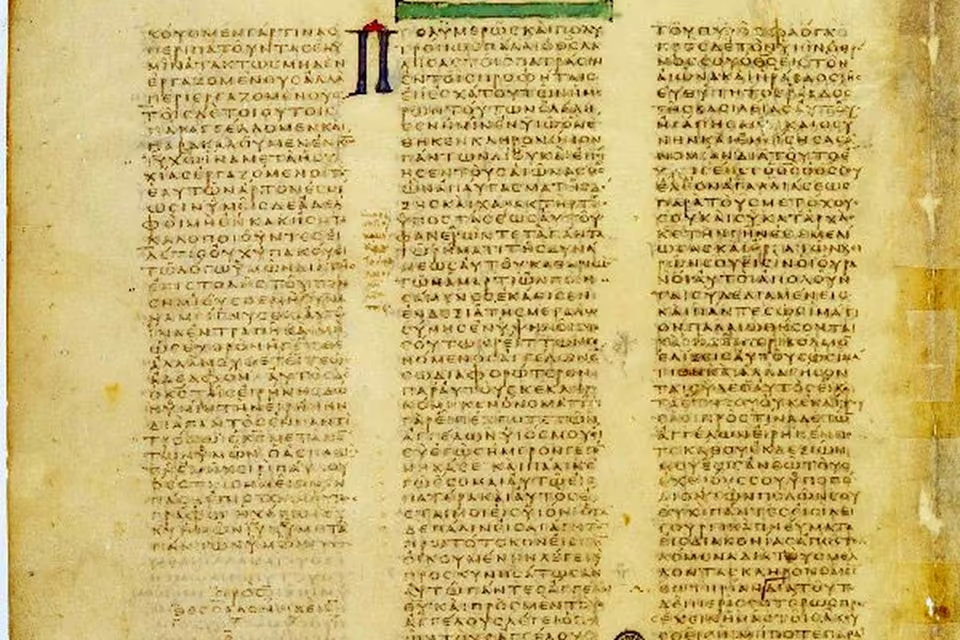
The naming of Jeremiah is the part that is hard to defend as a plain quotation. Some later copyists changed the name to Zechariah, which shows that early readers noticed it. Christians have long explained the matter as a composite citation, which is a possible account.
Defenders point out that ancient authors often named one prophet for a group of related texts, and that the Jewish collection of the prophets sometimes placed Jeremiah first. That explanation is offered in the commentaries and is plausible. It remains an explanation of a difficulty, and the difficulty is real: the passage Matthew quotes does not occur under Jeremiah’s name.
Strength: firm that the main text is Zechariah. The reason for naming Jeremiah is open.
Number 7: Zechariah 9:9: one animal in the Hebrew, two in Matthew
Zechariah 9:9 reads, “your King comes to you… lowly, and riding on a donkey, even on a colt, the foal of a donkey”. The Hebrew uses poetic parallelism, naming one animal twice. Matthew 21:2 to 7 has Jesus send for “a donkey tied, and a colt with her”, and says the disciples “laid their clothes on them; and he sat on them”.[8]
Matthew has taken the two phrases as two animals. Readers have long asked how a man sits on two animals, and the answer is usually that he sat on the clothes laid over them, or that the writer wished to follow the wording closely. The other Gospels mention one animal. The point here is how closely Matthew followed the surface of the words.
Strength: firm that the Hebrew names one animal in two lines. The reason Matthew has two is open.
Number 8: Isaiah 42:1 to 4: the nations "wait for his law" and then "hope in his name"
Matthew 12:17 to 21 quotes Isaiah’s servant song. Isaiah 42:4 ends, “the islands will wait for his law”. Matthew ends, “In his name, the nations will hope”.[9] The sense changes from waiting for the servant’s law to hoping in his name.
Matthew’s wording follows a Greek form of the verse and not the Hebrew, a point on which the New Testament often runs alongside the Greek translation of the Hebrew Bible. A Muslim reader has a reason to look at this verse for another purpose: it describes a servant who brings justice to the nations and waits for no law but God’s, and earlier Muslim writers have read it of the Prophet ﷺ. That reading is argued elsewhere and is not pressed here.
Strength: moderate. The difference is in the words. That Matthew followed the Greek is stated from general knowledge.
The bottom line
Six of the eight are firm as differences of wording or setting: Micah, Hosea, Jeremiah, the Nazarene saying, the naming of Jeremiah in 27:9 and the donkey and colt. Isaiah 7:14 is firm on context and open on method, and Isaiah 42 is moderate. In every case Matthew reads the older text in the light of Jesus, and the older text, read alone, says something nearer to its own setting.
None of this shows that Matthew was wrong in what he reported about Jesus. It shows that his “fulfilment” is a way of reading, close to the methods of the Qumran commentaries, and that a reader who expects a list of predictions will not find one. The Muslim reading, as Ismail al Faruqi put it, recognises the divine base of the earlier books and ascribes their historical growth to human effort, whether well or ill meaning.[10] Allāhu aʿlam.
Notes
- Matthew 1:23 and Isaiah 7:14, World English Bible, read on bible-api.com. The Hebrew ʿalmāh, the context of the sign to Ahaz and the Greek parthenos are stated from general knowledge and were not checked in a printed lexicon.
- Matthew 2:5 to 6 and Micah 5:2, World English Bible.
- 2 Samuel 5:2, World English Bible.
- Matthew 2:15 and Hosea 11:1, World English Bible.
- Matthew 2:17 to 18 and Jeremiah 31:15 to 17, World English Bible.
- Matthew 2:23 and Isaiah 11:1, World English Bible. The suggestion of a play on the word for a shoot is a commentators’ suggestion and no named commentary was checked.
- Matthew 27:9 to 10 and Zechariah 11:12 to 13, World English Bible. That some copyists changed the name Jeremiah is stated from general knowledge and was not checked in a printed apparatus; the references to Jeremiah 18, 19 and 32 are given as the chapters that speak of a potter and a field. The remark that Jewish tradition sometimes placed Jeremiah first among the prophets is stated from general knowledge (the order in the Babylonian Talmud, Bava Batra 14b) and was not checked on a page.
- Zechariah 9:9 and Matthew 21:2 to 7, World English Bible. That the other Gospels mention one animal is stated from general knowledge.
- Isaiah 42:1 to 4 and Matthew 12:17 to 21, World English Bible. That Matthew’s wording follows a Greek form of the verse is stated from general knowledge and was not checked against a printed text.
- Ismail R. al Faruqi, Essential Writings, ed. Imtiyaz Yusuf (Leesburg, Va.: Center for Islam in the Contemporary World, and Petaling Jaya: Islamic Book Trust, 2021), “Islam and Other Faiths: The History”, p. 46.


Leave a Reply