Two verses draw the same challenge. The Quran says some Jews called Ezra the son of God. It says Jesus will be asked whether he told people to take him and his mother as gods. Critics ask for the Jews and the Christians who believed either, and they say that the Quran has misunderstood both religions.
One of these has a clear answer. The other is a real difficulty, and I will treat it as one. The entries below take the Mary verse first, then the Ezra verse, and in each case they state the objection at its strongest before replying.
Number 1: The Quran never says Mary is part of the Trinity
The verse has God asking Jesus whether he told people to take him and his mother as two gods besides God, and Jesus denying it.[1] There is no mention of a Trinity in that verse, and no claim that Christians define God as Father, Son and Mary.
The Quran does address the Trinity, separately, when it rejects saying God is the third of three.[2] It also describes Mary in the next verses as a truthful woman who, like her son, ate food, which is a statement about her humanity.[2] Merging the verses into “Muslims think Mary is in the Trinity” creates a claim the text does not make. The critic’s best point is that no Christian church teaches that Mary is God. That is correct, and the verse does not say otherwise. It is a question put to Jesus on the Day of Judgement about whether he ever authorised worship of himself and his mother.
Number 2: Treating Mary as divine was a live practice near Arabia
Epiphanius of Salamis, writing around 376, describes women in Arabia who offered cakes to Mary as a goddess, and he rebukes them for worshipping her.[3] Some scholars doubt the sect existed as he describes it.

The point does not depend on that sect. The verse asks whether Mary was taken as a god. That is a question about worship, and the history of Marian devotion is long enough that a church father felt the need to warn against it.
Christians reply, with reason, that their churches distinguish the worship owed to God from the honour given to Mary, and that the Council of Ephesus in 431, which called her Theotokos (“bearer of God”), spoke about the person of Christ and not about Mary’s divinity.[4] The verse is consistent with that reply. It speaks of what ordinary believers may do, and its target is any practice that treats her as a rival to God, whatever the doctrine says.
Number 3: Ezra is the harder case, and it should be said
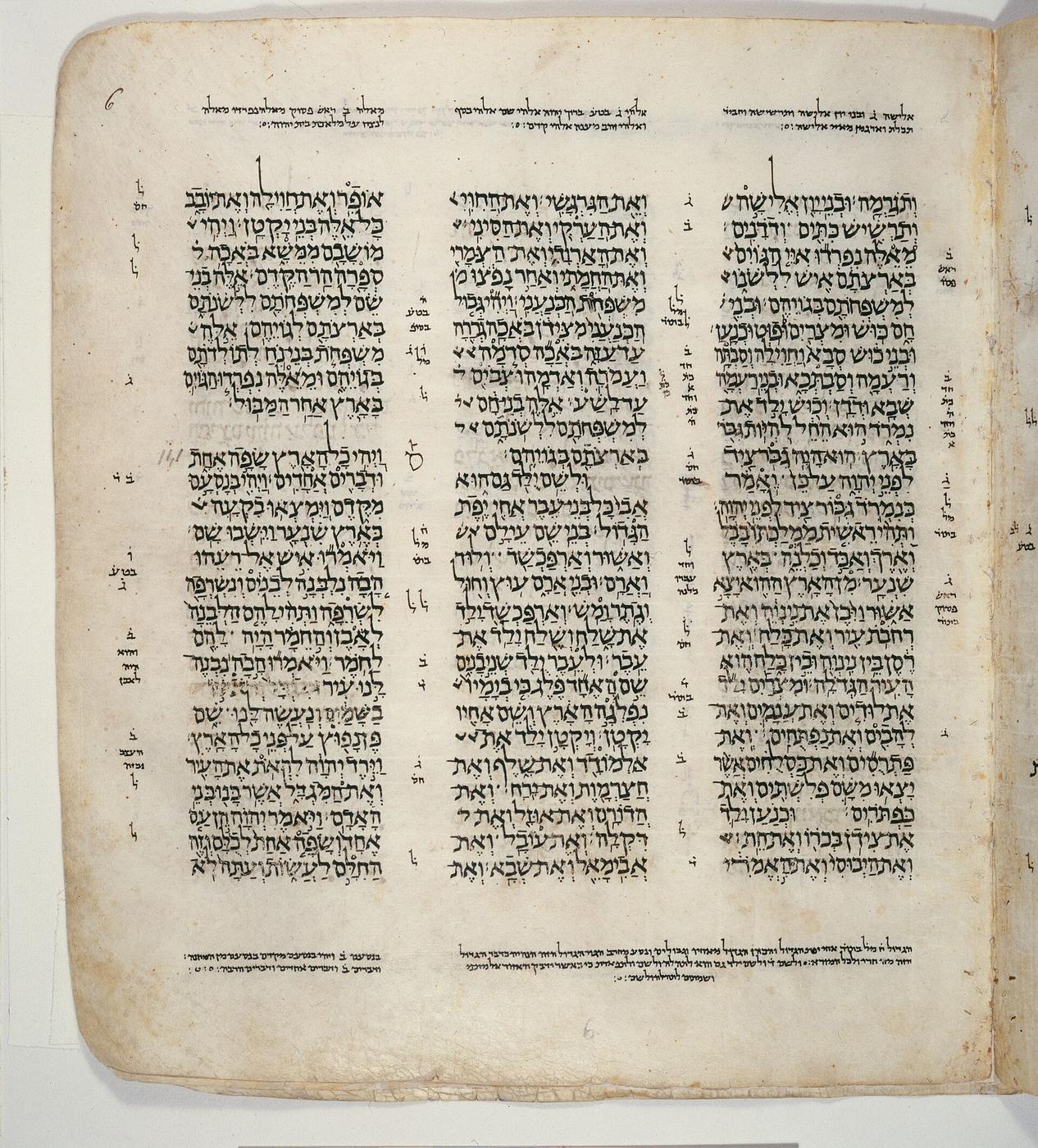
The Quran reports that some Jews said Ezra is the son of God.[5] No surviving Jewish text says this in those words. That is the honest starting point, and a Muslim who pretends otherwise hands the critic an easy win.
Jewish readers rightly add that mainstream Judaism has never taught that Ezra is divine, and that the charge has been painful to hear. The Quran’s wording is general: “the Jews say”. A Muslim answer cannot rest on proving that Judaism held this belief. It has to rest on two narrower claims, that the verse points at a particular group and that such a belief is imaginable in the language of the age.
Number 4: The verse speaks of some, in a particular place
Classical exegetes read the verse as describing a particular group within Judaism. The tradition names Sallam ibn Mishkam and his companions, Jews of Medina who disputed with the Prophet, among those who said it.[6] The Quran often names a whole community for the speech of some of its members, and the commentators read this verse in the same way.

The absence of a surviving Jewish text also proves less than it seems. As the historian F. E. Peters observed, the Quran is very nearly the only source for what Jews in seventh-century Arabia believed.[7] A belief held by one community in Medina could leave no trace in the rabbinic literature of Babylon and Palestine. The reverse also holds: the Medinan sources that report the saying are late, and they do not independently confirm it. A fair reader keeps both facts in view.
Number 5: Ezra held an exalted place in Jewish tradition
Ezra is remembered as the man who restored the Torah after the exile. The Talmud says that he was worthy of having the Torah given through him, had Moses not come first.[8] A text circulating in the early centuries has God tell him that he will be taken up from among men, to live with God’s son.[9] Scholars debate how that word should be translated, and the Latin text is later than the languages it came from.
“Son of God” was also a title that Jewish scripture applied to Israel and its kings, and Jewish writings called angels the children of God.[10] The Quran knows the idiom as a claim to nearness, since it quotes both Jews and Christians as saying “we are the children of God and His beloved”.[11] An exaltation of Ezra expressed in that vocabulary, among one community, is not far-fetched.
It is also not proven. Honesty requires saying both.
The bottom line
On Mary, the objection attacks a claim the Quran does not make. The verse concerns what Jesus authorised, it says nothing about Trinitarian doctrine, and the history of devotion to Mary gives it a plain context. On Ezra, the absence of a surviving text is real, and the answer rests on the verse’s first audience and on Ezra’s standing in Jewish memory.
One verse is answered. The other is argued, and a Muslim may legitimately say that the evidence outside the Quran is thin. Know which is which before you debate either.
Notes
- Quran 5:116.
- Quran 5:73; 5:75.
- Epiphanius of Salamis, Panarion 78 to 79.
- Council of Ephesus (431), on the title Theotokos.
- Quran 9:30.
- Jonathan A. C. Brown, “The Qur’an, the Jews and Ezra as the Son of God”, 2016, citing the Medinan tradition. Tabari, Jami al-bayan (Dar al-Tarbiya wa-l-Turath edition, Shamela text), commentary on 9:30, report no. 16620 (Ibn Ishaq, from Ibn Abbas), vol. 14, p. 202, which names Sallam ibn Mishkam, Nu’man ibn Awfa, Shas ibn Qays and Malik ibn al-Sayf.
- Ibid., citing F. E. Peters.
- Babylonian Talmud, Sanhedrin 21b.
- 4 Ezra 14:9; cf. Brown, op. cit.
- Exodus 4:22; 2 Samuel 7:14; Psalm 2:7; Job 1:6.
- Quran 5:18.


Leave a Reply