Both sides claim their scripture was reliably transmitted. Both can point to evidence. The evidence is different in kind, and the difference is the whole argument.
Here are five points of comparison between the Quran and the New Testament: how each was passed on, how settled the text is, how close the oldest manuscripts stand to the events, what each tradition admits to have been added, and what each community claims for its book. The Quran is set beside the Christian sources on their own terms, without caricature of either.
Number 1: Oral first, then written, versus written only
The Quran was memorised in full by many of the Prophet’s companions during his lifetime and recited publicly, daily, in prayer. The written copies were a check on the memory, not the other way round. That chain of memorisers has never broken; there are millions of people alive today who hold the whole text by heart.
Early reports say that the Prophet (peace be upon him) reviewed the whole Quran with the angel Gabriel each Ramadan, and twice in his last year. After the battle of Yamama in 632 or 633, in which many reciters were killed, the first caliph Abu Bakr had the scattered writings gathered into one set of pages under the supervision of Zayd ibn Thabit, who was himself a scribe of the revelation and a memoriser.[1]
The New Testament books were written, copied, and copied again. Their contents did circulate by word of mouth before they were written down, but there was no parallel institution of memorisation that checked the written copies against a fixed recitation. Reliability rests on the manuscripts, together with the early translations and the quotations of early Christian writers, which also serve as witnesses to the text. A fair critic of the Muslim account will say that the reports of this early process were written down later, and that is true. The test is whether the manuscripts agree with them, which the following entries examine.
Number 2: A single recension versus a text reconstructed from variants
Within 20 years of the Prophet’s death the caliph Uthman had a standard written copy produced and distributed. The tradition says that Hudhayfa ibn al-Yaman, returning from the northern campaigns, warned him that soldiers from different regions were disputing how the Quran should be recited. Uthman asked Zayd ibn Thabit and three men of Quraysh to write out the text in the dialect of Quraysh and sent a copy to each major city.[2] Regional readings differ in pronunciation and a small number of word forms, all catalogued, all within a known tradition.

The New Testament has no equivalent moment. The text printed today is a scholarly reconstruction from thousands of Greek manuscripts that disagree in hundreds of thousands of variant readings, a variant being counted in each manuscript where it occurs. Most variants are trivial, and many are spelling. Some are not, and the field of textual criticism exists to adjudicate them.
A fair objection is that early Muslims did not all agree. Companions such as Ibn Masʿūd are reported to have kept their own codices and to have disliked the order to burn the others. The reports are real, and the usual answer is that the differences recorded were of reading and arrangement and were settled within a generation by the community’s acceptance of the Uthmanic copy. Ahmad Ali al-Imam counts 123 differences between the Uthmanic text and all the personal codices of the Companions, 102 of them from Ibn Masʿūd, in a text of over 77,000 words, and reports that the classical scholars judged the stories of omitted and added surahs groundless.[3]
Number 3: The gap between event and earliest manuscript
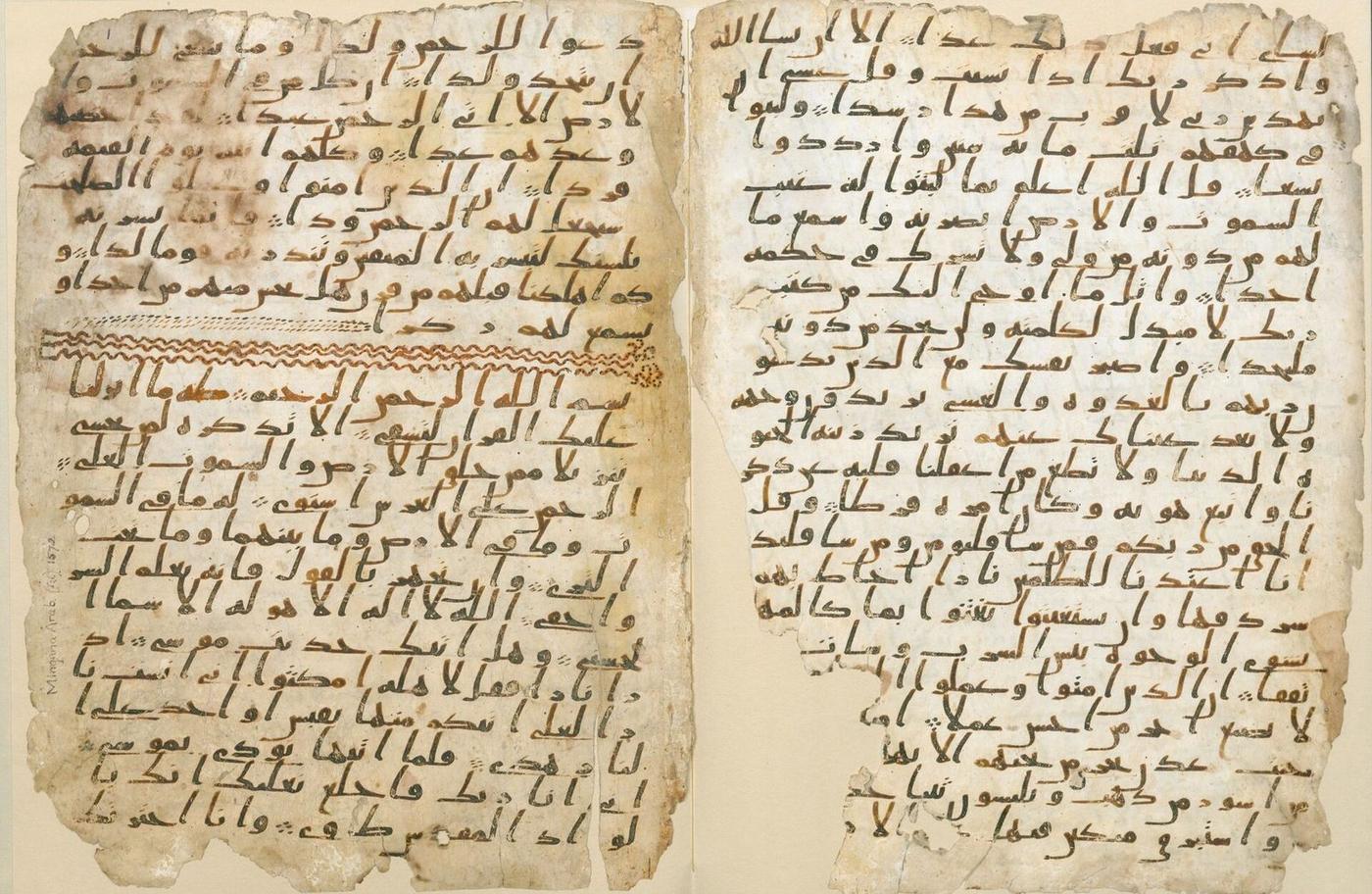
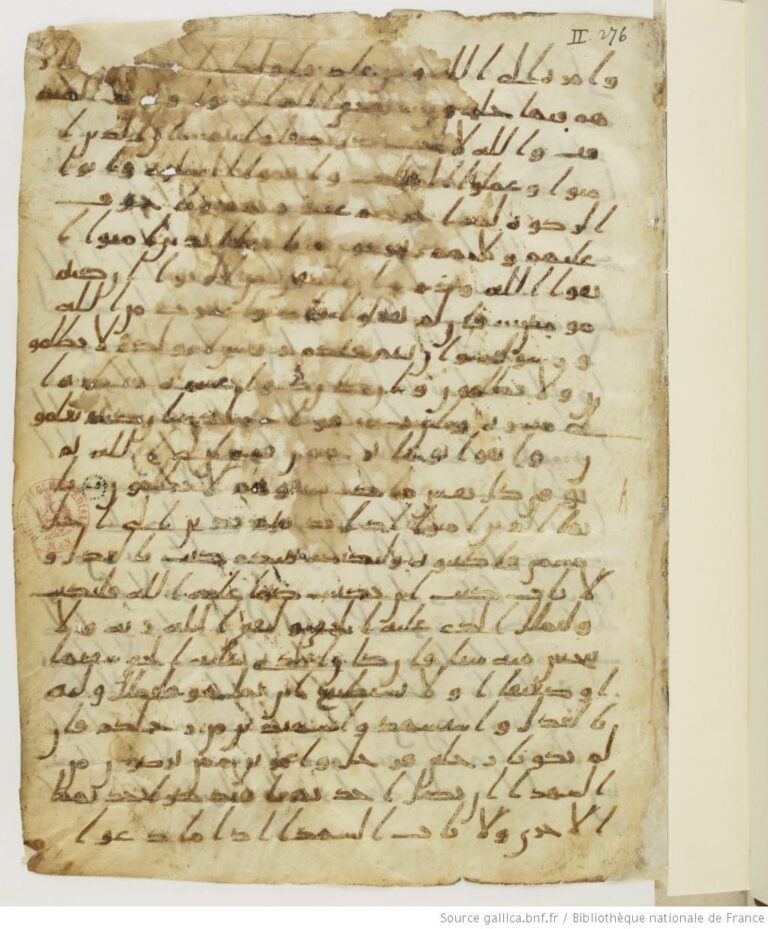
Quran manuscripts on parchment exist from the first century of Islam. The Birmingham leaves, radiocarbon dated to a range that overlaps the Prophet’s lifetime, carry text matching the standard copy.[4] They contain portions of chapters 18 to 20, and the dating applies to the parchment, so the writing may be somewhat later than the animal that gave the skin.
For the New Testament the earliest substantial manuscripts date from the 3rd and 4th centuries, 150 to 300 years after the events. Fragments are older; whole books are not. The papyri of the early third century in the Chester Beatty collection hold large parts of the gospels and the letters of Paul, and the two great fourth-century codices hold nearly the whole New Testament.
Honesty requires saying that the Quran’s early manuscript record has questions of its own. The undertext of the Sanaa palimpsest, a parchment scraped and reused, shows a written text with some variant wording and chapter order, and its editors place it in the early period.[5] Scholars treat it as evidence of the variety of the earliest readings, within a text recognisably the same book.
Number 4: Known additions versus a closed text
Some passages printed in the New Testament are absent from the oldest manuscripts and were added later. The longer ending of Mark, the woman taken in adultery, the Trinitarian clause in the first letter of John: modern critical editions bracket or footnote all of them. Christian scholars say so openly, and most modern translations carry a note.

The manuscripts show how it happened. The two oldest complete Greek copies of the Gospels, Codex Vaticanus and Codex Sinaiticus, both from the fourth century, end Mark with the women fleeing the tomb in silence, “for they were afraid”.[6] In Vaticanus, as a scholar noted in 1912, the scribe left the rest of that column blank and the whole of the next, the only such gap at the end of any book in the manuscript, as though he knew of more and could not decide whether to copy it.[7]
Other copies added material outright. Codex Bezae, copied around the year 400 and now in Cambridge, places a saying found in no other manuscript after Luke’s account of the disciples picking grain on the Sabbath: Jesus sees a man working on the Sabbath and tells him that he is blessed if he knows what he is doing, and cursed if he does not.[8] A Catholic translation of the Bible calls the passage interesting, but probably spurious.[9]
There is no comparable category for the Quran. No passage in the standard text is regarded, by any tradition, as a later insertion. The nearest the Muslim sources come is a report in which ʿUmar says a verse on stoning was recited and then lifted; the jurists classed it as a ruling kept in force after its wording was withdrawn, and not as a verse missing from the book.[10]
Number 5: What each community claims for its text
Muslims claim the Quran is the words God revealed, preserved letter by letter. The text itself makes the claim: “We have sent down the Reminder, and We will guard it”.[11] It is a strong claim and it has to be defended at that strength.
Christians, in the main, do not claim that for the gospels. They claim inspiration of the authors and a text that is reliable enough; the letter to Timothy says that all scripture is breathed out by God.[12] That is a weaker claim, easier to defend, and it concedes at the outset what the Muslim argument is trying to establish: that the text we have is not exactly what was written.
Some conservative Christians hold that the original manuscripts were without error, and they place the difficulty in the copies. The Muslim reply is that a book whose originals are lost, and whose copies disagree, gives its readers no certain way to find where the error lies.
The bottom line
The Quran has memorisation alongside writing, a standard copy within a generation, manuscripts from the first century, and no recognised interpolations. Its community makes a claim of exact preservation and is willing to be held to it. The New Testament has a rich manuscript tradition and honest scholars, and it has known additions and no single standard text.
None of that makes the Quran true. It makes the question of what the Quran says a settled one, which is the question you have to settle before you can ask whether it is true. On that narrower question the Muslim case is the stronger of the two.
Notes
- Sahih al-Bukhari, Book of the Virtues of the Quran, the chapters on the compilation of the Quran and on Gabriel reviewing it with the Prophet. Sahih al-Bukhari 4998, checked on sunnah.com; Ibn Hajar al-Asqalani, Fath al-Bari (Salafiyya edition), vol. 9, p. 43 (Shamela text).
- Sahih al-Bukhari, Book of the Virtues of the Quran, the chapter on the compilation of the Quran, on Uthman and Hudhayfa. Sahih al-Bukhari 4987, checked on sunnah.com; Ibn Hajar al-Asqalani, Fath al-Bari (Salafiyya edition), vol. 9, p. 11 (Shamela text).
- Ahmad Ali al-Imam, Variant Readings of the Qur’an: A Critical Study of Their Historical and Linguistic Origins (London and Washington: International Institute of Islamic Thought, 2006), chapter 4, on the personal codices of the Companions.
- University of Birmingham, Cadbury Research Library, Mingana Islamic Arabic 1572a, with Bibliothèque nationale de France, Arabe 328c; radiocarbon dating published by the Oxford Radiocarbon Accelerator Unit in 2015.
- Behnam Sadeghi and Uwe Bergmann, “The Codex of a Companion of the Prophet and the Qurʾān of the Prophet”, Arabica 57 (2010).
- Mark 16:8. On the manuscripts, Bruce M. Metzger and Bart D. Ehrman, The Text of the New Testament: Its Transmission, Corruption, and Restoration, 4th ed. (Oxford: Oxford University Press, 2005); Peter M. Head, “A Case against the Longer Ending of Mark”, Text and Canon Institute, 14 June 2022.
- J. Paterson Smyth, How We Got Our Bible, 23rd ed. (London, 1912), pp. 20–21.
- Luke 6:4. On the addition, see “The Cambridge Pericope: The Addition to Luke 6.4 in Codex Bezae”, New Testament Studies (Cambridge University Press); Cambridge Digital Library, “Codex Bezae” (Cambridge University Library, MS Nn.2.41).
- The Jerusalem Bible (1966), note a at Luke 6:5.
- Sahih al-Bukhari, Book of Legal Punishments (Hudud), the chapter on the stoning of a married adulterer, with the report of ʿUmar. Sahih al-Bukhari 6829 (Book of Hudud, “To confess the guilt of illegal sexual intercourse”), report of Ibn Abbas from Umar, checked on sunnah.com; Ibn Hajar al-Asqalani, Fath al-Bari (Salafiyya edition), vol. 12, p. 137 (Shamela text).
- Quran 15:9.
- 2 Timothy 3:16.



Leave a Reply