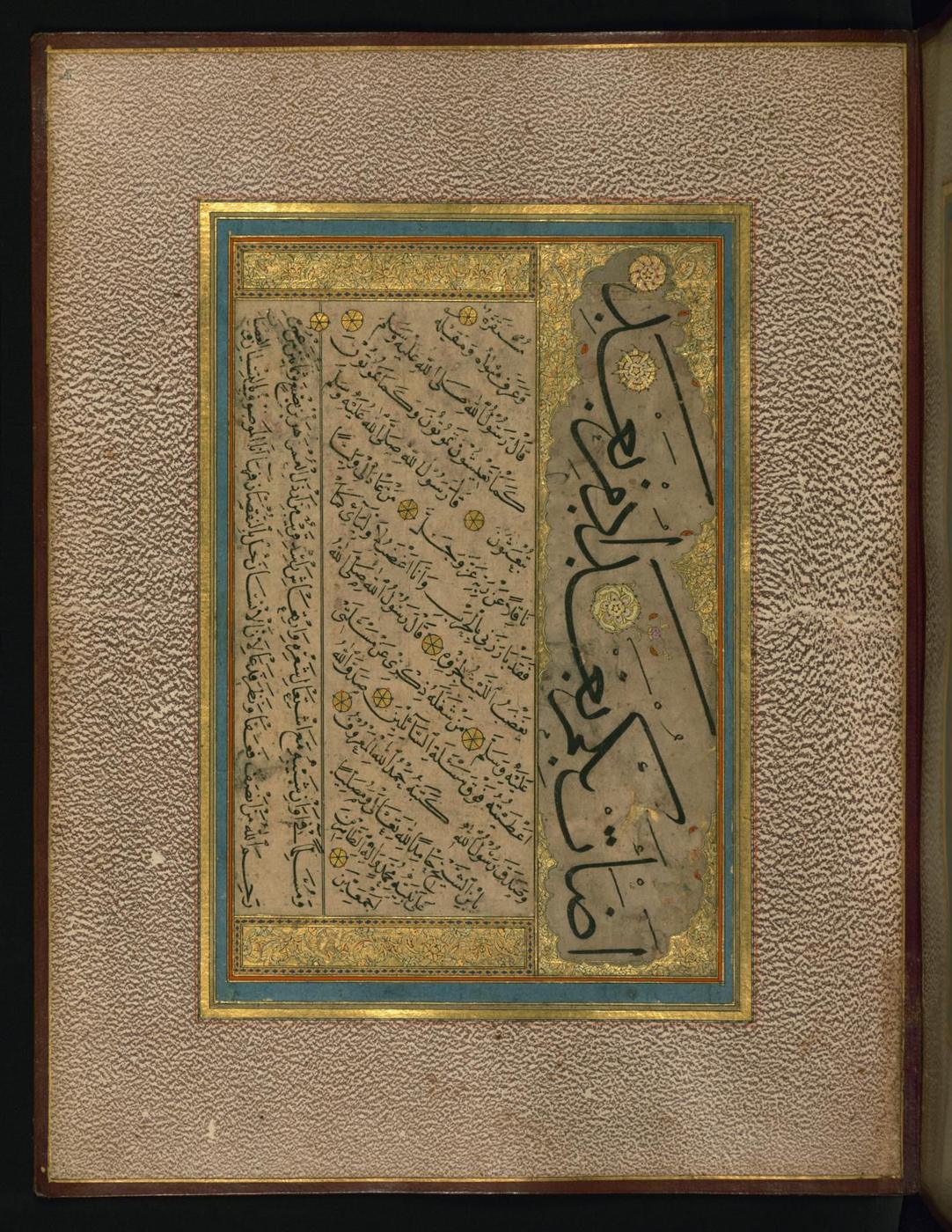
Most confusion about Islam starts here, with a name. So let us deal with the name first. Allāh is the word Arabic speakers use for God, and it appears in the Quran, the scripture of Islam, thousands of times.
Four claims about it come up again and again: that it names a different god from the God of the Bible, that it was once a moon god, that this God is remote and hard to love, and that Muslims worship Muhammad (peace be upon him). Each is taken in turn below, with the sources that answer it.
Number 1: That Allah is a different god from the God of the Bible
Allāh is the Arabic word for God. Arabic-speaking Christians use it. Arabic Bibles use it. The Maltese, whose language descends from Arabic, call God Alla in church.
It is the definite noun: al-ilāh, the god, contracted, and it works the way the English word God works. When a Muslim says Allah, the claim is that this is the God of Abraham, Moses and Jesus, the one the Quran says sent them all. The Quran tells believers to say to Jews and Christians that “our God and your God is one”.[1]
You can argue that Muslims and Christians describe God differently, and they do. The Quran itself rejects the Christian doctrine of the Trinity, so the disagreement is acknowledged on both sides. That is a different argument from saying they mean different beings. A Jew and a Christian describe God differently too, and nobody concludes that they worship two gods.
Number 2: That Allah is a moon god
This one circulates on the internet with a diagram of a crescent. It rests on two facts and a leap. Pre-Islamic Arabia had various deities, and some of them, in the south of the peninsula, were lunar. Some crescent imagery appears on later Islamic buildings. Therefore, Allah was originally a lunar deity.

The leap is the problem. The Quran names the sun and moon as created things, and forbids worshipping either.[2] The crescent as a symbol of Islam is Ottoman, 700 years after Muhammad. And Muhammad’s own father was named ʿAbd Allāh, meaning servant of God, which tells you the word was in use for the high God of Arabia before Islam existed, not for a moon.[3]
The Quran also reports that the pagans of Mecca, asked who created the heavens and the earth, would say Allah.[4] They worshipped other beings beside him, which is the charge the Quran brings against them. Historians of Arabia do not accept the moon-god thesis, and the evidence for moon cults concerns the south, where the lunar god had other names.
Number 3: That Allah is remote and unlovable
The impression comes from the emphasis on transcendence: God is unlike anything, beyond imagining, not to be depicted. The Quran puts it plainly: there is nothing like him.[5]
Read the Quran’s own vocabulary. Of the 99 names by which God is described in the tradition, the two that open nearly every chapter are al-Raḥmān and al-Raḥīm, both from the root for mercy, which is also the root of the word for the womb. God is described as nearer to a person than his jugular vein.[6] The hadith literature (the reports of what the Prophet said and did) has God saying that he comes to the one who walks towards him at a run.[7]
The Quran also speaks of wrath and punishment, and the critic is right to say so. The tradition answers with God’s own words in a hadith: “My mercy overcomes My wrath.”[8] Another report has the Prophet say that before God created the creation He wrote a book, “My mercy has preceded My wrath”, and that it is written with Him above the Throne. Islam asserts that God is both transcendent and near, and the tension between the two is where the theology lives.
Number 4: That the 99 names are a checklist
The names are often presented as a list to memorise, and there is a tradition that memorising them has merit. The Prophet is reported to have said that God has ninety-nine names, and that whoever enumerates them will enter Paradise.[9] The Quran says that the most beautiful names belong to God.[10]

The point of them is different. Each is a lens. The Provider, the Just, the Forgiving, the Subtle, the Withholder, the Reckoner. Read together, they describe a God who is not one thing, and who is not reducible to the single attribute a critic wants to argue against. Someone who says Islam’s God is only a judge has read 1 name out of 99.
One detail deserves honesty. The count of ninety-nine is in the well-attested hadith, but the familiar list of names is transmitted in a separate report, and many hadith scholars hold that the list was added by a narrator. The Quran itself names God in more ways than any one list holds. Scholars read “enumerates” as including understanding and living by the names, which makes the practice an education in character.[11]
Number 5: That Muslims worship Muhammad
Nobody who has heard the declaration of faith would think this, since it puts Muhammad second and calls him a messenger. But the impression persists, partly from the honour Muslims show him.
The line is sharp in practice. Muhammad is not prayed to. He is not depicted. He is described in the Quran as a man who will die, who cannot see the unseen, who has no power to help or harm anyone.[12] The reverence is for the messenger. The worship is for the one who sent him, and confusing the two is the single thing Islam is most concerned to prevent.
When the Prophet died, Abu Bakr told the grieving crowd that whoever worshipped Muhammad should know that Muhammad had died, and whoever worshipped God should know that God is living and never dies.[13] The Prophet had himself warned against the exaggerated praise Christians gave to Jesus, saying: call me the servant of God and his messenger.[14] The honour Muslims show him, in sending blessings upon him, is real, and the teaching sets a limit on it.
The bottom line
Allah is the Arabic word for God, used by Muslims and Arab Christians alike. Not a moon god, not a stranger, not a judge alone, and not Muhammad. Each of those claims fails against the sources it claims to describe: the Quran forbids worship of the moon, addresses Jews and Christians as worshippers of one God, fills its pages with names of mercy, and calls its own messenger a mortal man.
A fair critic can still dispute what the Quran says about God. That is a real argument and deserves a real answer. It begins from the correct subject, which is the God the Quran describes, and every other question about Islam gets easier once that one is settled.
Notes
- Quran 29:46.
- Quran 41:37.
- Ibn Ishaq, Sira, as transmitted by Ibn Hisham, on the Prophet’s parentage.
- Quran 29:61; 31:25.
- Quran 42:11.
- Quran 50:16; cf. 2:186.
- Sahih al-Bukhari, Book of Tawhid (Oneness of God), the hadith on God drawing near to the one who draws near. Sahih al-Bukhari 7405 (Book of Tawhid), report of Abu Hurayra, checked on sunnah.com; Ibn Hajar al-Asqalani, Fath al-Bari (Salafiyya edition), vol. 13, p. 384 (Shamela text).
- Sahih al-Bukhari and Sahih Muslim, the hadith “My mercy overcomes My wrath.”. Sahih Muslim 2751a (Book of Repentance, “The vastness of Allah’s mercy, which prevails over His wrath”), report of Abu Hurayra, checked on sunnah.com. Sahih al-Bukhari 7554 (Book of Tawhid, chapter on 85:21–22 and “a preserved tablet”), report of Abu Hurayra: “Before Allah created the creation, He wrote a Book: My mercy has preceded My wrath, and it is written with Him over the Throne”; Ibn Hajar, Fath al-Bari (Salafiyya edition, Shamela text), vol. 13, p. 522.
- Sahih al-Bukhari and Sahih Muslim, the hadith of the ninety-nine names. Sahih al-Bukhari 2736, report of Abu Hurayra, with the wording “whoever enumerates them” in the Fath al-Bari text, vol. 5, p. 354 (Shamela text); Sahih Muslim 2677a, chapter “The names of Allah and the virtue of the one who learns them by heart”, all checked on sunnah.com.
- Quran 7:180; cf. 17:110.
- Al-Tirmidhi, Book of Supplications, which gives a list of the names; the classical commentaries on the hadith discuss what “enumerates” means.
- Quran 7:188, cf. 3:144.
- Sahih al-Bukhari, the account of the Prophet’s death and Abu Bakr’s address. Sahih al-Bukhari 3667 and 3668, report of Aisha, checked on sunnah.com; Ibn Hajar al-Asqalani, Fath al-Bari (Salafiyya edition), vol. 7, p. 19 (Shamela text).
- Sahih al-Bukhari, Book of the Prophets, the hadith “Do not exaggerate my praise.”. Sahih al-Bukhari 3445, report of Umar, checked on sunnah.com; Ibn Hajar al-Asqalani, Fath al-Bari (Salafiyya edition), vol. 6, p. 478 (Shamela text).


Leave a Reply