
Critics of Islam often say that its rites were already old when Muhammad (peace be upon him) began to preach, and that he took them from the pagans of Mecca, from the Jews, or from a shrewd tribal chief. Part of that is true, and the Muslim sources themselves record it.
Below are six answers. Each states the objection as strongly as the evidence allows and then answers from the Quran, the hadith (reports of the Prophet’s words and acts) and the early biographies. Where a report is weak or the evidence is thin, the text says so.
Number 1: The Kaaba was modest, and Muhammad helped rebuild it
The objection says the Kaaba was a pile of stones, Mecca a cluster of mud huts, and Muhammad a participant in its rites. The first two points have a real basis. The Quran calls the valley one “without cultivation” (14:37), and Ibn Ishaq describes a low, roofless structure that Quraysh rebuilt when Muhammad was about 35. Ibn Ishaq adds that the new building had a timbered roof, so the claim of no wood does not match the account.[1][2]
Muhammad did take part in the rebuilding. Al-Bukhari reports him carrying stones, and Ibn Ishaq tells how the clans quarrelled over who would set the Black Stone until he laid it on a cloak that every clan lifted.[3] Muslims have always told this story, as evidence of his fairness before his call. The sources also say that he stood at Arafat with the pilgrims while the Quraysh stayed at Muzdalifah, and the Quran later told all pilgrims to move on from where the people move on (2:199).[4] For the stone itself, see 5 facts about the Black Stone and why Muslims touch it.
Number 2: Hagar, Zamzam and the claim that Abraham reached Mecca
The objection says Abraham, Hagar and Ishmael at Mecca is impossible: the distance from Canaan is great, no settlement existed, and the accounts of Zamzam and of Safa and Marwa contradict one another. Begin with what the Quran says. It does not name Hagar or Zamzam. Abraham says he settled some of his offspring in a valley near the Sacred House (14:37), and he and Ishmael raise its foundations (2:127). Safa and Marwa are called signs of God (2:158). The full story comes from a long hadith in al-Bukhari, and the reports differ on details such as whether the spring came from the heel of the angel or the stroke of his wing.[1][5]
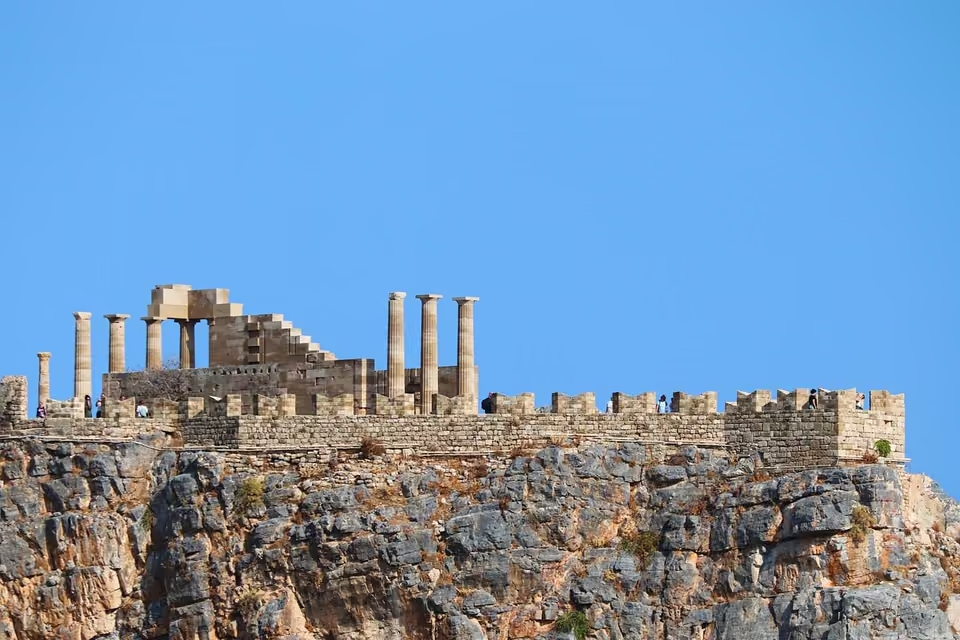
Two points weigh against the word impossible. The Hebrew Bible places Hagar and Ishmael in the wilderness of Paran (Genesis 21:21) and lists Ishmael’s sons under Arabian names such as Kedar and Tema (Genesis 25:13-15).[6] Archaeology cannot confirm or refute any individual of that age, at Mecca or in Canaan; the sanctuary area has also seen almost no excavation. The Muslim claim rests on revelation and transmitted memory, and the silence of the ground does not decide it. For earlier outside witnesses, see The Kaaba before Islam: 5 ancient witnesses, weighed.
Number 3: The Adnan line is secure only up to a point
The objection says the genealogy from Ishmael to Muhammad is arithmetically impossible: about 15 generations spread over some 2,300 years. If that list were complete, the objection would hold. Muslim genealogists never claimed it was. Al-Bukhari’s chapter on the lineage of the Prophet traces him up to Adnan and stops there. Ibn Ishaq gives longer lists between Adnan and Ishmael, and the lists disagree with each other.[7]
Many early scholars treated the line as sound as far as Adnan and uncertain beyond him, and some disliked tracing it further. Arabic ibn (son of) also means descendant, so a chain can skip generations, as biblical genealogies do. The Quran itself notes many unrecorded generations between earlier peoples (25:38).[8] The critic is right that the full chain cannot be dated or verified. No ritual or creed depends on a single name between Adnan and Ishmael, so the question is one for historians of Arabia and does not touch the faith.
Number 4: What Qusayy did, according to the Muslim sources
The objection says Qusayy invented the hajj tax, the fairs, circumambulation, prostration and the Black Stone cult as a business, and that Muhammad renamed the result. The Muslim sources do credit Qusayy, a Quraysh leader of the fifth century, with real work: custody of the Kaaba, the water supply for pilgrims, and the rifada, a contribution levied on the Quraysh themselves to feed pilgrims.[9] So the levy is recorded, and it fell on the Quraysh. The sources also place fairs such as Ukaz in the season. Al-Bukhari reports that some Muslims hesitated to trade there, and the Quran allowed them to seek the bounty of their Lord (2:198).[10] Ismail al Faruqi, in his essay on Islam in the Historical Atlas of the Religions of the World, lists the same duties: the Quraysh held the keys of the Kaaba and performed the sidana (“priestly care”), the siqaya and the rifada (“hospitality to the pilgrims”). Once a year, he adds, the Arabs came to the Kaaba on a pilgrimage whose rites included circumambulation and the sacrifice of cattle.[11]

The same sources describe circumambulation, standing at Arafat and the rites at Mina as older than Qusayy, kept by Arabs as a legacy of Ishmael’s line. Al-Bukhari names Amr ibn Luhayy as the first to set animals loose in the name of idols.[12] At Arafat the Prophet told pilgrims to stay at their places, since they were heirs to the legacy of Abraham.[13] The Quran says Abraham proclaimed the pilgrimage (22:27). Whether Qusayy-era management shaped details of the rite cannot be tested beyond these accounts, but no Muslim source says the hajj began with him or with Muhammad.
Number 5: Ramadan, Ashura, Friday and tahannuth
The objection says these were taken from Jews and pagans, then altered to insult the Jews. Several are acknowledged in the sources. The month of Ramadan was in the Arabic calendar before Islam; the Quran says fasting was prescribed for earlier communities too (2:183-185).[14] Aisha reports that the Quraysh fasted Ashura (the tenth of Muharram) in the Jahiliyya, the time before Islam, and that Muhammad did so as well. In Medina he found Jews fasting it for the rescue of Moses and said Muslims had a better right to Moses. When the Ramadan fast was prescribed, Ashura became optional.[15] He later said he would add the ninth day.[16] No early source links either fast to Tammuz; that link rests on resemblance.
On Friday, the Quran commands the congregation (62:9), and a hadith in al-Bukhari says earlier communities were given a day of gathering, differed over it, and that God guided the Muslims to Friday. That report names the other communities without mockery.[17] For the qibla, see Jerusalem, then Mecca: 5 facts about the change of qibla. Tahannuth was the devotion Muhammad practised in the cave of Hira before the revelation, and Ibn Ishaq says the Quraysh practised it too.[18] It was a pre-Islamic habit of retreat, and it is no rite of Islamic law.
Number 6: What Islam says it restored, and what it removed
The Quran presents Islam as the religion of Abraham, a hanif (one who turned away from idols to God alone), and ties the rites to him (2:127-128; 3:67; 22:78).[19] Muslim sources name Arabs who held that line before Muhammad, among them Zayd ibn Amr ibn Nufayl, who is said to have told the Quraysh at the Kaaba that none of them followed the faith of Abraham.[20] A critic who sees continuity with Mecca’s older practice is therefore describing what Islam claims. The dispute is over whether the older practice had been corrupted.
The sources list the changes. The idols around the Kaaba were removed at the conquest of Mecca (17:81).[21] Circumambulation without clothes was ended by a proclamation in the ninth year of the Hijra.[22] The Quraysh exemption from Arafat ended, and the pagan talbiya, which addressed partners of God, was replaced by a declaration of his oneness.[23] The Quran also condemned the practice of shifting the sacred months (9:36-37). For the rites as they stand, see 6 rites of Hajj and what they mean.
Al Faruqi draws the line in the same place. Islam, he writes, accepted the sacredness of Mecca and its temple, re-established the pilgrimage, and kept the holy months and the fast of Ramadan; it also rejected the setting up of partners with God, destroyed the idols of the Kaaba, abolished the priesthood, and rededicated the temple to the one God.[24] One change went beyond ritual. Meccan religion, in his account, had no life after death, no judgement, and neither paradise nor hell.[11] The Quran records the same denial in the words of its opponents: “There is not but our worldly life; we die and live, and nothing destroys us except time” (45:24).
The bottom line
The Muslim sources already say much of what critics present as a discovery: Mecca was modest, the Quraysh rebuilt the Kaaba, Muhammad took part, the Quraysh fasted Ashura, and the Jews of Medina kept the same fast. The charge of concealment fails because the record is open.
What remains is the Muslim claim that these rites descend from Abraham, were corrupted over time and were restored. The evidence for it is transmitted testimony and revelation. Archaeology neither confirms nor refutes it, and a reader may weigh that as he sees fit. The claim that Qusayy invented the pilgrimage for profit has no support in the sources that report him.
Notes
- Quran 14:37; 2:127; 2:158.
- Ibn Ishaq, Sirat Rasul Allah (in Ibn Hisham’s recension), the account of the rebuilding of the Kaaba by Quraysh.
- Sahih al-Bukhari 1582 (Book of Hajj), Jabir on the Prophet carrying stones for the Kaaba; Ibn Ishaq, the dispute over the Black Stone. Ibn Hajar al-Asqalani, Fath al-Bari (Salafiyya edition), vol. 3, p. 439 (Shamela text), for Bukhari 1582.
- Sahih al-Bukhari 1664 (Book of Hajj, chapter on the standing at Arafat), the report of Jubayr ibn Mutim; Quran 2:199. Ibn Hajar al-Asqalani, Fath al-Bari (Salafiyya edition), vol. 3, p. 515 (Shamela text), for Bukhari 1664.
- Sahih al-Bukhari 3364 (Book of the Prophets), the long report from Ibn Abbas on Hagar and Ishmael, where the angel digs “with his heel (or his wing)”. Ibn Hajar al-Asqalani, Fath al-Bari (Salafiyya edition), vol. 6, p. 396 (Shamela text), for Bukhari 3364.
- Genesis 21:21; Genesis 25:13-15.
- Sahih al-Bukhari, Book of the Merits of the Ansar, the chapter heading before no. 3851, which gives the lineage to Adnan; Ibn al-Qayyim, Zad al-Maad, vol. 1, p. 70, on the agreement to Adnan and the dispute beyond; Ibn Ishaq, the genealogy from Adnan to Ishmael.
- Quran 25:38.
- Ibn Ishaq, Sirat Rasul Allah, the account of Qusayy ibn Kilab and the offices of Mecca; on his dates in the fifth century, Martin Lings, Muhammad: His Life Based on the Earliest Sources (London: George Allen and Unwin, 1983), p. 6.
- Quran 2:198; Sahih al-Bukhari 2050 (Book of Sales), Ibn Abbas on Ukaz, Majanna and Dhul-Majaz. Ibn Hajar al-Asqalani, Fath al-Bari (Salafiyya edition), vol. 4, p. 288 (Shamela text), for Bukhari 2050.
- Ismail R. al Faruqi, “Islam”, in Ismail Ragi A. al Faruqi (ed.) and David E. Sopher (map ed.), Historical Atlas of the Religions of the World (New York: Macmillan, 1974), p. 240.
- Sahih al-Bukhari 3521 (Book of Virtues, the story of Khuzaa), on Amr ibn Luhayy; Quran 22:27. Ibn Hajar al-Asqalani, Fath al-Bari (Salafiyya edition), vol. 6, p. 547 (Shamela text), for Bukhari 3521.
- Sunan Abi Dawud 1919 (Book of the Rites of Hajj, chapter on the place of standing at Arafah): “you are an heir to the heritage of Abraham”, graded sound by al-Albani; al-Tirmidhi, Book of Hajj.
- Quran 2:183-185.
- Sahih al-Bukhari 2002 (Book of Fasting), the report of Aisha on Ashura; Sahih al-Bukhari and Sahih Muslim, the report of Ibn Abbas. Ibn Hajar al-Asqalani, Fath al-Bari (Salafiyya edition), vol. 4, p. 244 (Shamela text), for Bukhari 2002.
- Sahih Muslim 1134a (Book of Fasting): “we would observe fast on the 9th”.
- Quran 62:9; Sahih al-Bukhari 876 (Book of Friday Prayer). Ibn Hajar al-Asqalani, Fath al-Bari (Salafiyya edition), vol. 2, p. 354 (Shamela text), for Bukhari 876.
- Sahih al-Bukhari, Book of the Beginning of Revelation, the report of Aisha; Ibn Ishaq, the account of the retreat at Hira.
- Quran 2:127-128; 3:67; 22:78.
- Sahih al-Bukhari 3828 (Book of the Merits of the Ansar), Zayd ibn Amr: “none amongst you is on the religion of Abraham except me”. Ibn Hajar al-Asqalani, Fath al-Bari (Salafiyya edition), vol. 7, p. 143 (Shamela text), for Bukhari 3828.
- Quran 17:81; Sahih al-Bukhari, Book of Military Expeditions, the conquest of Mecca.
- Quran 7:31; Sahih al-Bukhari 1622 (Book of Hajj), on the proclamation sent with Abu Bakr in the ninth year of the Hijra. Ibn Hajar al-Asqalani, Fath al-Bari (Salafiyya edition), vol. 3, p. 483 (Shamela text), for Bukhari 1622.
- Quran 2:199; Sahih Muslim 1218a (Book of Hajj), the long report of Jabir, with the talbiya “Labbaik, Allah, Labbaik, Labbaik. Thou hast no partner”; Quran 9:36-37.
- Al Faruqi, op. cit., p. 245.


Leave a Reply