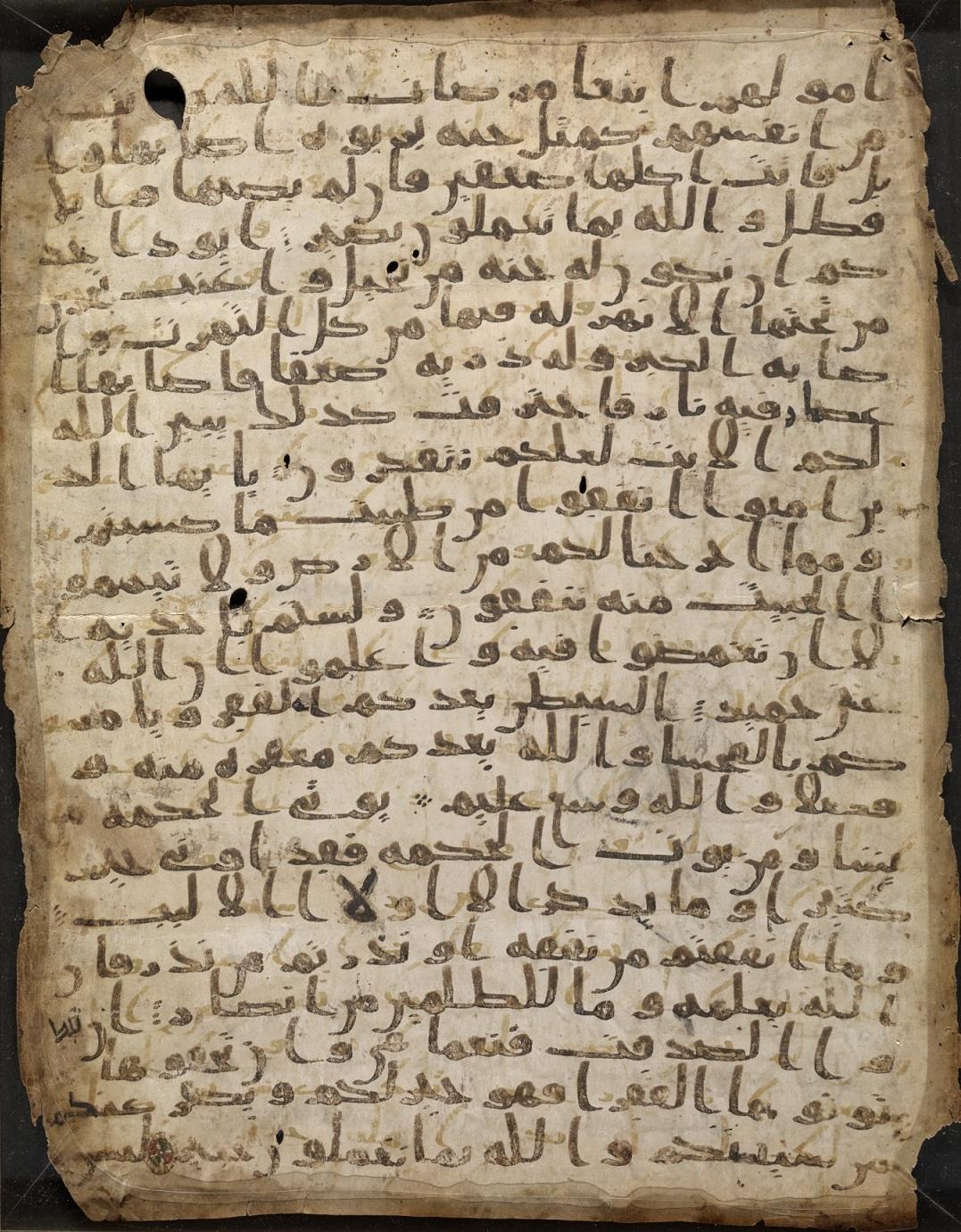
People who add the word Reddit to a search about the Quran’s preservation will find a careful discussion in r/AcademicQuran, a forum of some twelve thousand members for the academic study of the Quran, modelled on its counterpart for biblical studies.[1]
In December 2025 a long review of the scholarship on preservation was posted there, citing the leading specialists and revised after feedback from, among others, the linguist Marijn van Putten.[2] It concedes ground to both sides. Below are its five main points, with what each means for a Muslim reader and where the Muslim account of the Quran’s history stands on it.
Number 1: The starting point: ʿUthmān's standard text, within two decades
The review takes as its starting point that the Quran arose in western Arabia in the Prophet’s lifetime and was fixed as a standard text by a committee under the caliph ʿUthmān, within about two decades of his death. It notes, citing the historian Fred Donner, that this has been the view of the great majority of Western scholars.[2] The Islamic account says the same: ʿUthmān had Zayd ibn Thabit and a small group of Quraysh scribes copy the pages kept from the time of Abu Bakr, and sent a copy to each major city.[3]
The review adds that every surviving Quran manuscript, with the single exception of the Sanaa palimpsest, descends from that ʿUthmānic archetype.[2] The palimpsest is a parchment whose earlier text was washed off and written over, and its lower layer differs from the standard text in some wording and in the order of the surahs.[4] A critic can take that as proof of a rival Quran. The reply is that the differences are real but limited in extent, and that one erased manuscript is a thin base for the claim. The core of the Muslim account of the Quran’s collection stands on the academic evidence.
Number 2: The Birmingham leaves do not date from the Prophet's lifetime
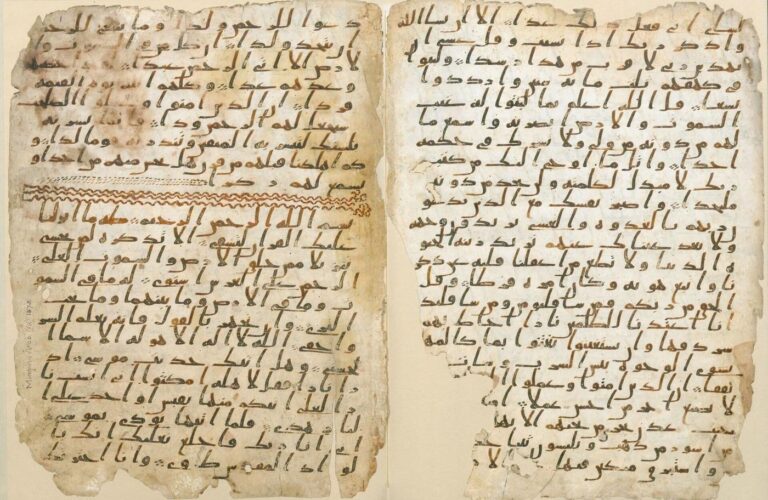
The review corrects a claim often made online, that the Birmingham manuscript was written in the Prophet’s lifetime.[2] Muslims should drop that claim. The two leaves, held at the University of Birmingham, carry parts of Surahs 18 to 20. The radiocarbon date of 568 to 645 dates the death of the animal whose skin became the parchment; the writing came afterwards, and the University of Birmingham’s own professor suggested a date for the text of around 650 to 655, the years of ʿUthmān’s copies.[5] The Prophet died in 632, and ʿUthmān became caliph in 644.

Read that way, the leaves are stronger evidence for the Muslim account than the exaggerated version. They show the ʿUthmānic text in circulation within about two decades of the Prophet’s death, as the tradition says.[6] A sceptic may say the date range still leaves room for the Prophet’s lifetime, and that point is fair. It does not alter the finding that the text on the leaves already belongs to the standard type, which is what a fixed text from ʿUthmān’s time predicts.
Number 3: Some features of the Quran were not fixed by the Prophet
The review lists features that varied in the early period: the order of the surahs (sūrah, “chapter”), their names, the placing of verse divisions, and the dotting that fixes pronunciation, which later produced the recognised readings.[2] The companions Ibn Masʿūd and Ubayy ibn Kaʿb kept collections with a different order and number of surahs.[2] Ahmad Ali al-Imam reports that classical scholars such as al-Baqillani treated the claims of different surah numbers as isolated reports, and counts 123 differences of wording between the Uthmanic text and all the personal codices, 102 of them from Ibn Masʿūd, against a text of over 77,000 words.[7] The recognised readings differ in small matters, such as whether the fourth verse of the opening surah reads Malik or Māliki yawm al-dīn, “Master of the Day of Judgement”.
Nearly all of this is known because Islamic tradition recorded it. The companions’ collections, the several regional systems for counting verses, and the canonical readings were preserved and studied by Muslim scholars for centuries. The Quran’s promise is that God will guard the revelation itself, “Indeed, it is We who sent down the Qur’an and indeed, We will be its guardian”; chapter titles and verse numbers are aids to reading it.[8] A critic who says the text varied is therefore describing what Muslim scholars said first, and the canonical readings differ in details of vocalisation and wording. A few of these have figured in legal reasoning, the reading of “feet” in the ablution verse (5:6) being the standard example, but none presents a different text or a different doctrine.
Number 4: The stories of mass memorisation are overstated
The review doubts the reports of thousands of early Muslims who had memorised the whole Quran perfectly, and argues that the early transmission was chiefly written, as the long survival of old spellings in the manuscripts shows.[2] The Islamic sources themselves lean toward that picture. They say that after many reciters fell at the battle of Yamama, Abu Bakr and Umar had the Quran gathered from the written pieces and from those who knew it, and Zayd ibn Thabit required two witnesses for every verse he copied.[3]
Muslims lose nothing by conceding the exaggeration. A written standard text, fixed within two decades and followed by every later copy, is firmer evidence than any headcount of memorisers. Memory remained important in the tradition as a check on the page, and the account of Yamama shows the first generation using both. What the review challenges is a later, rounder claim about numbers, and the core claim that the text was guarded in writing and in recitation survives it.
Number 5: Its conclusion: the variation is not considerable
After weighing all the variation, the review concludes that it is “not considerable”, and that most of the surahs likely go back, roughly in their present form, to what the Prophet preached as revelation. It also judges the process of transmission imperfect, shaped by human choices.[2] The tradition agrees that human choices were involved: it reports that ʿUthmān told the scribes to write in the dialect of Quraysh if they disagreed with Zayd over a word, and ordered other copies destroyed.[3]
That conclusion is reached by a method that grants nothing to faith. On that method, the Quran Muslims recite today is substantially the message the Prophet proclaimed, with its variation confined to matters the Islamic tradition itself documented. A reader who expected a finding of perfection will find “imperfect” a hard word, but it describes the human work of copying and standardising. The promise of 15:9 concerns the revelation, and the review’s evidence supports that the revelation was kept.
The bottom line
This academic discussion on Reddit supports the heart of the Muslim position: a standard text within two decades of the Prophet, followed by every manuscript since, and a Quran substantially as he preached it. It also asks Muslims to abandon claims that the evidence does not bear, such as a Birmingham leaf from the Prophet’s own day or a vast crowd of flawless memorisers, and the case for the Quran is stronger without them.
The full discussion can be read on r/AcademicQuran, together with a related thread on the codex of Ibn Masʿūd.[9] A forum post is not peer-reviewed scholarship, and its sources should be checked directly. The direction of the evidence is clear all the same, and it comes from researchers who owe the Muslim account nothing.
Notes
- r/AcademicQuran, subreddit wiki; membership as reported by GummySearch, “r/AcademicQuran”.
- “The data on the preservation of the Quran”, r/AcademicQuran, posted 22 December 2025, https://www.reddit.com/r/AcademicQuran/comments/1pt5wjh/the_data_on_the_preservation_of_the_quran/.
- Sahih al-Bukhari, Book of the Virtues of the Quran, the chapters on the collection of the Quran, reported from Zayd ibn Thabit. Sahih al-Bukhari 4986 and 4987, checked on sunnah.com and in Ibn Hajar al-Asqalani, Fath al-Bari (Salafiyya edition), vol. 9, pp. 10-11 (Shamela text).
- Behnam Sadeghi and Mohsen Goudarzi, “Ṣanʿāʾ 1 and the Origins of the Qurʾān”, Der Islam 87 (2012).
- University of Birmingham, “Birmingham Qur’an manuscript dated among the oldest in the world” (2015); Gulf News, “Scholar calls for more research on oldest Quran manuscript”, reporting David Thomas.
- Marijn van Putten, “‘The Grace of God’ as Evidence for a Written Uthmanic Archetype: The Importance of Shared Orthographic Idiosyncrasies”, Bulletin of the School of Oriental and African Studies 82, no. 2 (2019), pp. 271–288.
- Ahmad Ali al-Imam, Variant Readings of the Qur’an: A Critical Study of Their Historical and Linguistic Origins (London and Washington: International Institute of Islamic Thought, 2006), chapter 4, on the personal codices of the Companions.
- Quran 15:9.
- “How do we know that Ibn Masud’s Codex existed?”, r/AcademicQuran, posted 7 December 2023, https://www.reddit.com/r/AcademicQuran/comments/18d6yhi/how_do_we_know_that_ibn_masuds_codex_existed/.


Leave a Reply