Critics of Islam often press one question hard. The hadith, the reports of the Prophet’s words and deeds, were written down after his death, so why should anyone trust them, when Muslims question gospels written decades after Jesus?
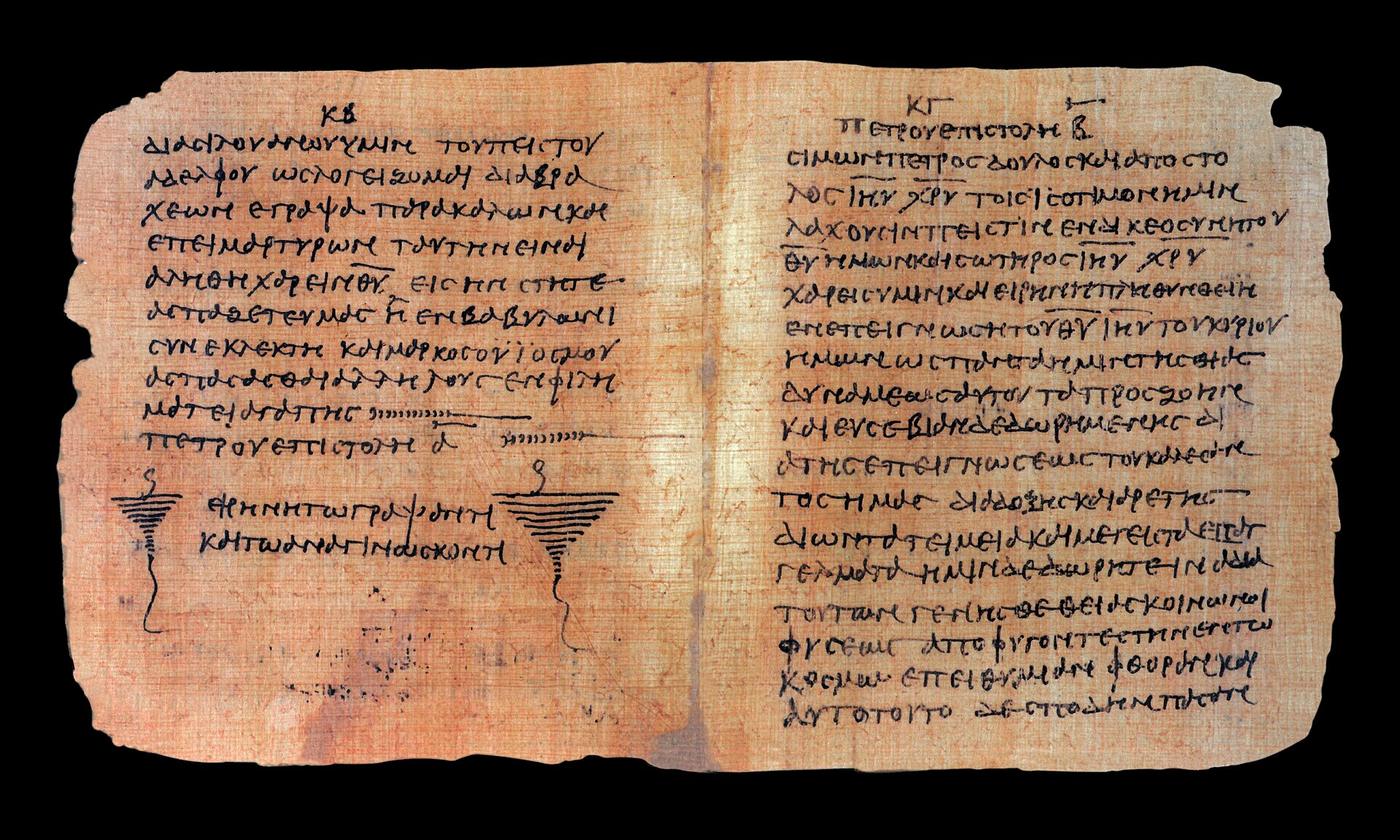
It deserves a straight answer. Part of the answer is found in an unexpected place: the introduction to the Second Letter of Peter in the Bible that the United States Conference of Catholic Bishops publishes online.[1] The five entries below set out what that introduction says, what the letter says about itself, and what follows when the standard is applied evenly.
Number 1: Scholars widely agree that Peter did not write it
The bishops’ introduction states that among modern scholars there is wide agreement that 2 Peter is pseudonymous: a work composed by a later author who attributed it to Peter, following a literary convention of the period.[1]
This comes from the Catholic Church’s own scholarship, printed as the introduction to the book itself. A Muslim who said the same would be accused of hostility.
The strongest objection is that a minority of scholars still defend Peter’s authorship. They point out that the first letter of Peter mentions a helper named Silvanus who wrote for him, and propose that a secretary shaped the Greek of the second letter.[2] The reply is that the bishops’ introduction describes where the field stands, and that a secretary explains style but does not explain the borrowing from Jude or the reference to a collected Paul, which the next entries take up.
Scholars who accept that Peter did not write the letter still disagree about what that means. Richard Bauckham, in his commentary on Jude and 2 Peter, argued that the letter belongs to the genre of the testament, the farewell speech of a famous figure, and that its first readers would have recognised the attribution as a transparent literary device.[3] Bart Ehrman argued the opposite: that ancient readers condemned writing in another person’s name when they detected it, and that a letter which claims an eyewitness experience is meant to be believed.[4]
Number 2: The letter claims to be Peter anyway
The letter opens in the name of Simon Peter, apostle of Jesus Christ.[5] It calls itself his second letter.[6] Its author says he was an eyewitness of the transfiguration and heard the voice from heaven.[7]
It also takes the form of a farewell, with the author saying he knows that he will soon put off his body, as the Lord Jesus Christ made clear to him.[8] The device of a dying apostle leaving his last words gives the letter a weight that a signed opinion would lack.

A later writer claiming to have stood on the mountain with Jesus is making a claim about himself that the evidence, on the bishops’ own account, does not support. The convention of pseudonymous writing may explain the motive. It does not turn the claim into a true one.
The early church’s own practice weighs on the question. Tertullian, writing around 200, reports that the presbyter in Asia who composed the Acts of Paul and Thecla out of love for Paul was found out and removed from his office.[9] Serapion, bishop of Antioch around the same time, first allowed a congregation to read the Gospel of Peter and then forbade it, explaining that the church received Peter and the other apostles as Christ but rejected writings falsely circulated in their names.[10] Church leaders of the second and third centuries, on this evidence, did not treat writing in an apostle’s name as a harmless convention.
The strongest Christian reply is that inspiration does not depend on authorship: a book can be true and authoritative whoever wrote it. That is a coherent position, and many Christians hold it. It concedes the point at issue here, which is whether a document carries an eyewitness’s guarantee. On the bishops’ own account, this one does not.
Number 3: It may be the last book of the New Testament to be written
According to the same introduction, many scholars consider 2 Peter the latest work in the New Testament, and date it to the first or second quarter of the second century.[1] Peter, by Christian tradition, died in Rome in the 60s, so a date in that range puts the letter several decades after him.
The letter gives its own reasons for that dating. It speaks of the apostles as a generation already gone, and records scoffers who say that all things have continued unchanged since the fathers fell asleep.[11] It refers to Paul’s letters as a known collection, some of it hard to understand, and ranks them with the other scriptures.[12] A collected Paul, already read as scripture and already disputed, belongs to a later church than Peter’s.
The passage about Paul also says something about how the letter was meant to function. It warns that “the ignorant and unstable” twist Paul’s letters to their own destruction, as they do the other scriptures.[12] By the time of writing, Paul was both scripture and a battleground. The letter uses Peter’s authority to settle a dispute about Paul’s meaning, a dispute that belongs to the second century, when groups such as the followers of Marcion were reading Paul in ways the wider church rejected.
Number 4: It borrows from another letter
The introduction notes that the passage on false teachers has many literary contacts with the Letter of Jude, and that 2 Peter is generally agreed to depend on Jude.[1] An apostle writing from his own memory of Jesus would have little need to rework another author’s text.
The parallels are specific. Each letter warns of false teachers, cites the fallen angels and the destruction of Sodom and Gomorrah as examples of judgement, and names Balaam.[13] Jude also quotes a prophecy from the book of Enoch عليه السلام, which 2 Peter leaves out.
The fair objection is that some conservative scholars hold the borrowing ran the other way, with Jude using Peter. Even so, one author had the other’s text in front of him, so the letter does not preserve an independent eyewitness memory. The introduction takes the order from Jude to 2 Peter as the generally agreed one.
The way 2 Peter uses Jude is itself revealing. Where Jude quotes the Book of Enoch and alludes to a dispute between Michael and the devil over the body of Moses, 2 Peter keeps the argument and drops or softens the material from books that were outside the emerging Jewish and Christian scriptures.[13] Scholars read that as the work of an editor with a later sense of which books counted, which fits the date the introduction gives.

Number 5: The church hesitated over it for centuries
The oldest certain reference to 2 Peter comes from Origen in the early third century, and Origen reports that others rejected it. Some local churches still excluded it from the canon as late as the fifth century.[1]
Origen, as quoted by the historian Eusebius, says that Peter left one letter acknowledged by all, and perhaps a second, since that one was doubted.[14] Eusebius himself, writing in the fourth century, lists it among the disputed books and reports that it was not handed down as part of the canon, though many found it useful.[15] Jerome, around 392, says that many deny it is Peter’s because its style differs from the first letter.[16] The old Syriac Bible left it out altogether.
The canon lists show the same hesitation. The Muratorian fragment, an early list of books read in the church, makes no mention of either letter of Peter. The Peshitta, the standard Syriac Bible, omitted 2 Peter together with 2 and 3 John, Jude and Revelation, and the Syriac churches accepted them only later. The letter appears without qualification in Athanasius’s Easter letter of 367 and in the decisions of the councils at Hippo and Carthage at the end of the fourth century.[17]
The early church doubted this letter for the same reason modern scholars do. It entered the canon in spite of that doubt, and it remains there.
The bottom line
The question for Muslims was why late writings should be trusted. The fairer question is what a writing carries with it.
A hadith comes with a named chain of transmitters, which Muslim scholars examined man by man and graded, rejecting a great many reports along the way. The chain is not a guarantee, and the major collections were compiled in the ninth century, about two hundred years after the Prophet, although written pages from the first generations also survive and are used to test the later books.[18] 2 Peter carries a famous name at its head, and the Catholic Church’s own Bible says that name is probably not its author’s.
Anyone who presses the charge of late and unreliable sources should apply it evenly. Applied evenly, it lands first on a letter that is canonical scripture in every major church.
Muslim scholarship has its own record of applying the standard. The hadith critics compiled whole books of forged reports, among them Ibn al-Jawzi’s collection of fabricated hadith, and graded narrators one by one, rejecting reports attributed to the Prophet when their chains failed.[19] Western critics such as Joseph Schacht questioned how far those methods succeeded, a debate discussed in Schacht, isnads and the dating of hadith. The question of authorship in the New Testament more broadly is taken up in which letters Paul wrote.
The comparison is a fair one only if it is made in both directions. Muslims should accept that hadith grading is a human science with real disagreements, and Christians should accept that their own scholars have reached conclusions like the one printed in the bishops’ introduction. Each tradition has ways of handling late and uncertain material, and each can be judged by how candidly it applies them.
Notes
- United States Conference of Catholic Bishops, “The Second Letter of Peter”, introduction, New American Bible, Revised Edition.
- 1 Peter 5:12.
- Richard J. Bauckham, Jude, 2 Peter, Word Biblical Commentary 50 (Waco, TX: Word Books, 1983).
- Bart D. Ehrman, Forgery and Counterforgery: The Use of Literary Deceit in Early Christian Polemics (New York: Oxford University Press, 2013).
- 2 Peter 1:1.
- 2 Peter 3:1.
- 2 Peter 1:16 to 18.
- 2 Peter 1:12 to 15.
- Tertullian, On Baptism 17.
- Serapion of Antioch, as quoted in Eusebius, Ecclesiastical History 6.12.
- 2 Peter 3:2 to 4.
- 2 Peter 3:15 to 16.
- Jude 4 to 16, compared with 2 Peter 2.
- Origen, as quoted in Eusebius, Ecclesiastical History 6.25.
- Eusebius, Ecclesiastical History 3.3.
- Jerome, On Illustrious Men 1.
- Bruce M. Metzger, The Canon of the New Testament: Its Origin, Development, and Significance (Oxford: Clarendon Press, 1987), on the Muratorian fragment, the Syriac canon, Athanasius’s Festal Letter 39 (367) and the councils of Hippo (393) and Carthage (397).
- M. M. Azami, Studies in Early Hadith Literature (Indianapolis: American Trust Publications, 1978).
- Ibn al-Jawzi, Kitab al-Mawdu’at.


Leave a Reply