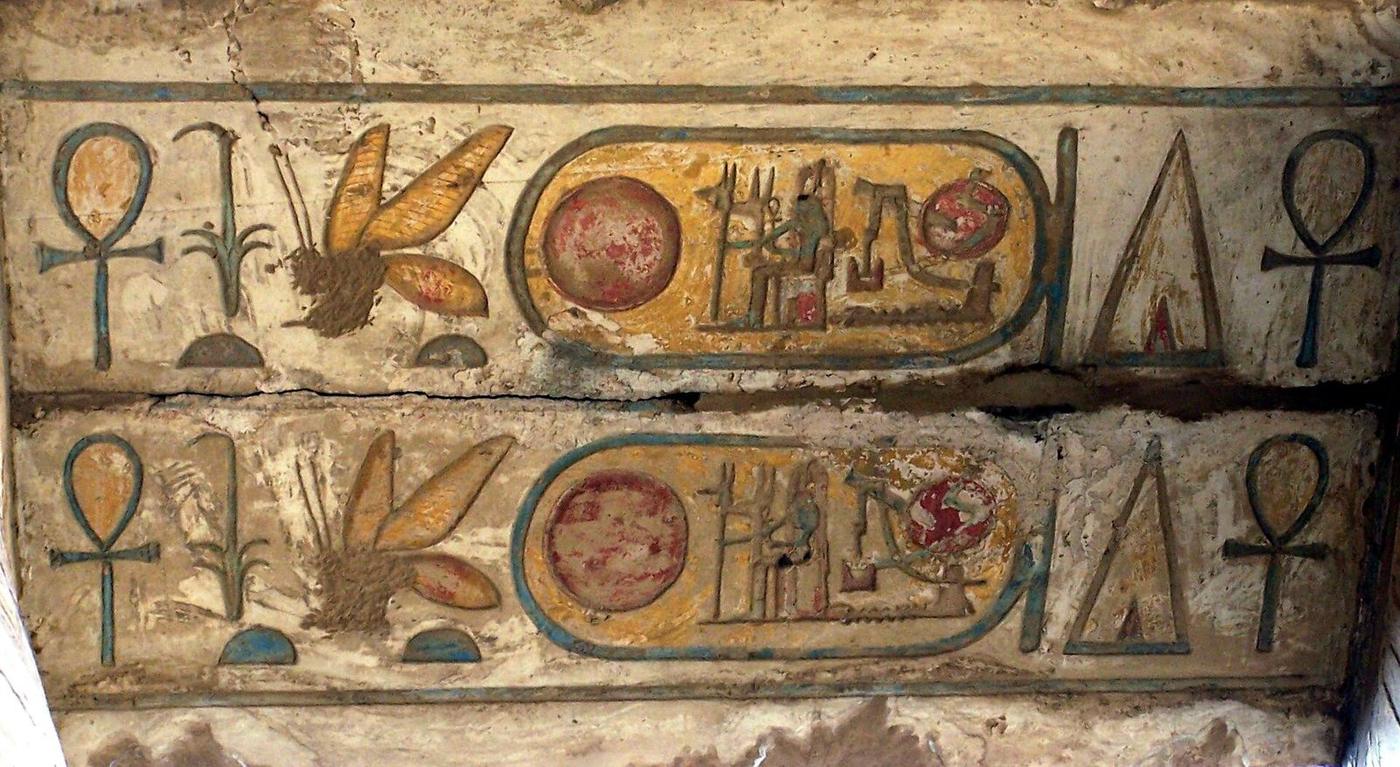
The Quran has Pharaoh’s minister Haman overseeing construction and advising against Moses.[1] The Bible has a minister named Haman too, except his king is Ahasuerus of Persia, and the Book of Esther puts him roughly eight centuries after Moses.[2]
Orientalists from the 17th century onward have called this a mix-up: Muhammad, peace be upon him, they say, lifted a name from a story he half-remembered and dropped it into the wrong court. Here are 5 reasons that verdict moves faster than the evidence allows. They range from the logic of the charge to the Egyptian record, and the last one looks at how the scholars who made the charge have since changed their tone.
Number 1: A shared name across centuries proves nothing on its own
Two people can be called Haman without one being copied from the other. Adriaan Reland made this point in 1705, and it still holds: the argument runs from “the Quran mentions someone named Haman” to “therefore it means the Haman of Esther,” with no step in between showing why those have to be the same person.[3]
Names repeat. There were multiple Pharaohs, multiple Herods, multiple men named John in the New Testament alone. Treating a shared name as proof of borrowing would need to be argued, not assumed, and the critics mostly assume it.
The two figures also share little else. Esther’s Haman is a Persian official who plots to destroy the Jews of the empire, and he never builds anything. The Quran’s Haman stands beside Pharaoh and takes orders for building, and the Quran never mentions Persia, Ahasuerus, Esther or a plot against a people. A borrower copying a story would be expected to copy its plot. Here only the name is shared.
Number 2: The comparison borrows a chronology the Quran never states
The objection depends on lining up Moses with a fixed date and Esther with a later fixed date, then measuring the gap. The Quran does neither. It places Haman in Pharaoh’s court during the Moses narrative and says nothing about when that court falls on a Persian or Babylonian calendar. It does not even name the Pharaoh. The Bible, by contrast, names the store-cities the Israelites built, Pithom and Raamses.[4]

An anachronism is a claim placed at the wrong point in a timeline the text itself sets out. Import a timeline from outside the text, find a mismatch, and call it the text’s error: that is the move being made here, and it is the reader’s chronology doing the work, not the Quran’s.
The critic can reply that the Quran retells biblical narratives, so the biblical chronology is the natural frame. The retelling differs from Genesis and Exodus in many details, however, and it is the Quran’s own account of Pharaoh, Haman and their soldiers (28:8) that has to be read first. The comparison is a hypothesis about sources, and the argument needs it proved.
Number 3: Egyptian inscriptions preserve a matching title, not just a name
This is the strongest answer, and it rarely reaches the popular version of the objection. Proponents point to New Kingdom Egyptian inscriptions that record a title ḥmn-ḥ, read as overseer of the stone-quarry workers. They say a limestone door jamb now in the Kunsthistorisches Museum in Vienna, dated to the 19th Dynasty and likely the reign of Ramesses II, carries this title.[5]
That is the period usually proposed for the Exodus, and it is a title for precisely the kind of construction authority the Quran assigns to Haman: a man Pharaoh puts in charge of building. A shared consonantal root behind an Egyptian title and the Quran’s name for Pharaoh’s builder would be a real point of contact, and the critics would have to explain it away.
The point should be stated with its limits. The reading of the signs and their link to the Quranic name are disputed among Egyptologists, and the identification is not a settled result. The argument of this article does not rest on it, because the first two entries already remove the supposed error. The inscription adds a positive suggestion to a case that stands without it.
Number 4: The role fits the office, not the novel
Pharaoh tells Haman to build a tower reaching toward the heavens (28:38; 40:36–37). Critics read this as a second borrowing, this time from the Tower of Babel in Genesis, stitched onto the Esther mix-up to produce one confused composite.[6]

Read plainly, it is simpler than that. Egyptian officialdom had a real class of men who ran monumental construction for the king, and Pharaoh in the Quran assigns exactly that job to exactly that kind of official. The story needs no second biblical source once the first is shown to be less solid than advertised.
The motives also differ. In Genesis the builders want to make a name for themselves and avoid being scattered. In the Quran Pharaoh says he wants to look at the god of Moses, and adds that he thinks Moses a liar, which reads as mockery. Egyptian kingship also pictured an ascent to the sky: the Pyramid Texts speak of a ladder or stairway by which the dead king climbs to heaven.[7] A tower in that setting needs no help from Babel.
Number 5: The same scholars flag anachronisms that cut both ways
Nöldeke, Mingana, Lammens and the first standard reference work on Islam all treat the Haman question as settled.[8] The later reference work devoted to the Quran is more careful: it lists the Esther theory alongside the Egyptian-title theory and does not choose between them.[9]
That shift matters. A claim confidently repeated for a century turns out, once the archaeology is checked, to rest on less than its confidence suggested. The word “Pharaoh” itself carries a comparable history: Egyptologists date its use as a royal title to the New Kingdom, which lines up with the Quran’s Mosaic setting and does not line up with the earlier Joseph narrative in Genesis, an anachronism on the biblical side that gets far less attention.
The Quran appears to keep the distinction. In the Joseph story the ruler of Egypt is called “the king” (al-malik) and never Pharaoh (12:43, 12:50), while in the Moses story he is Pharaoh.[10] A text that was careless about Egyptian usage would be unlikely to draw that line.
The bottom line
The claim needs the two Hamans to be the same figure, needs a chronology the Quran does not supply, and has to set aside a title recorded in Egyptian stone that matches the very office the Quran describes, if that title is read as its proponents read it. It also needs the Quran to be careless about Egyptian usage, and the use of “king” for Joseph’s ruler and “Pharaoh” for Moses’ points the other way.
Take those away and what is left is a name. A shared name can start a question, though it cannot settle one. On the evidence as it stands, the charge of error is unproven, and a reader who wants the Quran to be wrong here has to supply what the sources do not.
Notes
- Quran 28:6, 28:8, 28:38, 29:39, 40:24, 40:36 to 37.
- Book of Esther 3:1, on Haman the Agagite and King Ahasuerus.
- Adriaan Reland, De Religione Mohammedica Libri Duo, 1705, section 21.
- Exodus 1:11.
- Kunsthistorisches Museum, Vienna, inventory 5821 and 5822, 19th Dynasty limestone door jamb.
- Genesis 11:3–4; Quran 28:38; 40:36–37.
- R. O. Faulkner, The Ancient Egyptian Pyramid Texts (Oxford: Clarendon Press, 1969), the utterances on the ladder to heaven.
- The first edition of the Encyclopaedia of Islam, s.v. “Hāmān”.
- Encyclopaedia of the Qurʾān, s.v. “Haman”.
- Quran 12:43, 12:50; Genesis 41.



Leave a Reply