
In a recent public debate on the Islamic dilemma, a questioner from the audience read out a report from Sunan Abi Dawud. Jews in Medina bring the Prophet ﷺ a case of adultery, he asks for the Torah, takes the cushion from under himself, lays the Torah on it and says, “I have believed in you and in the One who sent you down.” The questioner said al-Albani graded it hasan, and he drew the conclusion that the Torah the Quran speaks of is the book the Jews of Medina held in their hands.[1]
The report deserves a full check. This article aims to provide context to the report, insha’Allah, in seven points: its text and chain, the parallel accounts in al-Bukhari and Muslim, what the commentators said about the words to the Torah, what the report shows and what it cannot show, and how it sits beside 5:43 and the verses on tahrif. We say how strong each entry is.
The wider argument is in The Islamic Dilemma, and the case for corruption is graded in Did Islam teach that the Bible was corrupted?. Here we stay with one hadith.
Number 1: What happened: a stoning case the Jews of Medina brought to the Prophet
The hadith is number 4449 in Sunan Abi Dawud عليه السلام, in the Book of Prescribed Punishments, under the chapter on the stoning of the two Jews. Abu Dawud heard it from Ahmad ibn Sa’id al-Hamdani, from Ibn Wahb, from Hisham ibn Sa’d, from Zayd ibn Aslam, from Abd Allah ibn Umar.[2]
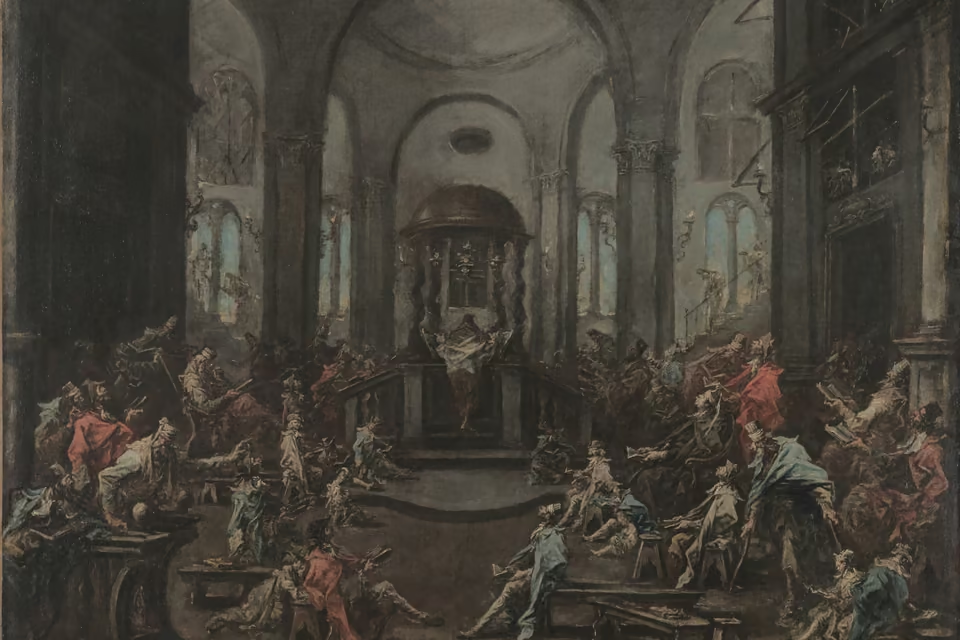
Ibn Umar says that a group of Jews came and invited the Messenger of God to al-Quff, a valley in Medina. He came to them in their house of study (bayt al-midras). They said: “Abu al-Qasim, a man among us has committed adultery with a woman, so judge between them.” They set down a cushion for him and he sat on it.
He said, “Bring me the Torah,” and it was brought. He drew the cushion out from under himself, placed the Torah on it and said: “I have believed in you and in the One who sent you down.” Then he said, “Bring me the most learned of you,” and a young man was brought. Abu Dawud then cuts the story short: the stoning followed “like the hadith of Malik from Nafi”.[2]
The Arabic of the key sentence is fa-naza’a al-wisada min tahtihi fa-wada’a al-Tawrata ‘alayha, thumma qala: amantu biki wa-bi-man anzalaki. The pronoun is feminine, so the words are spoken to the Torah itself. One printing reads “the Torah!” where the other reads “bring me the Torah”; the sense is the same.[2][3]
Now the grade. The questioner was right about al-Albani: the edition of Muhyi al-Din Abd al-Hamid carries his verdict, hasan. Shu’ayb al-Arna’ut, in his own edition, judged it “weak in this wording”.
Hisham ibn Sa’d alone gives it this way, he wrote, and what Hisham narrates alone is not relied on, all the more when al-Zuhri and others transmit the same event from Nafi through Ibn Umar in another wording, the one in al-Bukhari and Muslim.[3] Ibn Kathir quotes the report in full in his commentary on 5:41, without a grade.[4]
Strength: firm for the event, which is in the two Sahihs. Moderate for the cushion and the words to the Torah, which rest on one narrator: hasan for al-Albani, whose grade this site follows, and weak in its detail for al-Arna’ut.
Number 2: The parallel accounts: a hand over the verse of stoning
Al-Bukhari has the event from Malik, from Nafi, from Ibn Umar. The Jews told the Prophet that a man and a woman of theirs had committed adultery. He asked, “What do you find in the Torah about stoning?” They said: “We expose them, and they are flogged.” Abd Allah ibn Salam, a rabbi of Medina who had become Muslim, said: “You have lied. Stoning is in it.” They brought the Torah and opened it out.
One of them put his hand over the verse of stoning and read what came before it and after it. Ibn Salam told him to lift his hand, and there was the verse of stoning. They said, “He has spoken the truth, Muhammad. The verse of stoning is in it.” The two were stoned.[5]

Muslim has the same account from Ibn Umar through another pupil of Nafi, where a young man reading from the scroll puts his hand on the verse.[5] Al-Bara ibn Azib gives a second line of the story, in Muslim and in Abu Dawud. A Jew is led past with his face blackened.
The Prophet adjures one of their scholars “by God who sent down the Torah to Moses” and asks what the penalty is in their book. The man answers that it is stoning, that adultery had spread among their nobles, and that they had agreed on blackening and flogging for everyone so that the noble and the weak would be treated alike. The Prophet said: “O God, I am the first to revive Your command after they let it die.”[6] Al-Albani grades the shorter version of al-Bara’s report sahih.[7]
A third line, from Abu Hurayra through a man of the tribe of Muzayna, has the Jews hoping for a lighter ruling from a prophet “sent with relief” from heavy laws, and ends with the Prophet saying, “I judge by what is in the Torah.” Al-Arna’ut grades it sound through its supporting reports.[8] Ibn Hajar, who collected the versions, quotes the cushion wording of Zayd ibn Aslam beside them.[9]
Strength: firm. Three Companions report the case, and two of the lines are in the Sahihs. The cushion is the only detail that stands on a single chain.
Number 3: "I have believed in you": the commentators say it honours the Torah God sent down
Shams al-Haqq al-Azimabadi, in Awn al-Ma’bud, his commentary on Abu Dawud, explains the scene in two short glosses. He placed the Torah on the cushion “to honour it”, and the words “I have believed in you” are addressed to the Torah.[10] He names the young scholar as Abd Allah ibn Suriya.

Ibn Hajar goes further, and he goes to the exact point the questioner raised. In Fath al-Bari, at the end of his notes on the case, he says that some people took the report as proof that the Torah brought that day was wholly sound and free of change. He calls that inference “not clear”, and he adds that “I have believed in you and in the One who sent you down” does not answer the objection, “because what is meant is the original Torah (asl al-Tawrat)”.[11]
So the two best-known commentators on the hadith read the words as faith in the revelation God gave Moses and respect for the scroll that carried it. Neither reads them as a certificate for every line on that scroll.
Strength: firm as a report of what the commentators said. A reader can still disagree with Ibn Hajar, and the next two entries ask what the report itself supports.
Number 4: What it shows: a Torah in Medina, in Jewish hands, with the stoning law in it
Here the questioner has a real point, and it should be granted plainly. In every version, the Torah is a written book that the Jews of Medina own, can fetch and can read aloud.
The Prophet treats it as the authority in the case. The law of stoning is on the page, and a man’s hand is what keeps it from being read.[5]
The Hebrew Bible agrees. Deuteronomy 22:22 says that a man found lying with a married woman shall die with her, and verses 23 and 24 add, for a betrothed woman in the city, “you shall stone them to death with stones.” Leviticus 20:10 sets death for both adulterers.[12] The ruling the Jews of Medina had set aside is in the book Jews read today.
The Quran says the same thing in its own words. “But how is it that they come to you for judgement while they have the Torah, in which is the judgement of God?” (wa-‘indahum al-Tawratu fiha hukmu Allah, 5:43). It also tells the Prophet to say, “So bring the Torah and recite it, if you should be truthful” (3:93).[13][14]
Ibn Kathir, on 5:43, says they were rebuked for leaving “what they believe to be sound of the Book in their hands”.[15] A Muslim who denies that the Quran ever means the scroll in Jewish hands is going against his own scripture. The case for that wider reading is set out in What does the Quran mean by “the Book”?.
Strength: firm. The Torah in Medina was a real book, and on this ruling it spoke truly.
Number 5: What it does not show: that the whole text was intact
The report is about one verse and one ruling. The Prophet asked what they found on stoning, and that verse was checked. Nothing in any version says that he, or anyone, compared the rest of the scroll with what God revealed to Moses.
Ibn Hajar made this the decisive point. Some had used the case to argue that the Jews dropped none of the Torah’s words. He answers that the inference “is not clear, because it may be particular to this incident, so it does not prove a general rule”, and he applies the same reasoning to the claim that the whole scroll was sound.[11]
The Maliki jurist al-Baji, whom he quotes earlier, offered two ways the Prophet could have known that this ruling was unchanged: by revelation, or from Ibn Salam and other Jewish converts.[9] Either way, the knowledge covered the ruling in question.
The report also shows the other half of the Quran’s charge in action. Ibn Hajar notes that the Jews attributed to the Torah what was not in it, when they answered “we expose them and flog them” to a question about what the Torah said.[11] Al-Khattabi, on Abu Dawud, says the Prophet pointed them to “what they had concealed of the ruling of the Torah”.[16]
The text was there. Its custodians hid it with a hand and spoke over it.
Strength: firm. A test of one verse is a test of one verse. The scholar who knew the versions best said so in as many words.
Number 6: How it fits 5:43 and the verses on tahrif
The stoning case is the occasion the commentators give for the passage that contains 5:43. Abu Dawud’s own text of al-Bara’s report says that after the stoning God revealed 5:41 to 5:47, “O Messenger, let them not grieve you who hasten into disbelief”.[6] And 5:41, two verses before “they have the Torah, in which is the judgement of God”, says of the same people: “They distort words beyond their proper places, saying, ‘If you are given this, take it; but if you are not given it, then beware.’”[13]

So the one passage says both things the debate keeps pulling apart. The Torah is with them and holds God’s judgement.
Some of them distort words and look for a ruling that suits them. Ibn Kathir, on 5:45, puts the two together: the Jews “went against the ruling of the Torah stated among them on stoning” and turned to the flogging and blackening they had agreed on, and they did the same with the law of retaliation.[17]
The other verses on the earlier books reach further than this case. 5:13 says they distort words from their places “and have forgotten a portion of that of which they were reminded”. 5:15 says the Messenger makes clear “much of what you used to conceal of the Scripture”.
2:79 condemns “those who write the scripture with their own hands, then say, ‘This is from God.’”[14] The stoning report illustrates the concealment and the distorted reading. It does not settle whether, and where, wording was lost or added; that question is graded in Did Islam teach that the Bible was corrupted? and set in the Quran’s own words in What do the Quran’s verses on the Torah and Gospel say?.
Strength: firm for the link between the case and 5:41 to 47. Moderate for any wider lesson about the text as a whole, which the case was never asked to answer.
Number 7: Graded together: what each side may fairly take from the report
The Christian questioner may take this much. The Quran and the Sunna both speak of a Torah in Jewish hands in seventh-century Medina, and both treat its ruling on stoning as God’s judgement.
A Muslim reply that the Quran means only an abstract proclamation by “the Torah” does not survive 5:43, 3:93 or this case. The historian in that debate conceded much the same, while setting the hadith aside as a source.[1]
The questioner may not take the rest. The cushion detail has a split grade, and the event it belongs to is about one verse.
The two classical commentators who address the words to the Torah read them as honour for the revelation and its scroll, and Ibn Hajar expressly denies that they certify the whole text. The same passage of the Quran that says “they have the Torah” says that some of them “distort words”.
A Muslim should not claim more either. The report gives no evidence that the Torah of Medina was corrupt in any particular verse; on the one verse it tested, it was right.
Strength: firm on both limits. The report proves a real book and a true ruling, and it proves no more than that.
The bottom line
Abu Dawud 4449 is graded hasan by al-Albani and weak in its wording by Shu’ayb al-Arna’ut, because Hisham ibn Sa’d alone tells it this way. The event behind it is firm: al-Bukhari and Muslim tell of a Torah fetched, a hand over the verse of stoning, and the verse read out.
The Prophet’s respect for that scroll is respect for what God revealed to Moses, which is how Ibn Hajar and the author of Awn al-Ma’bud read it. Islam honours the revelation and examines the record that carries it, and this report does both at once: the book is set on the cushion, and the hand is lifted from the verse. Allahu a’lam.
Notes
- Audience question in the public debate “Islamic Dilemma or Christian Dilemma?” between a Christian apologist and a Muslim scholar, transcript read for this article. The Muslim speaker answered that, as a historian, he does not take the hadith as reliably going back to the Prophet, and that Quranic verses do imply the Torah was in Jewish hands.
- Sunan Abi Dawud 4449, Book of Prescribed Punishments, chapter on the stoning of the two Jews, ed. Muhammad Muhyi al-Din Abd al-Hamid, vol. 4, p. 155 (Shamela text, shamela.ws/book/1726/6117), with al-Albani’s grade: hasan. This printing reads “bi-l-Tawrat” for “bring me the Torah”.
- Sunan Abi Dawud 4449, ed. Shu’ayb al-Arna’ut and Muhammad Kamil Qarah Balli (Dar al-Risala al-Alamiyya), vol. 6, p. 498, note 1 (Shamela text, shamela.ws/book/117359/3737): “weak in this wording; Hisham ibn Sa’d alone narrated it”. The same note glosses al-Quff as a valley in Medina and al-midras as the house where they studied.
- Ibn Kathir, Tafsir al-Quran al-Azim, ed. Sami Salama, vol. 3, p. 114, on 5:41 (Shamela text, shamela.ws/book/8473/1379).
- Sahih al-Bukhari 6841, Book of Prescribed Punishments, chapter on the rulings for the protected peoples, in Ibn Hajar, Fath al-Bari, Salafiyya edition, vol. 12, p. 166 (Shamela text, shamela.ws/book/1673/7153). Al-Arna’ut lists the same report at al-Bukhari 1329 and 3635 and Muslim 1699 (notes to Abu Dawud 4446, vol. 6, p. 495; shamela.ws/book/117359/3734). Muslim’s wording, with the young reader’s hand on the verse, is quoted by Ibn Kathir, vol. 3, p. 114.
- Sunan Abi Dawud 4448, report of al-Bara ibn Azib, ed. al-Arna’ut, vol. 6, p. 497 (shamela.ws/book/117359/3736), which ends with the revelation of 5:41 to 5:47; al-Arna’ut notes that this report comes from the margins of two manuscripts, in the recension of Ibn al-A’rabi, and gives it as Muslim 1700.
- Sunan Abi Dawud 4447, ed. Abd al-Hamid, vol. 4, p. 154 (shamela.ws/book/1726/6115), with al-Albani’s grade: sahih.
- Sunan Abi Dawud 4450, report of Abu Hurayra, ed. al-Arna’ut, vol. 6, p. 499 (shamela.ws/book/117359/3738), graded sahih li-ghayrihi (sound through supporting reports).
- Ibn Hajar, Fath al-Bari, vol. 12, p. 168, on al-Bukhari 6841 (shamela.ws/book/1673/7155): the Zayd ibn Aslam wording, and al-Baji’s two explanations.
- Shams al-Haqq al-Azimabadi, Awn al-Ma’bud Sharh Sunan Abi Dawud, vol. 12, p. 89, on hadith 4449 (Shamela text, shamela.ws/book/5760/4006).
- Ibn Hajar, Fath al-Bari, vol. 12, p. 172 (shamela.ws/book/1673/7159).
- Deuteronomy 22:22–24 and Leviticus 20:10, World English Bible, read on bible-api.com.
- Quran 5:41, 5:43 and 5:44, Arabic and Saheeh International translation read on the Quran.com API.
- Quran 3:93, 5:13, 5:15 and 2:79, Saheeh International translation read on the Quran.com API.
- Ibn Kathir, Tafsir, vol. 3, p. 117, on 5:43 (shamela.ws/book/8473/1382).
- Al-Khattabi, quoted in al-Arna’ut’s notes to Abu Dawud 4446, vol. 6, p. 496 (shamela.ws/book/117359/3735).
- Ibn Kathir, Tafsir, vol. 3, p. 120, on 5:45 (shamela.ws/book/8473/1385).



Leave a Reply