Two arguments about the text of the Quran circulate side by side. The first holds that the Prophet allowed seven ways of reciting, so that the printed Quran of today is only one of them. The second holds that verses went missing, with the stoning verse and a sheep as the best-known example.
The ten points below take the reports on the seven modes, their meaning, the difference between the modes and the readings, the transmission of the ten readings, the reason printings differ, the personal codices of the Companions, the conditions for an accepted reading, the 1924 Cairo edition and the stoning verse in turn.
Number 1: The Prophet approved more than one way of reciting
Umar ibn al-Khattab رضي الله عنه once heard Hisham ibn Hakim reciting Surat al-Furqan in a way Umar had not been taught, and brought him to the Prophet. The Prophet approved both recitations as revealed and said that the Quran was revealed in seven ways (ahruf, singular harf), so that people should recite what comes easiest to them.[1]
The report is the foundation of the later study of the readings. It places variation inside the Prophet’s own lifetime and under his approval, which answers the charge that the variants arose from later confusion.
Number 2: The hadiths on the seven ahruf are among the best attested reports
The report about Umar and Hisham is one of many. Ahmad Ali al-Imam, a Sudanese specialist in the readings who wrote his Edinburgh doctorate on the subject, notes that Ibn Hibban counted 35 hadiths on the seven ahruf and that al-Suyuti spoke of about 40, and that al-Suyuti lists twenty Companions among their narrators. Abu Ubayd al-Qasim ibn Sallam (died 224 AH) regarded them as mutawatir, meaning reported through so many chains that collusion is out of the question.[2]
One narration has Uthman asking the congregation in the mosque of Medina whether they had heard the Prophet say that the Quran was revealed in seven ahruf. Many stood and testified, and Uthman testified with them.[2] A critic who builds an argument on this tradition therefore builds on a report that the Companions themselves confirmed in public. The same hadith literature carries the instruction that matters for the question of stability: the Prophet told his Companions not to quarrel over the differences, because each recitation was correct.[2]
Number 3: The seven ahruf and the seven readings are different things
Critics often equate the seven ahruf with the seven canonical readings (qira’at) and then ask why the printed text follows only one. SeekersGuidance, summarising the classical literature, states that the two are different. The ahruf were seven valid modes of recitation present in the Prophet’s lifetime, while the readings are methods attributed to named reciters and transmitted through chains, and they were fixed as a recognised set in the fourth century of the Hijra.[3]
Ibn Mujahid (d. 324 AH) singled out seven well-known readings in his book on the subject, and Ibn al-Jazari later added three to make ten. Scholars disagreed on how much of the seven ahruf the Uthmanic codices preserved: al-Baqillani held that the codices together contained all of them, while another view holds that only part remains, since Uthman had the scribes follow the dialect of Quraysh when they differed.[3] Al-Qurtubi, in the introduction to his commentary, records the position of many Maliki scholars, among them al-Dawudi and Ibn Abi Safra, that the seven famous readings are not the seven ahruf in which the Companions were permitted to recite. On that view the readings go back to one of the seven, the one on which Uthman united the codex, and the famous readings are the choices of the imams, each of whom selected what he judged best from what he had received. None of them rejected the choice of another.[4] The classical sources record the disagreement openly.

Number 4: Scholars have read the seven ahruf in six ways, and none of them is the seven readings
The Arabic word harf can mean an edge, a letter of the alphabet, a grammatical particle, a manner of doing something, or a dialect. Al-Imam sets out six main interpretations of the phrase: that it is ambiguous; that it means ways of pronunciation; that it means seven kinds of meaning, such as command, prohibition, lawful and unlawful; that it means synonyms, so that one may say taal or aqbil for “come”; that it means seven Arab dialects; and that it means seven kinds of difference in recitation, the view of Ibn Qutayba.[5] The scholars who held each view argued with one another, and some of the views were rejected on the evidence.
Ibn Qutayba’s seven kinds of difference range from a change in vowelling that leaves the consonants and the meaning alone, through changes in a word that alter its consonantal outline, to a difference in word order or in a single letter.[5] None of the six interpretations treats the ahruf as seven rival editions of the Quran. Each treats them as permitted variation within one revealed text. Al-Imam adds that the seven readings collected by Ibn Mujahid did not exist as a set in the Prophet’s lifetime or the first Islamic century, that many more than seven were known, and that Abu Ubayd had listed 25 and al-Tabari more than 20.[5] Abu Shamah, a leading authority on recitation, wrote that only the ignorant think the seven readings are what the hadith means.[5]
Number 5: All ten readings are reported by mass transmission
Ten readers are named in the classical literature: Nafi, Ibn Kathir, Abu Amr, Ibn Amir, Asim, Hamza, al-Kisa’i, Abu Jafar, Yaqub and Khalaf. An IslamWeb fatwa on the question records that the first seven are confirmed as coming from the Prophet by tawatur (mass transmission), meaning a group of trustworthy narrators reporting from a group in every generation, a number too large to agree on a falsehood.[6]
The same fatwa adds that the last three, Abu Jafar, Yaqub and Khalaf, are also confirmed by tawatur on the view it calls most correct, and it names Ibn al-Subki, Ibn al-Jazari and al-Nawawi among the scholars who held it. It quotes Ibn al-Jazari that the ten ways are confirmed by tawatur both in the rules of recitation and in the ways of reciting under those rules, whether the readings agree or differ.[6] Ibn Mujahid had singled out seven of the readings in the fourth century AH, and Ibn al-Jazari later completed the ten.[3]
For the critic who asks whether the variants show an unstable text, the point is that each reading comes with a named chain, and the whole set was fixed and written down by name. The variation was recorded and taught from the start of the science, and it is a sign of careful preservation of what the Prophet recited.
Number 6: Different printings follow different readings of one text
A visitor who compares a Quran printed in Morocco with one printed in Egypt or Malaysia may find small differences in vowelling and spelling and conclude that there are rival Qurans. The answer is that the printings follow different recognised readings. According to IslamWeb, the readings used in published copies are three: Warsh and Qalun, both from Nafi of Medina, used mainly in north-west Africa; Hafs from Asim of Kufa, used in most Islamic countries; and al-Duri from Abu Amr ibn al-Ala of Basra, used mainly in Sudan.[7]
The same source gives reasons for the spread of Hafs. A fatwa answering a question on the matter says that Hafs is easy to recite and simple to pronounce, while other readings include features that make recitation harder: imala, a sound between the long vowels a and e, and ibdal of the hamza, replacing the glottal stop with a long vowel. It adds that the Ottoman Empire may have helped to spread it.[8] The answer is hedged about the Ottoman role, and it presents ease of use as the main reason, so the claim is a modest one: the popularity of Hafs reflects ease of use.
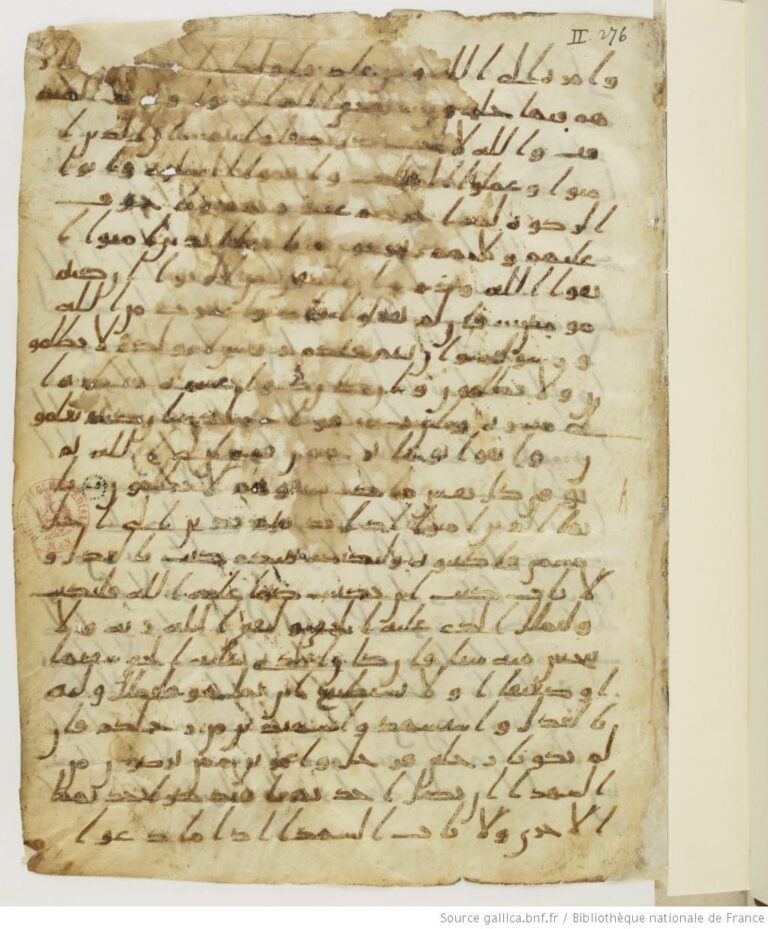
The three printings are three recognised readings of the Quran, each carrying its own named chain. A difference between printings therefore shows which reading a publisher chose. For the manuscript side of the question, see the article on the copies of Uthman.
Number 7: The personal codices of Ibn Masud and Ubayy do not show a different Quran
Critics cite reports that Ibn Masud left the opening surah and the last two surahs out of his personal copy, and that Ubayy ibn Kab added two prayers of supplication (qunut) to his. Al-Imam shows how the classical scholars answered. Some called the reports fabricated. Others pointed to the facts: Ubayy’s supplications were recited in the witr prayer and were written, on the view of al-Baqillani, as a prayer on the back of the page, and Ubayy never taught them to his pupils as Quran. Ibn al-Anbari explained that Ibn Masud left out the opening surah because it is recited in every cycle of prayer. Al-Baqillani added that if Ibn Masud had denied two surahs, the dispute with the other Companions would have been widely known, since smaller quarrels were.[9] Al-Imam concludes that the reports about the omitted and added surahs are groundless.[9]
The reports of variant wording are small in scale. Al-Imam counts 123 differences between the Uthmanic text and all the personal codices of the Companions, and 102 of them are reported from Ibn Masud alone. The Quran has over 77,000 words.[9] Many of the differences are explanatory glosses of the kind a student writes in the margin of his own copy. Ibn al-Jazari states that the Companions knew what was Quran and what was commentary, and did not allow anyone to recite by meaning in place of the text.[9] Al-Jahiz put the matter in terms a historian can test: if someone slipped one line into the poems of a minor poet, it would be known among the transmitters, so a change in a book recited day and night would not pass unnoticed.[9]
The copies Uthman sent to the provinces did differ from one another in small points of spelling. The copy of Kufa differs from that of Basra in five places, the copy of Medina from the Iraqi copies in twelve, and the copies of Damascus and Iraq in forty. All but two of the forty differ in a single letter, and the other two differ in a particle, as at 9:100.[9] Al-Dani held that every one of these differences is authentic, because each was heard from the Prophet, and that Uthman distributed them across the copies because no single copy could hold them all.[9] The variation was designed and recorded, and nobody discovered it afterwards.
Number 8: A reading is accepted only if it meets three conditions
Muslim scholars did not accept every recitation that circulated. The classical conditions, formulated by Makki ibn Abi Talib and adopted by Ibn al-Jazari, are three: a sound and well-known chain of transmission, consistency with Arabic, and agreement with the orthography of at least one of the Uthmanic copies. A reading that fails any one of them is classed as anomalous (shadhdh) and is not recited as Quran.[10] Al-Suyuti ranks the types in turn, from the mutawatir reading down to the fabricated one, and gives examples of each rejected type, among them a gloss that Sad ibn Abi Waqqas added at 4:12 and a gloss ascribed to Ibn Abbas at 2:198.[10]
The rule was enforced. Ibn Shunbudh recited according to the personal codex of Ibn Masud, and in 323 AH (934 CE) a gathering of scholars in Baghdad, with Ibn Mujahid presiding and the vizier’s support, had him beaten and forbade him to continue. Ibn Miqsam, who recited by a reading that fitted the Arabic and the script but lacked a sound chain, was told by the leading scholars of his time to stop, and he repented.[10] A text policed in this way by the community of readers is the opposite of a text drifting through unchecked variants. Al-Imam also records that Malik held that a man who recites by a personal codex differing from the Uthmanic copies should not lead the prayer.[10]
Number 9: The Cairo edition of 1924 is a printing decision
The edition printed in Cairo under King Fu’ad and associated with al-Azhar is often described as the moment the Quran was standardised. A conference of the French Institute of Oriental Archaeology in Cairo records that the edition was dated 1919 in its colophon, though it is customarily dated 1924, a date linked with the abolition of the caliphate, and that al-Azhar saw it as a way of filling the gap that abolition left.[11]
The same account notes that the edition carried appendices on abrogation, revelation and the seven readings, and that it became the main reference for European researchers after 1950 until the Medina edition of 1985 replaced it.[11] The edition is therefore a printing project with a political setting, and the sources in this section do not describe it as a change to the text.

Number 10: The stoning verse report concerns a ruling, not a missing chapter
Critics cite Umar’s statement that the verse of stoning was among the things God revealed, that the Prophet stoned and the Muslims did so after him, and that Umar feared people would say that they could not find the verse in the Book of God.[12] They pair it with a report of A’isha, in Ibn Majah, that the verse of stoning and of suckling an adult ten times was written on a paper under her pillow, and that a domestic sheep ate it when the Prophet died.[13]
The scholars who examined the first report treated it under the heading of abrogation of wording while the ruling stays (naskh al-tilawa duna al-hukm). Abu Amina Elias, citing al-Bayhaqi, states that the ruling is established and the recitation abrogated, with no known disagreement, and that stoning for the married adulterer was carried out under the Prophet, Abu Bakr and Umar.[14] The ruling therefore rests on the practice of the Prophet and his successors, and does not depend on the wording being printed in the codex. The second report carries a grading of hasan in the Darussalam edition, and the Quran’s text rests on the mass transmission of the community, not on a single sheet of paper in one house.[13] The chain and the gradings of that report receive their own treatment in the article on the sheep and the sheet.
Notes
- Sahih al-Bukhari 4992, Book of the Virtues of the Quran, report of Umar ibn al-Khattab.
- Ahmad Ali al-Imam, Variant Readings of the Qur’an: A Critical Study of Their Historical and Linguistic Origins (London and Washington: International Institute of Islamic Thought, 2006), chapter 1, on the hadiths of the seven ahruf and the opinions of Abu Ubayd, Ibn Hibban and al-Suyuti.
- Anas al-Musa, “Are the Seven Ahruf (Modes of Recitation) the Same as the Seven Qira’at (Readings) of the Quran?”, SeekersGuidance, 24 December 2023.
- Al-Qurtubi, al-Jami li-Ahkam al-Quran, vol. 1, p. 46 (Shamela text), the section stating that the seven readings ascribed to the seven reciters are not the seven ahruf. Ibn Mujahid’s Kitab al-Sab’a and its chain of transmission are described in Ibn al-Jazari, al-Nashr fi al-Qira’at al-Ashr, vol. 1, p. 81 (Shamela text).
- Ahmad Ali al-Imam, Variant Readings of the Qur’an: A Critical Study of Their Historical and Linguistic Origins (London and Washington: International Institute of Islamic Thought, 2006), chapter 1, on the meanings of harf and the six scholarly interpretations of the seven ahruf, including Ibn Qutayba’s seven categories of difference and the remark of Abu Shamah.
- IslamWeb, Fatwa No. 91213, “The ten ways of reciting the Quran”, 27 February 2006 (29 Muharram 1427), citing Ibn al-Subki, Ibn al-Jazari, al-Nawawi and al-Zarqani. https://www.islamweb.net/en/fatwa/91213/the-ten-ways-of-reciting-the-quran
- IslamWeb, Fatwa No. 91555, “The Quranic recitations published in the world”, 27 March 2006 (27 Safar 1427). https://www.islamweb.net/en/fatwa/91555/the-quranic-recitations-published-in-the-world
- IslamWeb, Fatwa No. 118960, “Popularity of the recitation of Hafs from Aasim”, 9 March 2009 (13 Rabi’ al-Awwal 1430). https://www.islamweb.net/en/fatwa/118960/popularity-of-the-recitation-of-hafs-from-aasim
- Ahmad Ali al-Imam, Variant Readings of the Qur’an: A Critical Study of Their Historical and Linguistic Origins (London and Washington: International Institute of Islamic Thought, 2006), chapter 4, on the personal codices of the Companions, including the reports on Ibn Masud and Ubayy ibn Kab, the count of differences, al-Jahiz and al-Dani.
- Ahmad Ali al-Imam, Variant Readings of the Qur’an: A Critical Study of Their Historical and Linguistic Origins (London and Washington: International Institute of Islamic Thought, 2006), chapter 6, on the development of the conditions for accepted recitations, Makki ibn Abi Talib, Ibn al-Jazari and the case of Ibn Shunbudh.
- “The Cairo Edition of the Qur’an 1924: Texts, history and challenges,” conference page, French Institute of Oriental Archaeology (IFAO), Cairo, 2021.
- Sahih al-Bukhari 6830, Book of Legal Punishments, report of Umar ibn al-Khattab.
- Sunan Ibn Majah 1944, Book of Marriage, report of A’isha, with the grading of Darussalam.
- Abu Amina Elias, “Is the stoning verse missing from the Quran?”, citing al-Bayhaqi, al-Sunan al-Kubra 15553, and Sunan al-Tirmidhi 1431.



Leave a Reply