
The Gospels show Jesus at prayer again and again: rising before dawn to pray alone, spending a whole night in prayer, falling on his face in Gethsemane. Muslims often ask a simple question about these passages. If Jesus is God, to whom was he praying?
Christians have an answer, worked out over centuries: Jesus prayed in his human nature, as a true man, while remaining God. We state that answer fairly and weigh it on its merits. This article aims to provide context to the question, insha’Allah, in seven answers: what the Gospels say about Jesus’ prayer, what he taught about prayer, how the church explained it, and how the Quran describes the same man.
Number 1: The question, and the Christian reply
The question is not a trick. Prayer is the act of a creature turning to its Creator.
The Gospels describe Jesus praying, giving thanks, asking and submitting, and they describe it often. A reader who meets these passages without a doctrine to protect will ask what they show about who Jesus was.[1]
The classical Christian reply was set out at the Council of Chalcedon in 451: Christ is one person “in two natures,” fully God and fully man, and the man prayed as men pray. The Third Council of Constantinople in 681 added that Christ had two wills, a divine will and a human will, the human always submitting to the divine.
On this view, when Jesus prayed, the human will was speaking to God. The reply is coherent within its own terms, and the question is whether the Gospels lead to it or whether it was built to meet them.[2]
Number 2: The Gospels show a praying Jesus
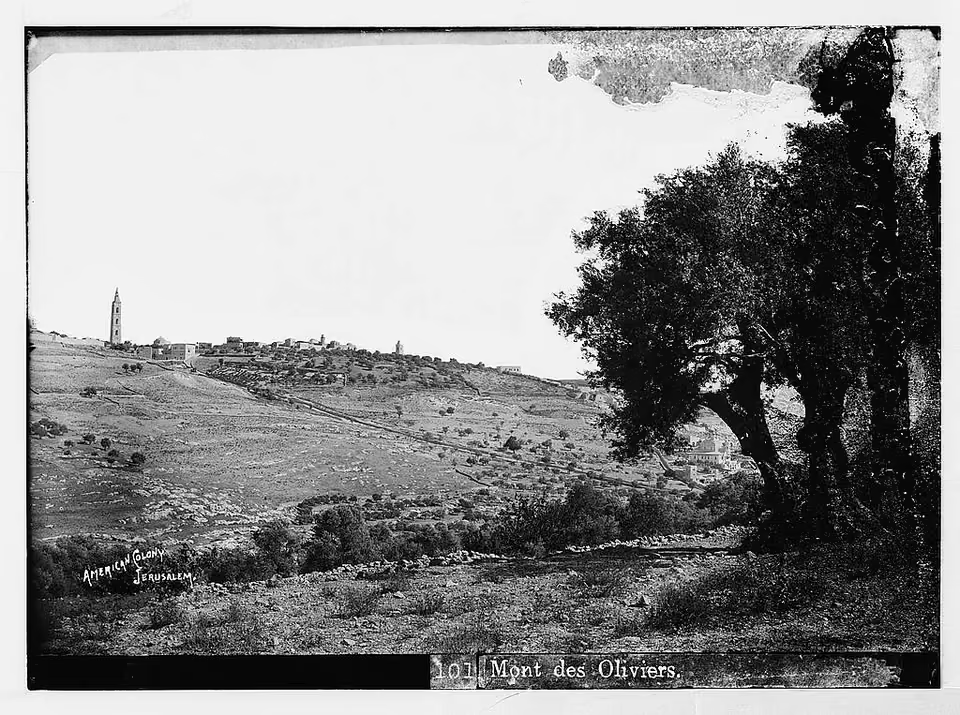
The evidence is plentiful. “And rising very early in the morning, while it was still dark, he departed and went out to a desolate place, and there he prayed” (Mark 1:35). “But he would withdraw to desolate places and pray” (Luke 5:16).
“In these days he went out to the mountain to pray, and all night he continued in prayer to God” (Luke 6:12). He prayed at his baptism (Luke 3:21), before he chose the twelve, and on the mountain of the transfiguration (Luke 9:28-29).[3]
He gave thanks to God in prayer: “I thank you, Father, Lord of heaven and earth” (Matthew 11:25). Before raising Lazarus he prayed aloud, “Father, I thank you that you have heard me” (John عليه السلام 11:41). His last long prayer in John’s Gospel is addressed to the Father, and in it he names who the true God is: “this is eternal life, that they know you, the only true God, and Jesus Christ whom you have sent” (John 17:3).[3]
The verb Luke uses in 6:12 is the ordinary verb for prayer, and the object is explicit: he prayed “to God.” The Gospel writers did not hesitate to say so.
He also prayed for others. “I have prayed for you that your faith may not fail,” he tells Peter (Luke 22:32). In John 17 he prays for his disciples: “I am praying for them… for those whom you have given me, for they are yours” (John 17:9).
And after feeding the five thousand “he went up on the mountain by himself to pray” (Matthew 14:23). Prayer was not an occasional act in the Gospels’ portrait of Jesus. It was the pattern of his days.[3]
Number 3: Gethsemane: one will yields to another
The prayer in Gethsemane is the most searching. “And going a little farther he fell on his face and prayed, saying, ‘My Father, if it be possible, let this cup pass from me; nevertheless, not as I will, but as you will’” (Matthew 26:39). Mark gives the same prayer: “Abba, Father, all things are possible for you. Remove this cup from me. Yet not what I will, but what you will” (Mark 14:36).[4]

Here Jesus falls on his face, the posture of prostration. He asks for something and submits his will to another will. And he says that all things are possible for the one he addresses, a thing he does not say of himself.
Christians read this as the human will of Christ yielding to the divine. A Muslim reads it as the prayer of a servant to his Lord, and the plain words of the passage support that reading at least as well.
The posture itself is telling. Falling on the face before God is how the Hebrew Bible describes worship, as when Abraham عليه السلام “fell on his face” before God (Genesis 17:3). The Quran describes the prophets the same way: “when the verses of the Most Merciful were recited to them, they fell down in prostration and weeping” (19:58).
Matthew adds that Jesus went away and prayed “for the third time, saying the same words again” (Matthew 26:44). A Muslim recognises in this the prayer of the prophets, repeated and humble.[4]
Luke adds that “an angel from heaven” appeared and strengthened him, and that his sweat became like drops of blood (Luke 22:43-44). Honesty requires a note here: the English Standard Version marks these two verses, because some of the earliest manuscripts, among them the papyrus known as P75 and Codex Vaticanus, do not contain them. The point of this answer does not depend on them.[4]
Number 4: "Heard because of his reverence"
The Letter to the Hebrews, which holds the highest view of Christ in the New Testament, describes his prayer in remarkable words: “In the days of his flesh, Jesus offered up prayers and supplications, with loud cries and tears, to him who was able to save him from death, and he was heard because of his reverence” (Hebrews 5:7).[5]

The verse speaks of prayers offered to one who could save him, and of an answer given because of his reverence, his godly fear. That is the language of a servant heard for his devotion.
On the cross, Matthew and Mark record him crying out the opening of Psalm 22: “My God, my God, why have you forsaken me?” (Matthew 27:46). He calls the one he addresses “my God.”[5]
After the resurrection he tells Mary Magdalene: “I am ascending to my Father and your Father, to my God and your God” (John 20:17). He places himself beside his disciples, under the same God.
Number 5: To whom he taught his disciples to pray
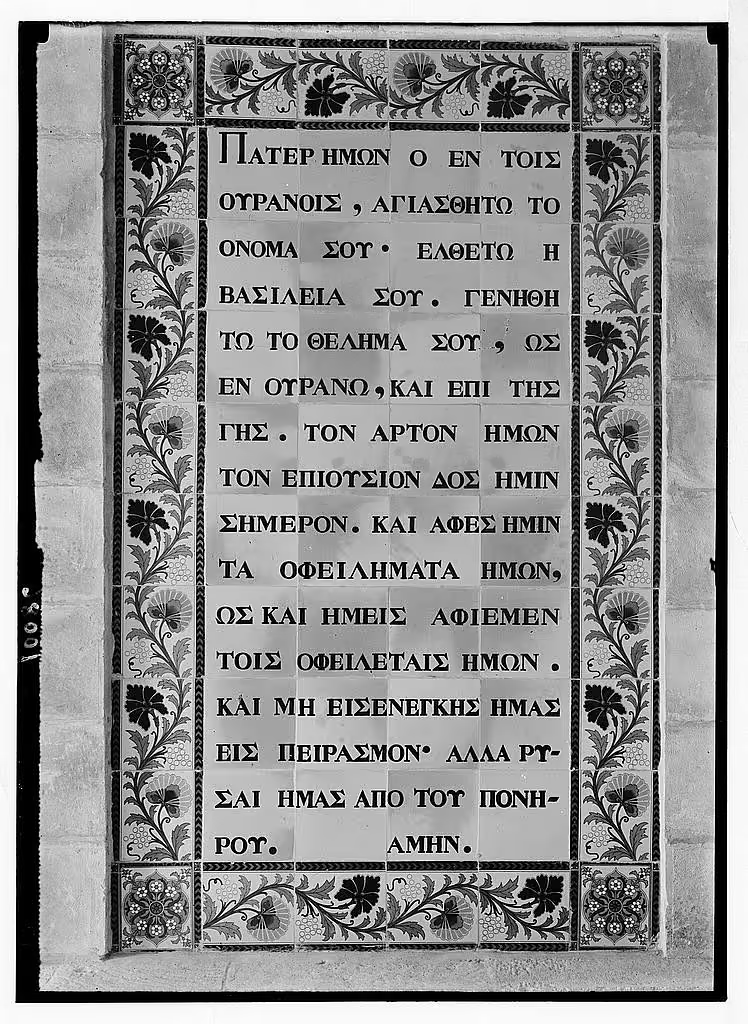
What Jesus taught matters as much as what he did. When the disciples asked him, “Lord, teach us to pray,” he answered: “When you pray, say: Father, hallowed be your name. Your kingdom come” (Luke 11:1-2; compare Matthew 6:9-13). The prayer he taught is addressed to the Father, and it asks nothing of Jesus himself.[6]
When Satan tempted him to worship, he answered from Deuteronomy: “You shall worship the Lord your God and him only shall you serve” (Matthew 4:10). To the Samaritan woman he said that “the true worshippers will worship the Father in spirit and truth” (John 4:23). And when a man called him “Good Teacher,” he replied, “Why do you call me good? No one is good except God alone” (Mark 10:17-18).[6]
None of these passages, on its own, settles the doctrine. Together they show a teacher who directed worship and prayer to the Father, and who drew a line between himself and God when others blurred it.
Number 6: Weighing the two-natures answer
The Christian answer rests on the doctrine of two natures, and it is fair to ask where that doctrine comes from. The Gospels do not state it.
It was worked out in the fourth and fifth centuries, in debates over how to hold together the confession that Jesus is God with passages like the ones above. Chalcedon’s formula, “in two natures, without confusion, without change, without division, without separation,” is a careful attempt to say both at once.[2]
The difficulty is that the Gospels present one person praying. It is Jesus himself who rises before dawn, who falls on his face, who says “not as I will.” And the Gospel of Mark has him say that of the last day “no one knows, not even the angels in heaven, nor the Son, but only the Father” (Mark 13:32). A doctrine that answers each such passage by assigning it to the human nature can absorb any passage at all, and so the passages can no longer test it.[7]
Al-Faruqi’s rule for such questions is to honour the revelation and examine what was built on it later. The prayers of Jesus belong to the first; the two-natures formula belongs to the second. Our articles on why Jesus is not God in the Quran’s account and on where Jesus is said to claim divinity take the wider question.
Number 7: The Quran's Jesus at prayer
The Quran describes Jesus as the Gospels’ praying Jesus would lead a reader to expect. As a newborn he speaks: “I am the servant of God. He has given me the scripture and made me a prophet. He has made me blessed wherever I am, and has enjoined on me prayer and almsgiving as long as I live” (19:30-31). He calls his people to the same worship: “God is my Lord and your Lord, so worship Him. This is a straight path” (19:36; compare 3:51).[8]
On the Day of Judgement, the Quran says, Jesus will answer for what he taught: “I said to them only what You commanded me: Worship God, my Lord and your Lord” (5:117). And it says of him: “The Messiah would never disdain to be a servant of God, nor would the angels who are near to Him” (4:172). In the Quran, as in the Gospels, Jesus prays, prostrates and calls others to worship the one God, his Lord and theirs.[8]
The bottom line
The Gospels show Jesus praying before dawn and through the night, giving thanks, falling on his face, submitting his will, crying out “my God,” and teaching his disciples to pray to the Father. Christians explain these prayers by the doctrine of two natures, settled at Chalcedon in 451 and refined in 681. The doctrine was framed later, to meet passages like these, and it can absorb any passage at all.
Read as they stand, the prayers of Jesus are the prayers of a servant to his Lord, the same Jesus the Quran describes, who was enjoined to prayer as long as he lived and who told his people to worship God, his Lord and theirs. God knows best.
Notes
- Mark 1:35; Luke 5:16; 6:12; 22:41; Matthew 26:39. Bible quotations follow the English Standard Version.
- The Definition of the Council of Chalcedon (451) and the Exposition of Faith of the Third Council of Constantinople (681), in Norman P. Tanner (ed.), Decrees of the Ecumenical Councils, vol. 1 (London: Sheed and Ward; Washington: Georgetown University Press, 1990).
- Mark 1:35; Luke 3:21; 5:16; 6:12–13; 9:28–29; Matthew 11:25; John 11:41–42; 17:1–3; Luke 22:32; John 17:9; Matthew 14:23.
- Matthew 26:36–44; Mark 14:32–36; Luke 22:41–44, with the ESV note on verses 43 and 44; Genesis 17:3; Quran 19:58.
- Hebrews 5:7; Matthew 27:46; Mark 15:34; Psalm 22:1; John 20:17.
- Luke 11:1–4; Matthew 6:9–13; Matthew 4:10, quoting Deuteronomy 6:13; John 4:23; Mark 10:17–18.
- Mark 13:32; compare Matthew 24:36.
- Quran 19:30–31; 19:36; 3:51; 5:116–118; 4:172; compare 43:63–64.


Leave a Reply