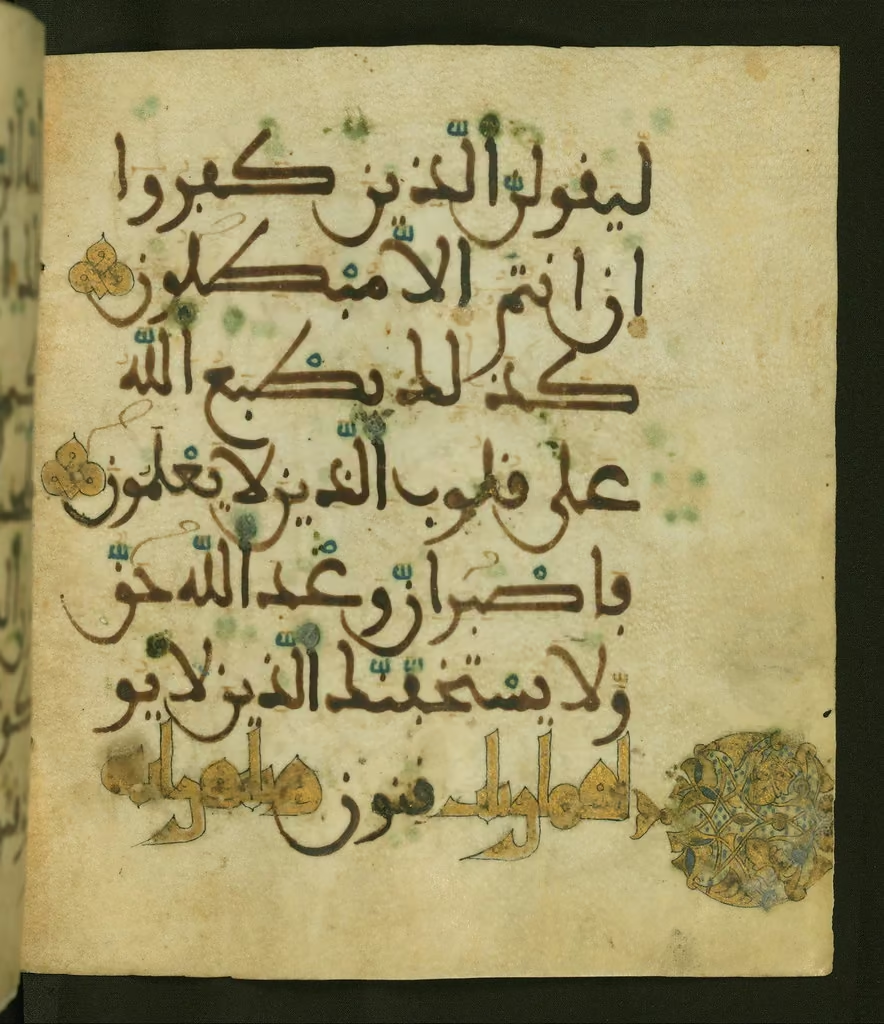
“And they plotted, and God plotted, and God is the best of plotters” (3:54). Critics of Islam quote this verse often, sometimes in the translation “God is the best of deceivers.” From it they build a sharp argument.
If God deceives, nothing He says can be trusted, including His promises. And if, as the Quran says, it was made to appear that Jesus was crucified, then God deceived the world for six centuries.
The argument turns on one Arabic word, makr, and on a handful of verses. This article aims to provide context to that word, insha’Allah, in seven answers that state the objection at full strength, look at what the word means and where it is used, and then apply the same test to the Bible, which the critics usually hold as their standard.
Number 1: The objection, stated fairly
The verses are real. Besides 3:54, the Quran says of the plot against the Prophet in Mecca: “They plot, and God plots, and God is the best of plotters” (8:30). Of the hypocrites it says: “They seek to deceive God, but it is He who outwits them” (4:142).
It says of the unbelievers: “They are devising a plan, and I am devising a plan” (86:15-16). And of Jesus: “They did not kill him and they did not crucify him, but it was made to appear so to them” (4:157).[1]
Several English versions render makr as “scheming” or “deceiving,” and a reader who meets the words in English alone can fairly ask what they mean when said of God. The question deserves an answer from the Arabic and from the classical commentators, who asked it before any modern critic did.
Number 2: What makr means in Arabic
Makr is a hidden plan: a scheme laid without the other party’s knowledge, to turn him from what he intends. In itself the word says nothing about whether the plan is good or bad.
The Quran shows this by qualifying it when it means the bad kind: “the evil plot encompasses none but its own people” (35:43). If makr meant only deceit, the word “evil” in that verse would add nothing.[2]

The commentator al-Baghawi, writing in the twelfth century, put the distinction plainly in his comment on 3:54: makr from created beings is “malice, deception and stratagem,” while makr from God is “drawing the servant on step by step and seizing him suddenly from where he does not know,” as God says, “We will draw them on step by step from where they do not know” (7:182). He quotes the grammarian al-Zajjaj: the makr of God is His requital of their makr, and the requital is called by the name of the deed because it answers it.[3]
A fair English rendering of 3:54, then, is “they planned, and God planned, and God is the best of planners.”
One more fact points the same way. The Prophet taught that God has ninety-nine names, and the best-known list of them, preserved by al-Tirmidhi, includes the Truth, the Just and the Faithful.
It does not include “the Plotter.” The scholars drew a rule from this: a verb the Quran uses of God in answer to a deed is not turned into a name or quality of God standing on its own. God is described as planning against those who plot; He is never called a plotter as His nature.[3]
Number 3: Every verse answers a plot
The pattern holds wherever the word is used of God. It never describes God beginning a deception against people who meant no harm. It describes God’s answer to people who were already plotting.

In 3:54 the plotters are those who sought to kill Jesus. In 8:30 they are the leaders of Quraysh, who met to “restrain you, or kill you, or drive you out,” and the verse recalls how the Prophet left Mecca safely on the night they planned to kill him. In 27:50 it is the nine men of Thamud who swore to murder the prophet Salih and his family by night: “They planned a plan, and We planned a plan, while they did not perceive.” In 86:15-16 it is those who scheme against the Quran itself.[4]
The Quran tells how the plan of 8:30 unfolded. The Prophet left Mecca by night with Abu Bakr and hid in a cave while the search went on around them: “God supported him when those who disbelieved drove him out, the second of two, when they were in the cave and he said to his companion, Do not grieve, God is with us” (9:40).
Nothing in the account involves a lie. The plotters were simply outplanned.[4]
Al-Tabari, in his commentary on 3:54, explains God’s makr in the same terms. The plotters agreed among themselves to kill Jesus, and God saved him. He adds a second reading: that God’s makr is His leaving them to go on step by step until the appointed term, as he had explained for “God mocks them” (2:15).[5]
Number 4: "He outwits them": naming the answer by the deed
The commentators read 4:142 and 2:15 the same way. “They seek to deceive God, but it is He who outwits them.” “God mocks them.” In each case the verb used of God repeats the verb used of the wrongdoers, and the classical grammarians named the device: the requital is given the name of the deed it answers.[3]

The Quran states the principle openly: “The recompense of an evil is an evil like it” (42:40). No reader takes that verse to mean that just punishment is itself a sin.
The same holds for “they forgot God, so He forgot them” (9:67), where God’s “forgetting” is His leaving them to what they chose. English does the same when it says that a swindler “got a taste of his own medicine” or that a plotter was “caught in his own trap.”[6]
On this reading, which is the standard reading of the commentators, there is no verse in which God lies to the innocent. Each verse describes God turning a plot back on the people who made it.
Number 5: Who was deceived in 4:157?
The sharpest form of the objection concerns the crucifixion. “It was made to appear so to them” (4:157). Does this mean that God misled the disciples, and through them the Christian church?

The verse names whom it means. “Them” are those who claimed, “We killed the Messiah, Jesus son of Mary” (4:157), the people who sought his death.
The plan described in 3:54 is God’s answer to their plot, and al-Tabari and Ibn Kathir both explain it as the rescue of Jesus from those who came to kill him.[5][7] The commentators differ over how the likeness came about, and the Quran does not settle the details.
And the same Quran that reports the event corrects the record openly, for everyone, in the plainest words: “they did not kill him and they did not crucify him.” A deceiver hides the truth. The Quran states it. Our article on what the Quran says about the crucifixion takes the verse and its readings in full.
Number 6: The Bible says the same, and more strongly
A critic who holds the Bible as the standard should apply the same test to it, and the Bible uses stronger language than the Quran. “With the crooked you make yourself seem tortuous” (Psalm 18:26). God “catches the wise in their own craftiness” (Job 5:13), a line Paul quotes with approval (1 Corinthians 3:19).[8]
Some passages go further. In 1 Kings 22 God asks who will entice King Ahab to his death, and a spirit offers to be “a lying spirit in the mouth of all his prophets”; the prophet Micaiah reports, “the LORD has put a lying spirit in the mouth of all these your prophets” (1 Kings 22:20-23). God says in Ezekiel, “if the prophet is deceived and speaks a word, I, the LORD, have deceived that prophet” (Ezekiel 14:9).
Paul writes that “God sends them a strong delusion, so that they may believe what is false” (2 Thessalonians 2:11). Jeremiah complains, “O LORD, you have deceived me, and I was deceived” (Jeremiah 20:7).[8]
Jewish and Christian interpreters read these passages as the Muslim commentators read the Quran: as God’s judgement on those who had already chosen falsehood, given in language that matches their deed. That reading is fair. It is fair for the Quran too, and a critic cannot grant it to one book and refuse it to the other.
Number 7: God's word is truth
The Quran’s description of God leaves no room for a deceiving God. “Who is truer than God in speech?” (4:87).
“The promise of God is true, and who is truer than God in word?” (4:122). One of the names of God is al-Haqq, the Truth: “that is because God is the Truth” (22:6).[9]
This is part of the oneness of God itself. In al-Faruqi’s reading of tawhid, truth is one, because God, the source of both revelation and creation, is one; reason and revelation cannot finally contradict each other, and God does not set the one against the other to mislead His creatures.[10]
A God who lied in His revelation would destroy the very ground on which the Quran asks to be tested. The verses on makr say something narrower and harder: that a plot against God’s messengers will fail, and that those who make it will find it turned against them.
The bottom line
The critics quote the verses correctly, and English translations sometimes make them sound worse than they are. Makr means a hidden plan, good or bad according to its aim. In every verse where it is used of God, it answers a plot that someone else made, against Jesus, against Muhammad, against Salih, against the message.
The commentators read these verses as requital named by the name of the deed, and the Quran states that principle in so many words. The Bible uses stronger language of God and is read the same way.
The Quran calls God the Truth and asks who is truer than He in speech. A plan that saves a prophet from his murderers and lets their own scheme fall on them is no deception of the innocent. God knows best.
Notes
- Quran 3:54; 8:30; 4:142; 86:15–16; 4:157.
- Quran 35:43; compare 7:99, 13:42 and 27:50–51.
- Al-Baghawi, Ma’alim al-Tanzil, commentary on Quran 3:54, quoting al-Zajjaj; Quran 7:182–183; the names of God in Jami’ al-Tirmidhi 3507, report of Abu Hurayra.
- Quran 3:52–54; 8:30; 9:40; 27:48–51; 86:15–17.
- Al-Tabari, Jami’ al-Bayan, commentary on Quran 3:54 (ed. Shakir, vol. 6, pp. 454–455), referring to his commentary on 2:15 (vol. 1, pp. 301–306).
- Quran 42:40; 9:67; 2:15; 4:142.
- Ibn Kathir, Tafsir al-Quran al-Azim, commentary on Quran 3:54.
- Psalm 18:26; Job 5:13; 1 Corinthians 3:19; 1 Kings 22:19–23; Ezekiel 14:9; 2 Thessalonians 2:11; Jeremiah 20:7. Bible quotations follow the English Standard Version.
- Quran 4:87; 4:122; 22:6.
- Ismail Raji al-Faruqi, Al Tawhid: Its Implications for Thought and Life, 2nd edition (Herndon: International Institute of Islamic Thought, 1992), chapter 4, section III.


Leave a Reply