
A questioner at a public debate between a Christian apologist and a Muslim scholar put it bluntly. Muslims say the gospels are weak because Jesus did not write them. Muhammad ﷺ ﷺ never wrote down a single word either. So why should anyone trust the Quran or the hadith?[1]
It is a fair question, and it deserves a straight answer. The seven points below take the Quran first, then the hadith, then the comparison itself. Each is graded for how much weight it can carry.
Number 1: The Prophet dictated the Quran to scribes as it came
When a passage came down, the Prophet called for someone to hold the pen. Al-Bukhari records al-Bara ibn Azib describing the moment a verse on those who stay behind from fighting came down: the Prophet said, “Call Zayd for me, and let him bring the board, the inkwell and the shoulder blade.” He then told Zayd to write. A blind Companion, Ibn Umm Maktum رضي الله عنه, spoke up about his own case, and the words “except those who are disabled” were revealed on the spot and added.[2]

That report shows the method: revelation, then dictation, then a written record checked in the presence of the man who recited it. When Abu Bakr رضي الله عنه later chose Zayd ibn Thabit to gather the Quran, his reason was simple: “You used to write the revelation for the Messenger of God.”[3]
Zayd was one scribe among many. Ibn Hajar, in his commentary on al-Bukhari, names others: Ubayy ibn Kab, the first to write for the Prophet in Medina, the four caliphs, al-Zubayr ibn al-Awwam, Abd Allah ibn al-Arqam and Abd Allah ibn Rawaha among them. He adds that Zayd only became Muslim after the Hijra, so the Meccan revelation was written by others.[3]
The Quran itself records the opponents’ charge that the Prophet had the old tales “written down, and they are dictated to him morning and afternoon”.[4] His critics in Mecca knew that writing was going on. They disputed its source and took the writing for granted.
The Quran also says he had not written any scripture “with your right hand” before it came.[5] Whether he could read at all is a separate debate, answered in Was Muhammad illiterate?. Either way, the point stands: the writer was a scribe, and the speaker was present.
Strength: strong. The reports are in Sahih al-Bukhari and the names of the scribes are recorded. The point rests on Muslim sources, which a sceptic may discount, and entry 4 brings in the physical evidence.
Number 2: Written pieces and memorised recitation existed in his lifetime
Ibn Hajar states the position of the classical scholars in one sentence: “The whole Quran was written in the time of the Prophet, but it was not gathered in one place, and the surahs were not put in order.”[6]
The writing materials were whatever Arabia had. Zayd, describing his later search, lists palm stalks and thin white stones, along with “the breasts of men”, meaning what people held by heart.[7] So the text lived in two places at once: on scattered pieces, and in the memories of Companions who recited it daily in prayer.
A report in Sahih Muslim has the Prophet say, “Do not write anything from me except the Quran.” Ibn Hajar quotes it here and explains that it concerned a particular kind of writing, keeping the Quran apart from everything else.[6] The Prophet put a fence around the written Quran so nothing else got mixed into it.
Strength: strong. Writing during the Prophet’s life is reported by the main sources and accepted by the classical scholars. How complete each private collection was is less certain, and no written piece from his lifetime has been identified.
Number 3: Abu Bakr gathered the pages, and Uthman made the standard copies
After the battle of Yamama in 632 or 633, where many reciters were killed, Umar urged Abu Bakr to gather the Quran into one set of pages. Abu Bakr hesitated at first, asking how he could do something the Prophet had not done. Then he agreed, and gave the task to Zayd. The pages stayed with Abu Bakr, then with Umar, then with Umar’s daughter Hafsa.[7]

Al-Khattabi, quoted by Ibn Hajar, gives one reason the Prophet left no single bound copy: revelation was still coming, and a verse could still be replaced. Once his death closed the revelation, the caliphs gathered it.[8]
About 20 years after the Prophet, Uthman had Hafsa’s pages copied into standard codices and sent to the provinces. The site covers that story, the burning of other copies and the surviving manuscripts in Uthman’s copies, and it is not repeated here.
Strength: strong. The chain from the Prophet to a single gathered text is two years long on the traditional account, and to the standard copies about 20. The account comes from hadith, which is why entry 6 matters.
Number 4: Early manuscripts fit the account, within limits
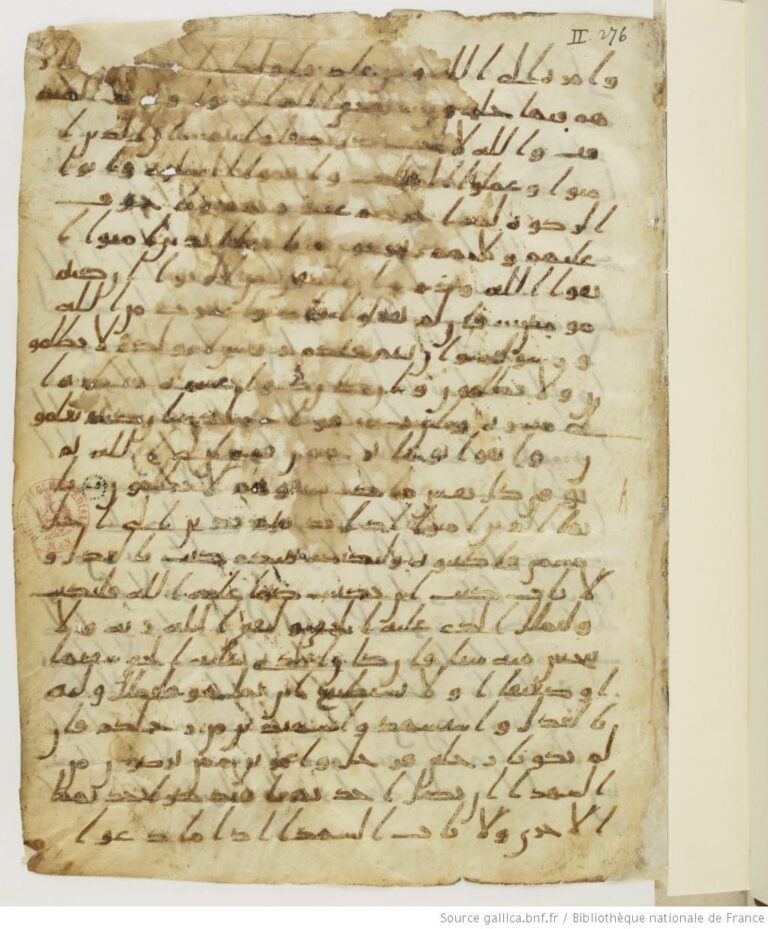
Two leaves at the University of Birmingham, with parts of chapters 18 to 20, gave a radiocarbon date of 568 to 645 at 95.4 percent probability.[9] A Quran manuscript at the University of Tübingen was dated in 2014 to between 649 and 675, with the same probability.[10]

Be careful with these numbers. Radiocarbon dates the death of the animal whose skin became the parchment. The ink went on later, perhaps years later. A date range is a range, and the early edge of the Birmingham one tells you little.
What the dates do support is modest and enough: written copies of the Quran in its recognised form were circulating within a few decades of the Prophet, which is what the Muslim account predicts. Quran preservation on Reddit sets out how far academic scholars go on this, and Does a preserved text prove it is true? explains why preservation alone settles nothing about the source.
Strength: moderate. The manuscripts confirm an early written text. They cannot confirm dictation under the Prophet, and a fair writer does not claim they do.
Number 5: The Gospels differ because no chain links them to Jesus
The four Gospels were written in Greek. Jesus spoke Aramaic. Most critical scholars date Mark to around 70 and John to the last decade of the first century, so 40 to 70 years after Jesus.[11]

None of them names its author in its text. The titles “according to Matthew” and the rest come from later tradition, and the earliest report on who wrote Mark and Matthew comes from Papias, preserved by Eusebius.[11] Luke tells his reader openly that he is writing from what was “delivered” by those “who from the beginning were eyewitnesses and ministers of the word”.[12] Luke never claims to be one of them.
So the gap lies between the speaker and the page. No source names a scribe who took down the words of Jesus while he was alive, or a chain of named people between him and the evangelists. Christians who defend eyewitness links, such as Richard Bauckham, argue for them from tradition and internal clues, since no recorded chain exists.
Muslims honour the Injil as a revelation God gave Jesus, and the Gospels carry much of his message alongside other material. Where is the Injil? and Manuscript transmission cover what the comparison does and does not show.
Strength: strong. The dates, the language and the anonymity are the mainstream scholarly position, Christian scholars included.
Number 6: Hadith come with chains, and scholars graded them one by one
Here the questioner has a real point, and Muslims should say so. Hadith are a different kind of text from the Quran. Most were passed on by individuals, often by meaning, and many were written down in collections only in the second and third centuries after the Hijra. Some were forged. Muslim scholars said that first.
Their answer was the isnad, the chain of named narrators attached to every report. Muhammad ibn Sirin, who died in 110, describes when it began: “They did not ask about the isnad. When the fitna came, they said: name your men to us.” Reports from trustworthy people were taken, and reports from people of innovation were not.[13]
Abd Allah ibn al-Mubarak put the principle in a sentence: “The isnad is part of the religion. Without the isnad, anyone could say whatever he liked.”[14] Muslim placed these sayings at the opening of his Sahih, under a heading that says criticism of narrators is a duty.
The critics were hard on their own. Yahya ibn Said al-Qattan said, “We have not seen the righteous lie in anything more than in hadith.” Muslim explains what he meant: pious men repeated reports carelessly without meaning to lie.[15] So piety earned a narrator no pass.
The result is a graded body of reports: sound (sahih), good (hasan), weak (daif) and fabricated (mawdu). Al-Albani alone published a multi-volume series listing weak and fabricated hadith that Muslims had circulated.[16] A Muslim who quotes a hadith should know its grade. The site answers the main academic challenge to this system in Schacht, isnads and the dating of hadith.
Strength: moderate. The method is real, early and self-critical. It sorts reports by the reliability of their chains, and a sound chain makes a report probable, which falls short of the certainty Muslims claim for the Quran.
Number 7: The parity question has a fair answer
The founder’s own handwriting is a test no historian applies; Plato wrote down Socrates, and historians still read Plato for Socrates. The fair test for any scripture is the link between the speaker and the written text: who wrote it, when, and how we know.
Run that test on all three. The Quran was dictated to named scribes in the speaker’s presence, memorised by many, gathered within two years of his death and standardised within 20, and early manuscripts fit that account. The hadith carry named chains, and each report passes or fails on its own chain, so some are sound and some are not. The Gospels carry no chain at all; their authors are unnamed in the text and wrote in another language decades later.
The Muslim speaker, answering the questioner, conceded that the hadith face a problem close to the one Muslims raise about the Gospels, and said Muslims should not attack Christians on that point. He also said the Quran was an exception, since most historical-critical scholars trace it to Muhammad.[17] On the hadith, that concession goes too far for most Muslim scholars, who hold that the grading system answers the problem. On the principle, he is right: an argument a Muslim would reject when it is aimed at the hadith should not be aimed at the Gospels either.
One more honest admission. The story of Abu Bakr’s collection itself reaches us through hadith. What lifts it above an ordinary report is that the Quran has a second line of evidence: an unbroken recitation by very large numbers in every generation, and manuscripts from the first century. Does the Islamic dilemma have a Christian twin? applies the same even-handed test to another argument from this debate.
Strength: strong on the Quran, mixed on the hadith. The comparison favours the Quran clearly. For the hadith it favours the graded sound reports, and Muslims gain nothing by pretending every report is sound.
The bottom line
Muhammad did not write the Quran down himself. He had it written, by people whose names we know, while he was there to correct them. That is a stronger chain than a book written by its author and found decades later with no history attached.
The hadith are a mixed record, and the Muslim scholars who sorted them were the first to say so. A questioner who presses that point is doing what the scholars did, and deserves to be thanked. Allahu alam.
Notes
- Audience question in the debate “Islamic Dilemma or Christian Dilemma?”, between a Christian apologist and a Muslim scholar, question-and-answer session (video transcript).
- Sahih al-Bukhari 4990, Book of the Virtues of the Quran, chapter “The scribe of the Prophet”, report of al-Bara ibn Azib; the verse is Quran 4:95. Ibn Hajar al-Asqalani, Fath al-Bari (Salafiyya edition), vol. 9, p. 22 (Shamela text).
- Sahih al-Bukhari 4989, same chapter, report of Zayd ibn Thabit; Ibn Hajar al-Asqalani, Fath al-Bari (Salafiyya edition), vol. 9, p. 22, on the other scribes (Shamela text).
- Quran 25:5.
- Quran 29:48.
- Ibn Hajar al-Asqalani, Fath al-Bari (Salafiyya edition), vol. 9, p. 12 (Shamela text), quoting Sahih Muslim 3004, report of Abu Said al-Khudri.
- Sahih al-Bukhari 4986, Book of the Virtues of the Quran, chapter “The collection of the Quran”, report of Zayd ibn Thabit; Ibn Hajar al-Asqalani, Fath al-Bari (Salafiyya edition), vol. 9, pp. 10 to 11 (Shamela text).
- Ibn Hajar al-Asqalani, Fath al-Bari (Salafiyya edition), vol. 9, p. 12, quoting al-Khattabi (Shamela text).
- University of Birmingham, Cadbury Research Library, MS 1572a; radiocarbon result OxA-29418; University of Birmingham, press release, 22 July 2015.
- Tübingen, Universitätsbibliothek, Ma VI 165; University of Tübingen, press release, November 2014, on the radiocarbon dating carried out for the Coranica project.
- Raymond E. Brown, An Introduction to the New Testament (New York: Doubleday, 1997), on the date and authorship of each Gospel; Eusebius, Ecclesiastical History 3.39.15 to 16, for Papias.
- Luke 1:1 to 2 (English Standard Version).
- Sahih Muslim, Introduction, chapter “The isnad is part of the religion”, sayings of Muhammad ibn Sirin; ed. Muhammad Fuad Abd al-Baqi, vol. 1, pp. 14 to 15 (Shamela text).
- Sahih Muslim, Introduction, same chapter, saying of Abd Allah ibn al-Mubarak; ed. Abd al-Baqi, vol. 1, p. 15 (Shamela text); al-Nawawi, Sharh Sahih Muslim, vol. 1, p. 87 (Shamela text).
- Sahih Muslim, Introduction, saying of Yahya ibn Said al-Qattan with Muslim’s explanation; ed. Abd al-Baqi, vol. 1, pp. 17 to 18 (Shamela text).
- Muhammad Nasir al-Din al-Albani, Silsilat al-ahadith al-daifa wa al-mawdua (Riyadh: Maktabat al-Maarif).
- The Muslim speaker, reply to the audience question in the debate cited in note 1.






Leave a Reply