
Some stories in the Quran are short on detail on purpose. The Quran leaves the names, the places and the dates out, and the commentators filled them in, with different answers. Here are five, with what the text says and what it does not.
Each one raises a question that readers ask at once: who was this, where was it, and why does the Quran tell it this way? The classical commentary on the Quran (tafsīr) offers several answers to each, and the disagreement among scholars is part of the record. The entries below separate what the verses state from what later tradition added, so that the reader can see how far each answer rests on the text.
Number 1: Khidr
In Surah al-Kahf, Moses meets “a servant of Ours to whom We had given mercy from Us and taught knowledge from Our presence.”[1] Moses asks to follow him in order to learn, and is warned that he will not have patience. The man does three things that seem wrong: he damages a boat, kills a boy, and rebuilds a wall for a town that had refused them hospitality, without asking payment. Each is explained at the end by a hidden reason. The boat belonged to poor men and a king was seizing sound ships; the boy’s parents were believers and he would have burdened them with rebellion; the wall guarded a treasure for two orphans.
The Quran does not name him. A hadith reported by Ubayy ibn Kaʿb identifies him as Khidr, “the Green One”, because he sat on bare ground that turned green beneath him.[2] Scholars differed on whether he was a prophet or a righteous servant, and most held that he has died. The strongest objection is that the story seems to approve a killing. The answer given is that the servant says he acted by command and not from himself (18:82), a case of knowledge granted to one man, and that it gives nobody a rule to copy.
Number 2: Gog and Magog
Dhu al-Qarnayn, a just ruler who travels east and west, is asked by a people to protect them from Yājūj and Mājūj, who were causing corruption in the land. He has them bring blocks of iron, fills the gap between two mountains, and has molten copper poured over it. The barrier could not be climbed or pierced. He said: “This is a mercy from my Lord. When the promise of my Lord comes, He will level it.”[3] Gog and Magog are mentioned again in Surah 21, which says that when they are let loose they descend “from every elevation”.[4]
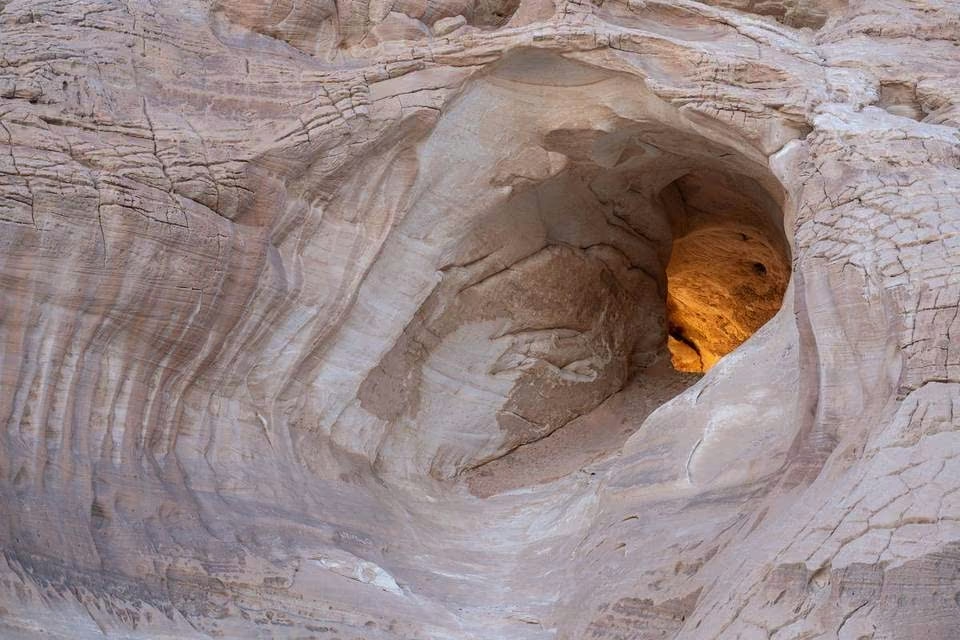
A hadith reported from Zaynab bint Jahsh has the Prophet saying that an opening the size of a ring had already been made in the wall of Gog and Magog.[5] Muslim scholars have not located the wall. Some say it is figurative, medieval geographers looked for it in the Caucasus or Central Asia, and the Quran gives no site. The skeptic asks how a wall can still stand unseen. The reply from the text is that the account serves as a warning about the end of time and was never meant as a map, and that its detail is the promise of God, who will level it at the appointed time.
Number 3: The Companions of the Cave
Young men flee a ruler who persecutes their belief in one God, take refuge in a cave, and are put to sleep. The Quran says they stayed “three hundred years and added nine”, and that God knows best how long they stayed.[6] People will dispute how many they were: some will say three, the fourth their dog; some five, the sixth their dog; some seven, the eighth their dog. The Prophet is told not to argue about it but to say: “My Lord knows best their number.”[7] The Quran gives their dog, and no names.
The puzzle is why a story with a famous parallel in Christian tradition, the Seven Sleepers of Ephesus, is told here so sparingly. A sceptic will call it borrowing. The Quran says that it relates their story “in truth” (18:13), and gives its purpose in 18:21: people were made to find them so that they would know the promise of God is true and that the Hour is beyond doubt. The answer commentators give is that a number and names would distract from that point. Ibn Abbas is reported to have said that he was among the few who knew, and that they were seven.
Number 4: Harut and Marut
Surah al-Baqara says that people followed what the devils taught of magic “and what was sent down to the two angels at Babylon, Harut and Marut.”[8] The two said, “We are only a trial, so do not disbelieve,” yet people learned from them what separates husband and wife. The verse adds that none of it harms anyone except by the permission of God.

It is one of the most discussed verses. Most commentators read it as two angels sent as a test, who warned each person before teaching. Another reading, attributed to Ibn Abbas and al-Hasan al-Basri, vocalises the word as malikayn, “two kings”, which removes the difficulty of angels teaching sorcery. A third takes the particle mā as a negation, so that nothing was sent down to the two angels at all. Stories in which the two angels fall for a woman and are punished rest on weak chains, and many scholars rejected them. Whichever reading is taken, the lesson is the same: magic is a trial and a disbelief, and nobody can claim a warning was withheld.
Number 5: The People of the Rass
The Quran names the “people of the Rass” twice. In Surah al-Furqan they appear beside ʿAd, Thamud and many generations between, and in Surah Qaf they stand among the peoples before Quraysh who denied their messengers, together with the people of Noah and Thamud.[9] It does not say who they were. The word rass means a well or a trench, and the name was taken to mean people who lived at one or who were cast into one.
Commentators gave many answers, among them a people of Yamama, a people who killed their prophet by throwing him into a well, and the people of a place near Najd. Al-Tabari reports several of these and settles on none. None is certain, and the reports go back to early authorities, not to a statement of the Prophet. The sceptic may say the Quran names a people it cannot place. The reply is that the verses use the name only in a list, for a single claim: those who denied their messengers met their end. A reader needs nothing further to take that warning.
The bottom line
In all five stories the Quran states what the believer needs and withholds the rest: a servant whose knowledge exceeds that of a prophet, a barrier that stands until God decides, a number nobody can fix, an angelic trial, and a people known only by a well. The reports that fill the gaps differ, and many of them are weak.
A reader who wants names and maps will be disappointed, but the pattern is consistent. Where the Quran gives detail, the detail serves the lesson, and where commentators disagree, the disagreement involves what the text leaves open. The sound position is to hold the verses as they stand, treat the later answers as opinions weighed by their sources, and decline to build any belief on what the Quran itself does not say.
Notes
- Quran 18:60–82, with 18:65 quoted.
- Sahih al-Bukhari, the hadith of Moses and Khidr, reported by Ubayy ibn Kaʿb; also in Sahih Muslim. Sahih al-Bukhari 122, checked on sunnah.com; Ibn Hajar al-Asqalani, Fath al-Bari (Salafiyya edition), vol. 1, p. 217 (Shamela text).
- Quran 18:83–98, with 18:98 quoted.
- Quran 21:96.
- Sahih al-Bukhari and Sahih Muslim, the hadith of Zaynab bint Jahsh on the opening in the wall. Sahih al-Bukhari 3346 (Prophets, “The story of Gog and Magog”), report of Zaynab bint Jahsh, checked on sunnah.com; Ibn Hajar al-Asqalani, Fath al-Bari (Salafiyya edition), vol. 6, p. 381 (Shamela text).
- Quran 18:9–26, with 18:25–26.
- Quran 18:22.
- Quran 2:102.
- Quran 25:38; 50:12; see also al-Tabari’s commentary on 25:38.


Leave a Reply