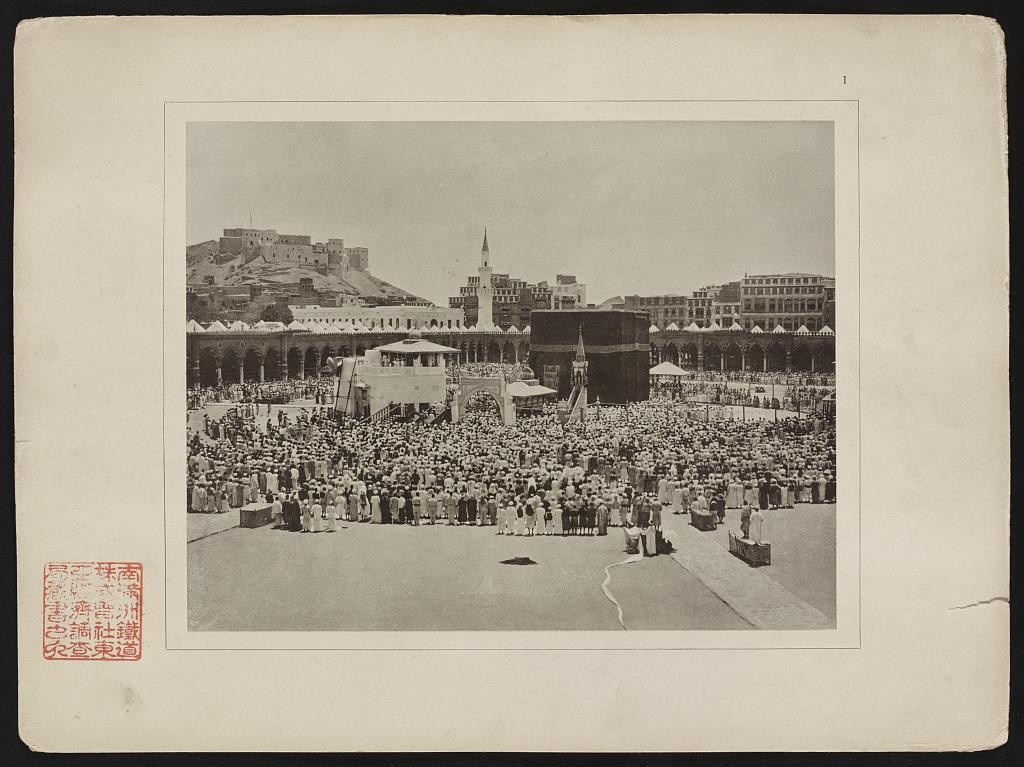
A favourite challenge: the Quran calls itself clear and detailed, so show the five daily prayers (salah) from the Quran alone. If you cannot, the book is not detailed after all.
The challenge assumes Islam was meant to run on the Quran alone. The Quran itself says otherwise. The entries below set out what the Quran gives on the times of prayer, where it sends readers for the rest, what its claim to detail means, how the five prayers were handed down, and what happens when the same test is turned on the New Testament.
Number 1: The Quran names the prayer times
It tells believers to establish prayer at the two ends of the day and in the early hours of the night.[1] It points to prayer from the sun’s decline to the darkness of night, and the recitation at dawn.[2] It speaks of glorifying God before sunrise and before sunset, and in the hours of the night.[3]
Another passage calls for glorifying God in the evening, in the morning, in the afternoon and at noon, and elsewhere the Quran says that prayer is prescribed for believers at fixed times.[4] Dawn, noon, afternoon, sunset and night can all be read out of these scattered verses, and the classical jurists drew the five from them together with the practice they had seen.
The times are there. The count and the form come from somewhere else, and the Quran says where.
Number 2: The Quran sends you to the Prophet for the rest
It tells believers to obey God and obey the Messenger,[5] and to take what the Messenger gives and refrain from what he forbids.[6] It describes him as the one who explains to people what was sent down to them.[7] It calls his conduct a good example for those who hope in God and the Last Day.[8]

A book that tells you to follow a teacher for the detail has told you where the detail lives.
The Quran treats other duties the same way. It commands zakah, the annual giving, many times without stating the rates, and the pilgrimage (hajj) without setting out its rites. Nobody has been able to follow those commands without the Prophet’s teaching. The jurists, al-Shafii among them, argued from these verses that the Prophet’s explanation is part of how the Quran is meant to be read.
Ismail al Faruqi puts the relation in a single phrase: the Prophet’s practice (sunnah, “trodden path”) supplies “the exemplary ‘how’ for the ‘what’ of revelation”, and from it Muslims take the whole form of their worship.[9]
Number 3: "Detailed" describes guidance, not a manual
When the Quran calls itself a detailed explanation of all things, the classical reading is that it sets out everything needed for guidance, directly or by pointing to its source.[10] It never claims to be a liturgical rubric. The critic’s reading makes “detailed” mean something no Muslim scholar ever took it to mean.
The strongest form of the objection quotes a second verse: God has neglected nothing in the Book.[11] Commentators differ on whether “the Book” there means the Quran or God’s whole record of creation. On the first reading the verse still includes the command to obey the Messenger, which is how the detail of prayer reaches the reader. A modern movement that holds to the Quran alone does exist. It has to explain away the verses of the previous entry and the unbroken practice described in the next.
Number 4: Five prayers was never in dispute
The five daily prayers are among the most widely transmitted practices in Islam, performed publicly, in congregation, five times a day, from the first generation to now. No early Muslim community prayed three, and none prayed seven.
A practice performed billions of times, in every Muslim city, since the 7th century, is known the way public practice is always known: people watched it, and joined in.
The hadith (reports of the Prophet’s words and deeds) record how it began. In a well-known report a man from the desert asked what God had made obligatory on him in prayer, and the Prophet answered with the five prayers of the day and night.[12] Other reports describe Gabriel leading the Prophet through the times of prayer,[13] and the night journey, after which fifty prayers were reduced to five.[14] A sceptic may question any single report. The practice does not rest on a single report.
Number 5: The same test would sink the New Testament
Ask a Christian to prove the Trinity, infant baptism or Sunday worship from the text alone, with no church tradition. Every Christian community relies on received practice to read its scripture.
The New Testament does describe the first Christians meeting on the first day of the week,[15] but it gives no command to hold the Sabbath on Sunday. Christians who hold that scripture alone is the final authority still rely on early creeds to state the Trinity, and on the church’s decisions in the early centuries to fix the list of books that make up the New Testament. The point is not that these practices lack defenders. Each is defended from tradition as well as text.
That is how revealed religion has always worked in both faiths: a text, and the people who lived it.
The bottom line
The Quran gives the times of prayer, commands obedience to the Prophet, and leaves the form to him. The Prophet prayed five times a day in public, and his community has done the same ever since. The same pattern holds for zakah and the hajj, where the Quran gives the command and the Prophet’s practice gives the detail.
The challenge only works for someone who has decided in advance that Islam must be Quran-only. Islam never has been. A person can still hold that scripture alone should settle every question, and that view has defenders in Christianity as well. It cannot be derived from the Quran, which points elsewhere, and it has no early Muslim community behind it.
Notes
- Quran 11:114.
- Quran 17:78.
- Quran 20:130.
- Quran 30:17 to 18; 4:103.
- Quran 4:59.
- Quran 59:7.
- Quran 16:44.
- Quran 33:21.
- Ismail Raji al Faruqi, Islam: Religion, Practice, Culture and World Order (London and Washington: The International Institute of Islamic Thought, 2012), p. 26.
- Quran 12:111; 16:89.
- Quran 6:38.
- Sahih al-Bukhari, Book of Faith, the hadith of the man of Najd. Sahih al-Bukhari 46 (Book of Faith), report of Talha ibn Ubaydullah, checked on sunnah.com; Ibn Hajar al-Asqalani, Fath al-Bari (Salafiyya edition), vol. 1, p. 106 (Shamela text).
- Sahih al-Bukhari, Book of the Times of Prayer, the report of Gabriel leading the prayer. Sahih al-Bukhari 521 and 522 (Book of the Times of Prayer), checked on sunnah.com; Ibn Hajar al-Asqalani, Fath al-Bari (Salafiyya edition), vol. 2, p. 3 (Shamela text).
- Sahih al-Bukhari, Book of Prayer, the hadith of the night journey. Sahih al-Bukhari 349, checked on sunnah.com; Ibn Hajar al-Asqalani, Fath al-Bari (Salafiyya edition), vol. 1, p. 458 (Shamela text).
- Acts 20:7; 1 Corinthians 16:2.


Leave a Reply