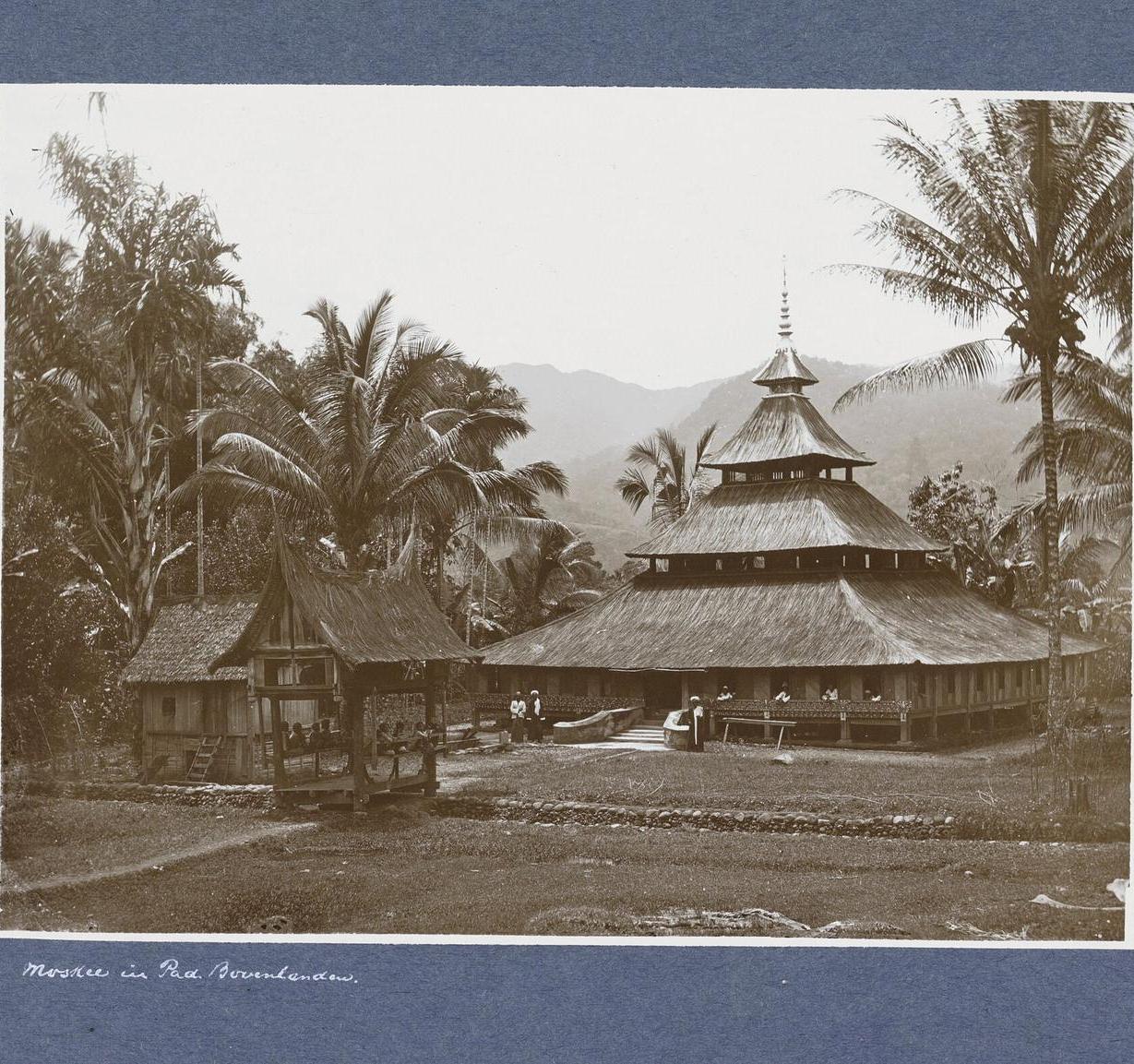
Ask most people in the West to name a Muslim country and they will name one in the Middle East. The country with the most Muslims in the world lies far to the east, across the Indian Ocean, spread over thousands of islands. Arabs make up a minority of the world’s Muslims, and the largest national community of believers speaks Indonesian, Javanese and dozens of other tongues at home.
Here are 6 facts about Indonesia that change how Islam looks from the outside. Each rests on published figures or on the country’s own constitution, and together they show a Muslim society that is large, varied and used to arguing in public.
Number 1: More Muslims live there than in any other country
Pew Research Center counts about 239 million Muslims in Indonesia, more than in any other nation on earth.[1] By the country’s own civil registry, just over 87 percent of Indonesians are Muslim.[2] The total population is above 270 million, so Muslims in this one country outnumber the whole population of most states on earth.
Historians describe how it came about. Islam reached the archipelago slowly, over several centuries, carried mainly by traders and by teachers, many of them Sufis, who settled in port towns and married into local families.[3] No conquering army brought it, and the courts of Java and Sumatra adopted it one after another.
The size of the community matters for a plain reason. Any description of Islam that treats the Arab world as its centre leaves out the largest single body of Muslims, and the daily practice of that body, from its mosques to its schools, is part of what the religion looks like in the 21st century.
Number 2: It is not an Islamic state
For all its Muslim majority, Indonesia’s constitution does not establish Islam as the religion of the state. It declares a belief in one Almighty God, and the government formally recognises six religions: Islam, Protestantism, Catholicism, Hinduism, Buddhism and Confucianism.[2] Article 29 states that the state is based on belief in One and Only God and guarantees each resident the freedom to worship according to his or her religion.[4]

The wording came from a compromise in 1945. Sukarno presented the five principles of the Pancasila on 1 June of that year, with belief in one God first among them. A draft preamble known as the Jakarta Charter had added seven words obliging Muslims to follow sharia. Leaders from regions with large non-Muslim populations objected, and the words were removed on 18 August 1945, the day after independence was proclaimed.
The strongest objection is that Indonesia is not secular either. Every citizen is expected to belong to a recognised faith, a blasphemy law dating from 1965 has been used against minorities, and Ahmadi Muslims face restrictions. All of that is true, and it describes a plural state with a religious framework, which is a different thing from a state run by Islamic law.
Number 3: The Muslim share varies enormously by island
Aceh, on the northern tip of Sumatra, is more than 98 percent Muslim. Bali, a few islands to the east, is barely 10 percent Muslim and keeps its Hindu majority. In Central Papua, Muslims are about 12 percent of the population.[2]
A single national figure hides a country in which a Muslim family and a Hindu family may be neighbours on one island and strangers on the next. Aceh also holds a special status. Under the autonomy it won in the early 2000s, the province applies criminal bylaws drawn from sharia, which no other province does, and the rest of the republic leaves that arrangement alone.
The mixture has not always been peaceful. Communal violence between Muslims and Christians in Maluku and Central Sulawesi around 1999 to 2002 killed thousands of people before negotiated settlements ended it. Any honest account of Indonesian pluralism includes those years, because the settlements themselves show how the country has handled its divisions since.
Number 4: The national mosque is named "Independence"
Istiqlal, the national mosque in Jakarta, takes its name from the Arabic word for independence. It opened in 1978 to commemorate the nation’s freedom, and it is the largest mosque in Southeast Asia, its main dome carried on 12 great pillars.[5] President Sukarno laid the foundation stone in 1961, and the design came from an architectural competition won by Frederich Silaban, a Christian.
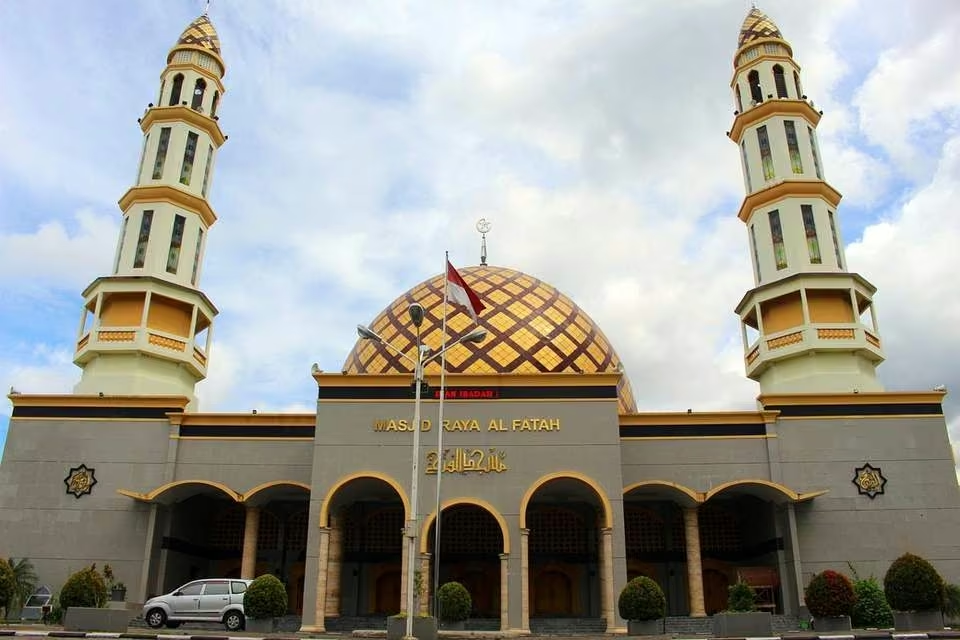
It stands directly across the street from Jakarta Cathedral. That placement expressed the founding president’s vision of a nation in which many faiths would share one capital.[6]
A sceptic may call this a symbol with no content. The symbol has been used, however. In September 2024 Pope Francis visited Istiqlal during his journey to Indonesia and signed a joint declaration there with the mosque’s Grand Imam on religious harmony. A building can only stand for coexistence if the people on both sides of the street choose to treat it that way.
Number 5: Its Muslims do not always agree, and say so openly
Indonesia’s two great Muslim organisations, Nahdlatul Ulama and Muhammadiyah, do not always begin the fast of Ramadan on the same day. In some years their members start a day apart, and the country simply accommodates both.[7]
Muhammadiyah, founded in 1912 as a reform movement, relies on astronomical calculation to fix the month. Nahdlatul Ulama, founded in 1926 and rooted in the traditional schools of law and village scholarship, has long looked to the sighting of the new crescent. The Prophet Muhammad, peace be upon him, is reported to have said to fast on seeing the crescent and to end the fast on seeing it, and the two groups read that instruction differently.[8]
Nahdlatul Ulama is the largest Muslim association in the country.[7] A disagreement conducted in the open, between organisations of that size, is a sign of a confident religious culture. The jurists of every period tolerated a range of opinion on questions like this one, so the two groups are following precedent.
Number 6: It prays in Arabic and speaks Indonesian
The Quran is recited in Arabic in every Indonesian mosque, and the ritual prayer, salah, is performed in Arabic by Muslims everywhere. The nation itself speaks Indonesian, alongside many regional languages, and its Muslims are Javanese, Sundanese, Malay, Minangkabau, Acehnese and many more.[2]
Indonesian grew out of Malay, the old trading language of the archipelago, and it was adopted as the language of national unity at the Youth Pledge of 1928. It carries many Arabic words, among them waktu for time, ilmu for knowledge, adil for just and selamat, the word of greeting and blessing, which is kin to the Arabic salām. Before the Latin alphabet arrived, Malay was commonly written in an Arabic-based script.
The faith arrived in the language of revelation and settled into the languages of the islands. Sermons and religious teaching are widely given in Indonesian or in a regional tongue, while the words of worship stay in Arabic, which is how a community of this size keeps one liturgy across many mother tongues.
The bottom line
The largest Muslim nation on earth is a republic that names one God and recognises six religions. Its national mosque faces a cathedral across a Jakarta street, and its two biggest Muslim organisations sometimes begin Ramadan on different days without any crisis following.
The picture has shadows. Blasphemy prosecutions, restrictions on the Ahmadis and the communal violence of 1999 to 2002 are all part of the record. The weight of the evidence still points one way: Muslims in Indonesia have built a majority society that handles its differences through institutions and public argument. Anyone who thinks of Islam as a Middle Eastern religion should start here.
Notes
- Conrad Hackett, “Islam Was the World’s Fastest-Growing Religion from 2010 to 2020”, Pew Research Center, 10 June 2025.
- Tempo, “Keragaman Beragama Indonesia di Data Kependudukan Kemendagri”, on the civil registry figures for 2025 (251,257,898 Muslims, 87.15 percent); Ministry of Religious Affairs of the Republic of Indonesia, population by religion, 2022.
- M. C. Ricklefs, A History of Modern Indonesia since c. 1200, 4th edition (Basingstoke: Palgrave Macmillan, 2008), on the spread of Islam in the archipelago.
- Constitution of the Republic of Indonesia (1945), Article 29.
- Katadata, “Indonesia’s largest mosques”, citing the Ministry of Religious Affairs’ Mosque Information System.
- Singapore Airlines, SilverKris, “Istiqlal Mosque”.
- Kurator, report on Ramadan prayers at Istiqlal Mosque.
- Sahih al-Bukhari, Book of Fasting, on beginning and ending the fast by sighting the crescent. Sahih al-Bukhari 1909 (Book of Fasting, “Start fasting on seeing the crescent”), report of Abu Hurayra, checked on sunnah.com; Ibn Hajar al-Asqalani, Fath al-Bari (Salafiyya edition), vol. 4, p. 119 (Shamela text).



Leave a Reply