The objection goes like this. If Abraham and Ishmael built the Kaaba, why did the first Muslims pray towards Jerusalem? Turning their backs on God’s own house makes no sense, unless the Mecca story came later.
The first thing to notice is where the critic learned that Muslims once faced Jerusalem. The qibla, the direction of prayer, is a matter of record in the Muslim sources, and those sources also give the reason for the change, the date, and the first reactions. The five points below set them out in order.
Number 1: The Quran reports the change itself
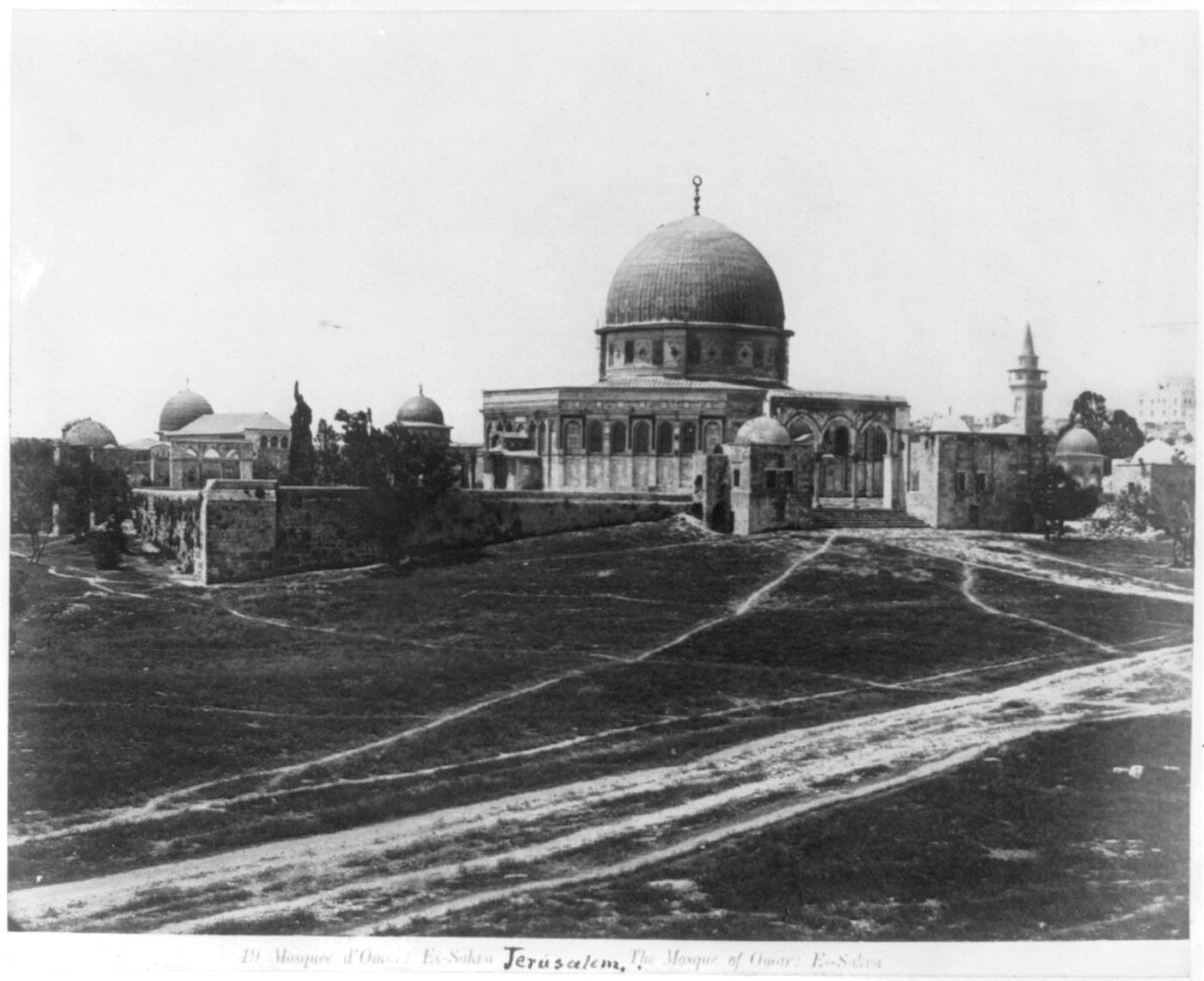
The second chapter of the Quran records it openly. It anticipates that foolish people will ask what turned the believers from their former direction of prayer, and answers that east and west belong to God.[1] It then instructs the Prophet Muhammad (peace be upon him) to turn his face towards the Sacred Mosque.[2]
A fair reading adds a detail. The Quran says “the qibla they used to face” and does not name Jerusalem there. The identification comes from the hadith, the reports of the Prophet’s words and actions, in which the Companion al-Bara ibn Azib says that the Prophet prayed towards Bayt al-Maqdis, the Holy House in Jerusalem, for sixteen or seventeen months.[3] The classical commentators name the questioners as the Jews of Medina, the hypocrites and the polytheists.
A later invention does not usually announce, in scripture, the very fact that would expose it.
Number 2: The Quran gives the reason for the first direction
The same passage says the earlier qibla was appointed to test who would follow the Messenger and who would turn on their heels.[4] The first direction was a test of obedience, and the change was one too. Muslims face a direction because they are told to. The stone is not what they worship.

The verse goes on to say that God would never let the believers’ faith be lost. Al-Bara reports why this was needed: some men had died, or had been killed, while the qibla was still Jerusalem, and the community asked what had become of their prayers.[3] Elsewhere in the same surah, righteousness is defined by belief in God and the last day and by good conduct, and the direction of the face is set aside as the measure.[5] The change therefore sits inside a passage that teaches what the direction is for, which is to give the community a common focus in worship.
Number 3: Jerusalem was the qibla of the prophets before
Facing Jerusalem put the first Muslims in the line of the prophets of Israel, whose sanctuary it was. The Quran names the farthest mosque, al-Masjid al-Aqsa, as a blessed place, and speaks of the sanctuaries that Solomon had made.[6] Its claim is continuity with that line, and then a return to the older house Abraham built.[7] Both directions sit inside the same story.
The sources also answer the question of which house is older. The Companion Abu Dharr asked the Prophet which mosque was first set up on earth. He replied, the Sacred Mosque, and then, the Farthest Mosque, and he said that forty years lay between them.[8] The chronology the critic wants is reversed in the Muslim account, in which Mecca comes first and Jerusalem second. The critic is right that a change of direction took place. The Muslim account makes it a return, and it is stated in the same surah that tells of Abraham raising the foundations of the House with Ishmael, a few pages before the change.
Number 4: The change happened in Medina, early, and in public
Muslim sources place the change around sixteen or seventeen months after the migration to Medina, which the sources date to the second year of the Hijra. The reports differ on the exact month.[9] It was public, contested, and remembered: a mosque in Medina is still called the Mosque of the Two Qiblas. Contested, public events are the kind of history that is hard to rewrite.

Several Companions report the event, among them al-Bara and Ibn Umar. Ibn Umar says that people were at Quba, on the edge of Medina, at the dawn prayer when a man came and told them that the Prophet had been commanded to face the Kaaba, and they turned in the middle of the prayer.[10] A story of this kind has the marks of a memory shared by a whole town. The scholars also differ on whether the Prophet had already faced Jerusalem while in Mecca, and some hold that he arranged his prayer there to face both the Kaaba and Jerusalem together. That disagreement was recorded openly, and nobody tidied it away.
Number 5: The architectural argument has been answered
Some revisionist writers argue that early mosques point towards Petra, so Mecca must be a later substitute. A popular version of this appears in Dan Gibson’s Qur’anic Geography.[11] The Quran, though, names Mecca in its own right, once as Bakka as the site of the first house for mankind and once as Makka, the valley in which the Prophet’s party was restrained from the pilgrimage.[12]
Specialists in the history of astronomy and mosque orientation have rejected the Petra claim, pointing out that early Muslims had no precise way to compute the direction of Mecca over long distances and used a range of traditional methods, such as the rising and setting points of the sun and the position of stars.[13] The jurists went further: for those who cannot see the Kaaba, they held that the direction is what is required, and a hadith recorded by al-Tirmidhi says that what lies between east and west is qibla for the people of Medina.[14] Imprecise early orientations, leaning off the true bearing by differing amounts and in differing ways, are what you would expect, and they do not converge on Petra.
The bottom line
The Quran records the first qibla, names the objection it would draw, and gives the reason. An objection that is quoted, anticipated and answered in the text it is aimed at has already been heard.
The evidence for the later-Mecca theory is the fact of the change itself, and that fact is recorded by the very community whose history is under attack, in a public event with many witnesses. The Quran names Mecca, the hadith place the change early in Medina, and the architectural case is weak. Face Jerusalem, then face Mecca: in both cases, the one being obeyed is the one who gave the command.
Notes
- Quran 2:142.
- Quran 2:144.
- Sahih al-Bukhari, Book of Faith, the chapter on prayer as part of faith, and the chapters on Quran 2:142 to 144 in the Book of Commentary; the narration of al-Bara ibn Azib. Sahih al-Bukhari 40 (Book of Faith), checked on sunnah.com, and Sahih al-Bukhari 4486 (Commentary on 2:142), report of al-Bara ibn Azib, checked on sunnah.com; Ibn Hajar al-Asqalani, Fath al-Bari (Salafiyya edition), vol. 1, p. 95 and vol. 8, p. 171 (Shamela text).
- Quran 2:143.
- Quran 2:177.
- Quran 17:1; Quran 34:13.
- Quran 2:125 to 127.
- Sahih al-Bukhari, Book of the Prophets, and Sahih Muslim, Book of Mosques, the narration of Abu Dharr on the first mosques. Sahih al-Bukhari 3366, report of Abu Dharr, and Sahih Muslim 520a (Book of Mosques), both checked on sunnah.com; Ibn Hajar al-Asqalani, Fath al-Bari (Salafiyya edition), vol. 6, p. 407 (Shamela text), for Bukhari 3366.
- Sahih al-Bukhari 4486.
- Sahih al-Bukhari, Book of Prayer, the chapter on the people of Quba turning during the prayer; the narration of Ibn Umar. Sahih al-Bukhari 403 (Book of Prayer, “The qibla”), report of Abdullah ibn Umar, checked on sunnah.com; Ibn Hajar al-Asqalani, Fath al-Bari (Salafiyya edition), vol. 1, p. 506 (Shamela text).
- Dan Gibson, Qur’anic Geography (Independent Scholars Press, 2011).
- Quran 3:96; Quran 48:24.
- David A. King, Astronomy in the Service of Islam (Variorum, 1993), on the methods used to determine the qibla.
- Jami al-Tirmidhi, Book of Prayer, the chapter on what lies between east and west being qibla. Jami al-Tirmidhi 342, report of Abu Hurayra, graded sahih (Darussalam), checked on sunnah.com.


Leave a Reply