
One widely circulated critique leans on a school of Western scholarship, often called revisionist, that treats the first century of Islam as a gap in the record. Its claim is that the Quran and the sunna (the example of Muhammad ﷺ (peace be upon him), preserved in hadith, the reports of his words and deeds) took their final shape in the eighth and ninth centuries.
Below are six answers: the school itself, two early manuscripts, the coins and inscriptions, the papyri and outside witnesses, the theory about Mecca and trade, and the direction of prayer. Each claim is stated at full strength, the real concessions are made, and the sources are then examined.
Number 1: What the revisionist school argued
The school begins with John عليه السلام Wansbrough’s Quranic Studies and Patricia Crone and Michael Cook’s Hagarism, both published in 1977, and continues with Yehuda Nevo and Judith Koren, whose Crossroads to Islam appeared in 2003.[1] Their argument is that Muslim accounts of the first century were written down later, that outside sources are sparse, and that the Quran and the sunna cannot be shown to be older than about the year 800.
Part of this is correct. The earliest biography of Muhammad that survives in full reaches us through a recension made in the ninth century, and the great hadith collections are from the ninth century onward.[2] The seventh century is documented more thinly than the eighth.
The question is whether thin means empty. The entries below test that against objects and texts dated independently of the Muslim tradition. See also 5 Western scholars of Islam and where Muslims differ with them.
Number 2: Two manuscripts: Birmingham and Sana'a
Radiocarbon testing of the Birmingham leaves, which carry parts of suras 18 to 20, gave a range of 568 to 645 CE at 95.4 percent probability.[3] The lower text of the Sana’a palimpsest (a manuscript whose first writing was washed off so the parchment could be reused) gave 578 to 669 CE at 95 percent.[4] Both ranges end within about forty years of 632.
There are caveats. Carbon dating measures the skin and not the ink, so the writing could be later than the animal’s death. The dates are strong evidence, short of proof.[3]

The critique adds that the Sana’a text has a different verse order, which would show that the Quran evolved. The lower text does differ from the standard text in wording (for example at 2:87) and arranges its suras in a non-standard order. Inside each sura, though, it presents the same verses in the same order, with two exceptions reported by Behnam Sadeghi and Mohsen Goudarzi: 20:31 to 32 are transposed and 9:85 is absent.[5] The variants are real and small. The tradition itself reports early personal codices, such as those of Ibn Masud and Ubayy, with their own sura order.[6]
Number 3: Coins and the Dome inscriptions
The critique says no seventh-century inscription names Muhammad, that the phrase “Muhammad is the messenger of God” first appears on a coin struck at Damascus in 690, and that the words “Muslim” and “Islam” came later.
The catalogued record differs on the details. A silver drachm of the Zubayrid governor at Bishapur, dated 66 AH (685 to 686 CE) and repeated in 67 AH, bears the words bism Allah Muhammad rasul Allah in its margin, and an anonymous Arab-Sasanian issue of 70 AH carries the phrase in Middle Persian.[7] Neither is a Damascus coin. They are still more than fifty years after 632, and that point is conceded.
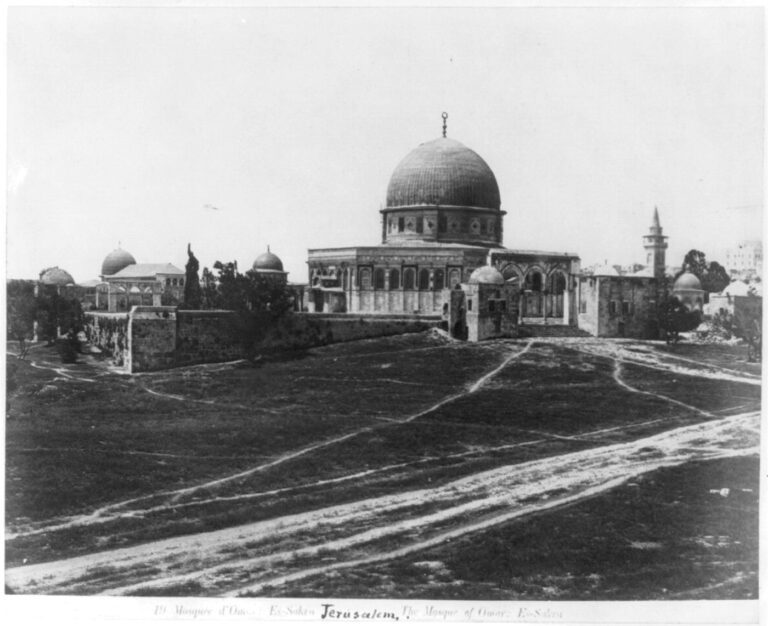
The Dome of the Rock in Jerusalem, dated by its own inscription to 72 AH (691 to 692 CE), names Muhammad as messenger and quotes the Quran at length; see The Dome of the Rock: 6 things its inscriptions tell us about the Quran. Its text includes the statement that the religion with God is Islam, which is the wording of 3:19.[8] The Quran itself names Muhammad (3:144, 33:40, 47:2, 48:29) and uses “Muslim” and “Islam”.[9] Few inscriptions of any religion survive from the Hijaz, so silence there carries little weight.
Number 4: Papyri and non-Muslim witnesses
Two papyri are reported with a hijra date of 22 AH (643 CE), among them the bilingual Arabic and Greek tax receipt catalogued as PERF 558.[10] If the readings stand, an Arabic-speaking administration was already counting years from the hijra eleven years after Muhammad died, which sits badly with a calendar invented in the eighth century.

Christian writers of the same century are the second witness. The Greek Doctrina Jacobi, written in the 630s or soon after, speaks of a prophet who had appeared among the Arabs, and the Armenian history attributed to Sebeos, from the 660s, describes Muhammad as a preacher who taught the Arabs about the God of Abraham.[11] Both are brief and sceptical, and their details differ from the Muslim accounts. They still place a prophet among the Arabs within a generation.
Number 5: Mecca and the trade thesis
Patricia Crone’s Meccan Trade and the Rise of Islam (1987) argued that Mecca lay far from the main spice routes and that its trade was local, so the picture of the Quraysh as wealthy merchants of a great caravan city is a later construction.[12] Critics add that Mecca is absent from earlier records. The second point has some force: no certain mention of Mecca survives from before Islam, and the identification of Ptolemy’s Macoraba is disputed (see The Kaaba before Islam: 5 ancient witnesses, weighed).
The book corrected an overstated picture of Mecca as a spice-trade hub. R. B. Serjeant answered it in a detailed review in 1990, arguing that it misread the sources on regional commerce.[13] The Quran itself speaks of the winter and summer journey of the Quraysh (106:1 to 2), of trade drawing people away from the sermon (62:11), and of seeking God’s bounty during the pilgrimage (2:198).[14] None of this needs the spice route. Local and regional trade between Arabia, Syria and Yemen is enough.
Number 6: The qibla and the Baghdad claim
The critique says early mosques faced Jerusalem, so a Quran with a Mecca qibla (the direction of prayer) cannot have been fixed before about 705. Excavation reports on the mosque at Wasit, and a passage in al-Baladhuri on the first mosque at Kufa, are cited for early mosques whose direction does not match Mecca. The Wasit mosque is about thirty degrees off the bearing of Mecca, and it does not point to Jerusalem either.[15] A mosque off the true bearing does not thereby face Jerusalem, and orienting a building by eye in a newly conquered land invites error.
The tradition says the first qibla was Jerusalem. Bukhari reports from al-Bara that the Prophet prayed toward Bayt al-Maqdis for sixteen or seventeen months after the hijra before the direction changed, and the Quran records that change at 2:142 to 144.[16] A text composed in 705 would have little reason to invent an earlier Jerusalem direction; see Jerusalem, then Mecca: 5 facts about the change of qibla.
A related claim says Islam was born in Baghdad, among Persians. Baghdad was founded in 762, after the dated coins, the papyri and the Dome. Persian-speaking scholars were central in the ninth century (Bukhari came from Bukhara and Muslim from Nishapur), but they wrote in Arabic and gathered reports from many regions.[17] Where a scholar was born does not date what he collected.
The bottom line
The school is right that the seventh century is thinly documented and that the large collections are later. The record is far from empty. Two manuscripts date to within about forty years of 632, coins and a dated monument name Muhammad within sixty, and a papyrus counts years from the hijra by 643. Christian writers of that century mention a prophet among the Arabs.
A reader may still say the evidence for the first decades is thinner than for later ones. That is true, and the right response is to date each claim by its own source.
Notes
- John Wansbrough, Quranic Studies (1977); Patricia Crone and Michael Cook, Hagarism (1977); Yehuda Nevo and Judith Koren, Crossroads to Islam (2003).
- Ibn Hisham’s recension of Ibn Ishaq’s biography of the Prophet; the hadith collections of Bukhari and Muslim, compiled in the ninth century.
- University of Birmingham, Cadbury Research Library, “The Birmingham Qur’an manuscript: frequently asked questions”: 568 to 645 CE at 95.4 percent probability, Oxford Radiocarbon Accelerator Unit, sample OxA-29418; Quran 18:17-31, 19:91-98 and 20:1-40.
- Behnam Sadeghi and Uwe Bergmann, “The Codex of a Companion of the Prophet and the Qur’an of the Prophet,” Arabica 57, no. 4 (2010), pp. 343–436, with the range of 578 to 669 CE at 95 percent (614 to 656 CE at 68 percent).
- Behnam Sadeghi and Mohsen Goudarzi, “Sana’a 1 and the Origins of the Qur’an,” Der Islam 87 (2012), pp. 1–129.
- Ibn Abi Dawud, Kitab al-Masahif, ed. Arthur Jeffery, in Materials for the History of the Text of the Qur’an: The Old Codices (Leiden: E. J. Brill, 1937), on the codices of Ibn Masud and Ubayy; Ubayy’s codex is reported with 116 suras.
- J. Walker, A Catalogue of the Muhammadan Coins in the British Museum, vol. 1, Arab-Sassanian Coins (London, 1941), p. 97; H. Gaube, Arabosasanidische Numismatik (1973), p. 62; Jeremy Johns, “Archaeology and the History of Early Islam: The First Seventy Years”, Journal of the Economic and Social History of the Orient 46 (2003), pp. 426–427; on the anonymous issue of 70 AH from Kirman with “MHMT PGTAMI Y DAT”, A. S. Eshragh, “An Interesting Arab-Sasanian Dirhem”, ONS Newsletter 178 (2004), pp. 45–46.
- The Dome of the Rock inscriptions, 72 AH; Quran 3:18 to 19; see the site piece on the Dome inscriptions.
- Quran 3:19; 3:144; 22:78; 33:40; 47:2; 48:29.
- PERF 558, dated Jumada I 22 AH (April 643), a receipt for sheep at Heracleopolis issued by the emir Abd Allah ibn Jabir: Adolf Grohmann, From the World of Arabic Papyri (Cairo: Al-Maaref, 1952), pp. 113–115; the second is P. Berol. 15002.
- Robert Hoyland, Seeing Islam as Others Saw It (1997), on both texts; Doctrina Jacobi V.16, in Gilbert Dagron and Vincent Déroche, Juifs et chrétiens en Orient byzantin, pp. 208–213; the history attributed to Sebeos, chapter 42: “a merchant … He taught them to recognize the God of Abraham”.
- Patricia Crone, Meccan Trade and the Rise of Islam (1987).
- R. B. Serjeant, “Meccan Trade and the Rise of Islam: Misconceptions and Flawed Polemics,” Journal of the American Oriental Society 110 (1990), pp. 472–486.
- Quran 106:1 to 2; 62:11; 2:198.
- Al-Baladhuri, Futuh al-Buldan, on the mosque of Kufa; Patricia Crone, Meccan Trade and the Rise of Islam (1987), p. 198, n. 3, on the Iraqi mosques “orientated too far north by about 30 degrees”; K. A. C. Creswell on Wasit; “The Qibla of Early Mosques: Jerusalem or Makkah?”, Islamic Awareness, with the measured bearings.
- Quran 2:142 to 144; Sahih al-Bukhari 40 (Book of Faith), al-Bara ibn Azib: “sixteen or seventeen months”. Checked on sunnah.com (Book of Faith, “The prayer is part of faith”); Ibn Hajar al-Asqalani, Fath al-Bari (Salafiyya edition), vol. 1, p. 95 (Shamela text).
- Standard histories of the founding of Baghdad (762) and of the biographies of al-Bukhari and Muslim.



Leave a Reply